Living being first
Verified biology and behavior come before symbolic use, and popular animal myths are corrected.
 KidunaMapshifting DecksAll decks ←
THE LIVING MIRROR
Complete 68-card manual · Approved visual referencesEncounter animals as living beings first and symbolic mirrors second. Each card connects a Gift with a related Wound, then returns interpretation to reflection, relationship, and choice.

Verified biology and behavior come before symbolic use, and popular animal myths are corrected.
Capacity and hurt are read as related expressions of one energy—not as positive and negative animals.
Specific traditions are attributed; closed teachings and generic claims about Indigenous peoples are excluded.
68 CARDS + COMPLETE MANUAL
Each boxed entry joins its own image with the complete card record and full manual wording. Use the index to move directly to an animal; every entry can be collapsed or reopened in place.

THE LIVING MIRROR · 001
Canis lupus · wolf
coordinated belonging
# Gray Wolf
Gray Wolf teaches coordinated belonging: coordination becomes trustworthy when it stays connected to endurance and does not harden into conformity.
coordination, endurance, social intelligence, conformity, exclusion, hypervigilance.
The deck uses these observations as a reflective analogy for coordinated belonging. The animal does not literally carry a human message, and the interpretation is labeled deck synthesis.
Gray Wolf occupies the role of coordinated belonging. Unlike Dog, Wolf emphasizes belonging negotiated within a wild family and territory rather than cross-species partnership.
The same energy that supports coordination can produce conformity when safety, timing, or relationship is lost. endurance may grow as an intelligent response to the wound, yet become overused and conceal it. Integration keeps social intelligence available while loosening the demand to live through exclusion.
A balanced expression combines coordination, endurance, and social intelligence. It responds to actual conditions, remains open to feedback, and stops when the purpose is met.
The Gift becomes rigid when coordination turns into conformity, or when social intelligence dominates context and relationship. The person may mistake intensity for truth.
Disconnection from this card can look like withholding coordination, distrusting endurance, or surrendering social intelligence even when the situation calls for it.
| Context | Reflective possibility |
|---|---|
| Identity | You may be developing coordination; ask whether conformity is driving or distorting it. |
| Relationships | Practice endurance without asking another person to absorb exclusion. |
| Community | The group may need the coordinated belonging role, with explicit limits against hypervigilance. |
| Work and vocation | Use social intelligence deliberately; check whether the surrounding habitat actually supports it. |
| Creativity | Let the animal's way of living suggest a form: pack structure is usually family-based and changes with prey, habitat, and human pressure. |
| Conflict | Choose the proportionate form of coordination rather than escalating into conformity. |
| Healing and restoration | Restore access to endurance through conditions of safety, time, and support; this is reflection, not treatment. |
| Decision-making | Ask which option embodies social intelligence without repeating exclusion. |
| Change and transition | Use Gray Wolf as a behavioral analogy for moving between present conditions and a viable next state. |
| Leadership and responsibility | Make coordination accountable to others and monitor for hypervigilance. |
These are possibilities, not predictions.
Map the groups you belong to. Name one contribution you freely offer and one boundary that keeps belonging from becoming self-erasure.
Secular alternative: Treat the card as a behavioral analogy and journaling prompt. Never approach, feed, touch, capture, purchase, or disturb wildlife for the exercise.
| Tradition or source | Association | Period or context | Provenance | Confidence | Citation |
|---|---|---|---|---|---|
| Ancient Roman foundation tradition | A she-wolf nurses Romulus and Remus in the Roman foundation motif. This is a historical art/literary comparison, not a universal wolf meaning. | Roman tradition; later European artwork | historical | medium | Met, Conca study referencing the Aeneid motif |
The official record for Ted Andrews' Animal-Speak confirms its animal-teacher and behavior-oriented scope, and the official records for Kim Krans' deck confirm a concise animal-archetype, self-discovery, and elemental framework. The complete requested editions were not available, so this draft does not claim either author's animal-specific interpretation, wording, or page reference for Gray Wolf. This comparison remains pending.
Deck synthesis — medium confidence: Gray Wolf represents coordinated belonging. The synthesis derives from the verified behaviors above and adopts coordination as the primary Gift and conformity as its closest Wound. It is original to this deck and may be revised after zoological, cultural, and comparative-source review.
Show Gray Wolf in forest, engaged in the behavior described here: wolves use scent, posture, and vocalization to coordinate and maintain territory. Emphasize real anatomy, ecological context, and the tension between coordination and conformity. Use an original composition and do not imitate any existing deck or artist.

THE LIVING MIRROR · 002
Panthera leo · lion
courageous presence
# African Lion
African Lion teaches courageous presence: courage becomes trustworthy when it stays connected to cooperative defense and does not harden into domination.
courage, cooperative defense, rest and timing, domination, status fixation, entitlement.
The deck uses these observations as a reflective analogy for courageous presence. The animal does not literally carry a human message, and the interpretation is labeled deck synthesis.
African Lion occupies the role of courageous presence. Unlike Gorilla, Lion foregrounds visible status, coalition, and energetic timing rather than restrained kin leadership.
The same energy that supports courage can produce domination when safety, timing, or relationship is lost. cooperative defense may grow as an intelligent response to the wound, yet become overused and conceal it. Integration keeps rest and timing available while loosening the demand to live through status fixation.
A balanced expression combines courage, cooperative defense, and rest and timing. It responds to actual conditions, remains open to feedback, and stops when the purpose is met.
The Gift becomes rigid when courage turns into domination, or when rest and timing dominates context and relationship. The person may mistake intensity for truth.
Disconnection from this card can look like withholding courage, distrusting cooperative defense, or surrendering rest and timing even when the situation calls for it.
| Context | Reflective possibility |
|---|---|
| Identity | You may be developing courage; ask whether domination is driving or distorting it. |
| Relationships | Practice cooperative defense without asking another person to absorb status fixation. |
| Community | The group may need the courageous presence role, with explicit limits against entitlement. |
| Work and vocation | Use rest and timing deliberately; check whether the surrounding habitat actually supports it. |
| Creativity | Let the animal's way of living suggest a form: related females often cooperate in hunting and cub care; males may form coalitions. |
| Conflict | Choose the proportionate form of courage rather than escalating into domination. |
| Healing and restoration | Restore access to cooperative defense through conditions of safety, time, and support; this is reflection, not treatment. |
| Decision-making | Ask which option embodies rest and timing without repeating status fixation. |
| Change and transition | Use African Lion as a behavioral analogy for moving between present conditions and a viable next state. |
| Leadership and responsibility | Make courage accountable to others and monitor for entitlement. |
These are possibilities, not predictions.
Choose one responsibility that deserves your full presence and one task that can wait. Practice courage without occupying every space.
Secular alternative: Treat the card as a behavioral analogy and journaling prompt. Never approach, feed, touch, capture, purchase, or disturb wildlife for the exercise.
| Tradition or source | Association | Period or context | Provenance | Confidence | Citation |
|---|---|---|---|---|---|
| Ancient Egypt | A monumental recumbent lion guarded a sanctuary; the museum record describes the lion as an early royal symbol and form of several deities. | Old Kingdom, ca. 2575–2450 BCE | historical | high | Met, *Recumbent Lion* |
The official record for Ted Andrews' Animal-Speak confirms its animal-teacher and behavior-oriented scope, and the official records for Kim Krans' deck confirm a concise animal-archetype, self-discovery, and elemental framework. The complete requested editions were not available, so this draft does not claim either author's animal-specific interpretation, wording, or page reference for African Lion. This comparison remains pending.
Deck synthesis — medium confidence: African Lion represents courageous presence. The synthesis derives from the verified behaviors above and adopts courage as the primary Gift and domination as its closest Wound. It is original to this deck and may be revised after zoological, cultural, and comparative-source review.
Show African Lion in savanna, engaged in the behavior described here: lions are the most social living cats, forming prides whose membership and territory change over time. Emphasize real anatomy, ecological context, and the tension between courage and domination. Use an original composition and do not imitate any existing deck or artist.

THE LIVING MIRROR · 003
Loxodonta africana · African bush elephant
intergenerational memory
# African Elephant
African Elephant teaches intergenerational memory: memory becomes trustworthy when it stays connected to intergenerational care and does not harden into burden-bearing.
memory, intergenerational care, obstacle sense, burden-bearing, grief fixation, overprotection.
The deck uses these observations as a reflective analogy for intergenerational memory. The animal does not literally carry a human message, and the interpretation is labeled deck synthesis.
African Elephant occupies the role of intergenerational memory. Unlike Humpback Whale, Elephant carries long memory through terrestrial family leadership and direct habitat engineering.
The same energy that supports memory can produce burden-bearing when safety, timing, or relationship is lost. intergenerational care may grow as an intelligent response to the wound, yet become overused and conceal it. Integration keeps obstacle sense available while loosening the demand to live through grief fixation.
A balanced expression combines memory, intergenerational care, and obstacle sense. It responds to actual conditions, remains open to feedback, and stops when the purpose is met.
The Gift becomes rigid when memory turns into burden-bearing, or when obstacle sense dominates context and relationship. The person may mistake intensity for truth.
Disconnection from this card can look like withholding memory, distrusting intergenerational care, or surrendering obstacle sense even when the situation calls for it.
| Context | Reflective possibility |
|---|---|
| Identity | You may be developing memory; ask whether burden-bearing is driving or distorting it. |
| Relationships | Practice intergenerational care without asking another person to absorb grief fixation. |
| Community | The group may need the intergenerational memory role, with explicit limits against overprotection. |
| Work and vocation | Use obstacle sense deliberately; check whether the surrounding habitat actually supports it. |
| Creativity | Let the animal's way of living suggest a form: older females can hold socially and ecologically useful knowledge about routes, water, and risk. |
| Conflict | Choose the proportionate form of memory rather than escalating into burden-bearing. |
| Healing and restoration | Restore access to intergenerational care through conditions of safety, time, and support; this is reflection, not treatment. |
| Decision-making | Ask which option embodies obstacle sense without repeating grief fixation. |
| Change and transition | Use African Elephant as a behavioral analogy for moving between present conditions and a viable next state. |
| Leadership and responsibility | Make memory accountable to others and monitor for overprotection. |
These are possibilities, not predictions.
Write down one inherited lesson that still serves and one burden that is not yours to carry. Take a concrete step to transmit the lesson without the burden.
Secular alternative: Treat the card as a behavioral analogy and journaling prompt. Never approach, feed, touch, capture, purchase, or disturb wildlife for the exercise.
| Tradition or source | Association | Period or context | Provenance | Confidence | Citation |
|---|---|---|---|---|---|
| Hindu art and devotion | The elephant-headed Ganesha is associated with good beginnings and overcoming obstacles in this Smithsonian teaching resource. This is a deity context, not a generic claim about all elephants. | Living Hindu tradition; object-based education | cultural | high | Smithsonian National Museum of Asian Art, *Seated Ganesha* |
The official record for Ted Andrews' Animal-Speak confirms its animal-teacher and behavior-oriented scope, and the official records for Kim Krans' deck confirm a concise animal-archetype, self-discovery, and elemental framework. The complete requested editions were not available, so this draft does not claim either author's animal-specific interpretation, wording, or page reference for African Elephant. This comparison remains pending.
Deck synthesis — medium confidence: African Elephant represents intergenerational memory. The synthesis derives from the verified behaviors above and adopts memory as the primary Gift and burden-bearing as its closest Wound. It is original to this deck and may be revised after zoological, cultural, and comparative-source review.
Show African Elephant in savanna, engaged in the behavior described here: elephant families use touch, scent, audible calls, and low-frequency sound across distance. Emphasize real anatomy, ecological context, and the tension between memory and burden-bearing. Use an original composition and do not imitate any existing deck or artist.

THE LIVING MIRROR · 004
Vulpes vulpes · fox
adaptive edge-walker
# Red Fox
Red Fox teaches adaptive edge-walker: adaptability becomes trustworthy when it stays connected to opportunistic intelligence and does not harden into evasive habits.
adaptability, opportunistic intelligence, boundary navigation, evasive habits, self-serving opportunism, mistrust.
The deck uses these observations as a reflective analogy for adaptive edge-walker. The animal does not literally carry a human message, and the interpretation is labeled deck synthesis.
Red Fox occupies the role of adaptive edge-walker. Unlike Chameleon, Fox changes tactics while retaining a recognizable way of moving through the world.
The same energy that supports adaptability can produce evasive habits when safety, timing, or relationship is lost. opportunistic intelligence may grow as an intelligent response to the wound, yet become overused and conceal it. Integration keeps boundary navigation available while loosening the demand to live through self-serving opportunism.
A balanced expression combines adaptability, opportunistic intelligence, and boundary navigation. It responds to actual conditions, remains open to feedback, and stops when the purpose is met.
The Gift becomes rigid when adaptability turns into evasive habits, or when boundary navigation dominates context and relationship. The person may mistake intensity for truth.
Disconnection from this card can look like withholding adaptability, distrusting opportunistic intelligence, or surrendering boundary navigation even when the situation calls for it.
| Context | Reflective possibility |
|---|---|
| Identity | You may be developing adaptability; ask whether evasive habits is driving or distorting it. |
| Relationships | Practice opportunistic intelligence without asking another person to absorb self-serving opportunism. |
| Community | The group may need the adaptive edge-walker role, with explicit limits against mistrust. |
| Work and vocation | Use boundary navigation deliberately; check whether the surrounding habitat actually supports it. |
| Creativity | Let the animal's way of living suggest a form: they hunt through acute hearing, smell, stalking, and sudden pounces, and they cache surplus food. |
| Conflict | Choose the proportionate form of adaptability rather than escalating into evasive habits. |
| Healing and restoration | Restore access to opportunistic intelligence through conditions of safety, time, and support; this is reflection, not treatment. |
| Decision-making | Ask which option embodies boundary navigation without repeating self-serving opportunism. |
| Change and transition | Use Red Fox as a behavioral analogy for moving between present conditions and a viable next state. |
| Leadership and responsibility | Make adaptability accountable to others and monitor for mistrust. |
These are possibilities, not predictions.
List three available routes around a current obstacle. Choose the most honest adaptable route, not merely the easiest escape.
Secular alternative: Treat the card as a behavioral analogy and journaling prompt. Never approach, feed, touch, capture, purchase, or disturb wildlife for the exercise.
No cultural or historical association is adopted for this card in the current draft. Unattributed or insufficiently specific claims were omitted rather than universalized.
The official record for Ted Andrews' Animal-Speak confirms its animal-teacher and behavior-oriented scope, and the official records for Kim Krans' deck confirm a concise animal-archetype, self-discovery, and elemental framework. The complete requested editions were not available, so this draft does not claim either author's animal-specific interpretation, wording, or page reference for Red Fox. This comparison remains pending.
Deck synthesis — medium confidence: Red Fox represents adaptive edge-walker. The synthesis derives from the verified behaviors above and adopts adaptability as the primary Gift and evasive habits as its closest Wound. It is original to this deck and may be revised after zoological, cultural, and comparative-source review.
Show Red Fox in forest edge, engaged in the behavior described here: red foxes occupy an unusually broad range of climates and human-altered landscapes. Emphasize real anatomy, ecological context, and the tension between adaptability and evasive habits. Use an original composition and do not imitate any existing deck or artist.

THE LIVING MIRROR · 005
Ursus americanus · black bear
resourceful retreat
# American Black Bear
American Black Bear teaches resourceful retreat: resourcefulness becomes trustworthy when it stays connected to restorative withdrawal and does not harden into avoidant withdrawal.
resourcefulness, restorative withdrawal, boundary power, avoidant withdrawal, overconsumption, defensive reactivity.
The deck uses these observations as a reflective analogy for resourceful retreat. The animal does not literally carry a human message, and the interpretation is labeled deck synthesis.
American Black Bear occupies the role of resourceful retreat. Unlike Desert Tortoise, Bear alternates expansive foraging with protected seasonal retreat rather than conserving steadily all year.
The same energy that supports resourcefulness can produce avoidant withdrawal when safety, timing, or relationship is lost. restorative withdrawal may grow as an intelligent response to the wound, yet become overused and conceal it. Integration keeps boundary power available while loosening the demand to live through overconsumption.
A balanced expression combines resourcefulness, restorative withdrawal, and boundary power. It responds to actual conditions, remains open to feedback, and stops when the purpose is met.
The Gift becomes rigid when resourcefulness turns into avoidant withdrawal, or when boundary power dominates context and relationship. The person may mistake intensity for truth.
Disconnection from this card can look like withholding resourcefulness, distrusting restorative withdrawal, or surrendering boundary power even when the situation calls for it.
| Context | Reflective possibility |
|---|---|
| Identity | You may be developing resourcefulness; ask whether avoidant withdrawal is driving or distorting it. |
| Relationships | Practice restorative withdrawal without asking another person to absorb overconsumption. |
| Community | The group may need the resourceful retreat role, with explicit limits against defensive reactivity. |
| Work and vocation | Use boundary power deliberately; check whether the surrounding habitat actually supports it. |
| Creativity | Let the animal's way of living suggest a form: in colder regions they enter winter dens and markedly reduce metabolism without the deep temperature drop of small hibernators. |
| Conflict | Choose the proportionate form of resourcefulness rather than escalating into avoidant withdrawal. |
| Healing and restoration | Restore access to restorative withdrawal through conditions of safety, time, and support; this is reflection, not treatment. |
| Decision-making | Ask which option embodies boundary power without repeating overconsumption. |
| Change and transition | Use American Black Bear as a behavioral analogy for moving between present conditions and a viable next state. |
| Leadership and responsibility | Make resourcefulness accountable to others and monitor for defensive reactivity. |
These are possibilities, not predictions.
Schedule a bounded period of true retreat, then name the time and condition for re-emergence. A refuge should restore participation, not erase it.
Secular alternative: Treat the card as a behavioral analogy and journaling prompt. Never approach, feed, touch, capture, purchase, or disturb wildlife for the exercise.
No cultural or historical association is adopted for this card in the current draft. Unattributed or insufficiently specific claims were omitted rather than universalized.
The official record for Ted Andrews' Animal-Speak confirms its animal-teacher and behavior-oriented scope, and the official records for Kim Krans' deck confirm a concise animal-archetype, self-discovery, and elemental framework. The complete requested editions were not available, so this draft does not claim either author's animal-specific interpretation, wording, or page reference for American Black Bear. This comparison remains pending.
Deck synthesis — medium confidence: American Black Bear represents resourceful retreat. The synthesis derives from the verified behaviors above and adopts resourcefulness as the primary Gift and avoidant withdrawal as its closest Wound. It is original to this deck and may be revised after zoological, cultural, and comparative-source review.
Show American Black Bear in forest, engaged in the behavior described here: black bears are highly flexible omnivores whose diets shift with season and place. Emphasize real anatomy, ecological context, and the tension between resourcefulness and avoidant withdrawal. Use an original composition and do not imitate any existing deck or artist.

THE LIVING MIRROR · 006
Odocoileus virginianus · deer
sensitive responsiveness
# White-tailed Deer
White-tailed Deer teaches sensitive responsiveness: sensitivity becomes trustworthy when it stays connected to responsive movement and does not harden into hypervigilance.
sensitivity, responsive movement, gentle alertness, hypervigilance, appeasement, flight from necessary conflict.
The deck uses these observations as a reflective analogy for sensitive responsiveness. The animal does not literally carry a human message, and the interpretation is labeled deck synthesis.
White-tailed Deer occupies the role of sensitive responsiveness. Unlike Gazelle-like speed stereotypes, this card centers edge sensitivity and timely response, not permanent fragility.
The same energy that supports sensitivity can produce hypervigilance when safety, timing, or relationship is lost. responsive movement may grow as an intelligent response to the wound, yet become overused and conceal it. Integration keeps gentle alertness available while loosening the demand to live through appeasement.
A balanced expression combines sensitivity, responsive movement, and gentle alertness. It responds to actual conditions, remains open to feedback, and stops when the purpose is met.
The Gift becomes rigid when sensitivity turns into hypervigilance, or when gentle alertness dominates context and relationship. The person may mistake intensity for truth.
Disconnection from this card can look like withholding sensitivity, distrusting responsive movement, or surrendering gentle alertness even when the situation calls for it.
| Context | Reflective possibility |
|---|---|
| Identity | You may be developing sensitivity; ask whether hypervigilance is driving or distorting it. |
| Relationships | Practice responsive movement without asking another person to absorb appeasement. |
| Community | The group may need the sensitive responsiveness role, with explicit limits against flight from necessary conflict. |
| Work and vocation | Use gentle alertness deliberately; check whether the surrounding habitat actually supports it. |
| Creativity | Let the animal's way of living suggest a form: the raised white tail can function as a conspicuous alarm signal while fleeing. |
| Conflict | Choose the proportionate form of sensitivity rather than escalating into hypervigilance. |
| Healing and restoration | Restore access to responsive movement through conditions of safety, time, and support; this is reflection, not treatment. |
| Decision-making | Ask which option embodies gentle alertness without repeating appeasement. |
| Change and transition | Use White-tailed Deer as a behavioral analogy for moving between present conditions and a viable next state. |
| Leadership and responsibility | Make sensitivity accountable to others and monitor for flight from necessary conflict. |
These are possibilities, not predictions.
Notice five sensory details without interpreting them. Then decide whether the situation calls for staying still, moving away, or turning to face it.
Secular alternative: Treat the card as a behavioral analogy and journaling prompt. Never approach, feed, touch, capture, purchase, or disturb wildlife for the exercise.
No cultural or historical association is adopted for this card in the current draft. Unattributed or insufficiently specific claims were omitted rather than universalized.
The official record for Ted Andrews' Animal-Speak confirms its animal-teacher and behavior-oriented scope, and the official records for Kim Krans' deck confirm a concise animal-archetype, self-discovery, and elemental framework. The complete requested editions were not available, so this draft does not claim either author's animal-specific interpretation, wording, or page reference for White-tailed Deer. This comparison remains pending.
Deck synthesis — medium confidence: White-tailed Deer represents sensitive responsiveness. The synthesis derives from the verified behaviors above and adopts sensitivity as the primary Gift and hypervigilance as its closest Wound. It is original to this deck and may be revised after zoological, cultural, and comparative-source review.
Show White-tailed Deer in forest edge, engaged in the behavior described here: white-tailed deer rely on acute smell, hearing, vision, stillness, and sudden bounding escape. Emphasize real anatomy, ecological context, and the tension between sensitivity and hypervigilance. Use an original composition and do not imitate any existing deck or artist.

THE LIVING MIRROR · 007
Bison bison · bison, American buffalo
grounded communal endurance
# American Bison
American Bison teaches grounded communal endurance: communal endurance becomes trustworthy when it stays connected to grounded provision and does not harden into stubbornness.
communal endurance, grounded provision, weather-facing resilience, stubbornness, scarcity fear, herd conformity.
The deck uses these observations as a reflective analogy for grounded communal endurance. The animal does not literally carry a human message, and the interpretation is labeled deck synthesis.
American Bison occupies the role of grounded communal endurance. Unlike Horse, Bison symbolizes collective staying power and ecological weight more than speed or partnership.
The same energy that supports communal endurance can produce stubbornness when safety, timing, or relationship is lost. grounded provision may grow as an intelligent response to the wound, yet become overused and conceal it. Integration keeps weather-facing resilience available while loosening the demand to live through scarcity fear.
A balanced expression combines communal endurance, grounded provision, and weather-facing resilience. It responds to actual conditions, remains open to feedback, and stops when the purpose is met.
The Gift becomes rigid when communal endurance turns into stubbornness, or when weather-facing resilience dominates context and relationship. The person may mistake intensity for truth.
Disconnection from this card can look like withholding communal endurance, distrusting grounded provision, or surrendering weather-facing resilience even when the situation calls for it.
| Context | Reflective possibility |
|---|---|
| Identity | You may be developing communal endurance; ask whether stubbornness is driving or distorting it. |
| Relationships | Practice grounded provision without asking another person to absorb scarcity fear. |
| Community | The group may need the grounded communal endurance role, with explicit limits against herd conformity. |
| Work and vocation | Use weather-facing resilience deliberately; check whether the surrounding habitat actually supports it. |
| Creativity | Let the animal's way of living suggest a form: their massive heads and shoulder structure help them sweep snow to reach winter forage. |
| Conflict | Choose the proportionate form of communal endurance rather than escalating into stubbornness. |
| Healing and restoration | Restore access to grounded provision through conditions of safety, time, and support; this is reflection, not treatment. |
| Decision-making | Ask which option embodies weather-facing resilience without repeating scarcity fear. |
| Change and transition | Use American Bison as a behavioral analogy for moving between present conditions and a viable next state. |
| Leadership and responsibility | Make communal endurance accountable to others and monitor for herd conformity. |
These are possibilities, not predictions.
Stand or sit with your feet supported. Identify the resource your group needs to keep moving through difficulty, and make one fair contribution to it.
Secular alternative: Treat the card as a behavioral analogy and journaling prompt. Never approach, feed, touch, capture, purchase, or disturb wildlife for the exercise.
No cultural or historical association is adopted for this card in the current draft. Unattributed or insufficiently specific claims were omitted rather than universalized.
The official record for Ted Andrews' Animal-Speak confirms its animal-teacher and behavior-oriented scope, and the official records for Kim Krans' deck confirm a concise animal-archetype, self-discovery, and elemental framework. The complete requested editions were not available, so this draft does not claim either author's animal-specific interpretation, wording, or page reference for American Bison. This comparison remains pending.
Deck synthesis — medium confidence: American Bison represents grounded communal endurance. The synthesis derives from the verified behaviors above and adopts communal endurance as the primary Gift and stubbornness as its closest Wound. It is original to this deck and may be revised after zoological, cultural, and comparative-source review.
Show American Bison in prairie, engaged in the behavior described here: bison graze in herds, wallow in soil, and move in response to forage, water, weather, and disturbance. Emphasize real anatomy, ecological context, and the tension between communal endurance and stubbornness. Use an original composition and do not imitate any existing deck or artist.

THE LIVING MIRROR · 008
Equus caballus · horse
embodied partnership in motion
# Domestic Horse
Domestic Horse teaches embodied partnership in motion: partnership becomes trustworthy when it stays connected to movement and does not harden into restlessness.
partnership, movement, embodied power, restlessness, servitude, force without direction.
The deck uses these observations as a reflective analogy for embodied partnership in motion. The animal does not literally carry a human message, and the interpretation is labeled deck synthesis.
Domestic Horse occupies the role of embodied partnership in motion. Unlike Bison, Horse centers negotiated movement and cross-species partnership, including the ethics of power and consent.
The same energy that supports partnership can produce restlessness when safety, timing, or relationship is lost. movement may grow as an intelligent response to the wound, yet become overused and conceal it. Integration keeps embodied power available while loosening the demand to live through servitude.
A balanced expression combines partnership, movement, and embodied power. It responds to actual conditions, remains open to feedback, and stops when the purpose is met.
The Gift becomes rigid when partnership turns into restlessness, or when embodied power dominates context and relationship. The person may mistake intensity for truth.
Disconnection from this card can look like withholding partnership, distrusting movement, or surrendering embodied power even when the situation calls for it.
| Context | Reflective possibility |
|---|---|
| Identity | You may be developing partnership; ask whether restlessness is driving or distorting it. |
| Relationships | Practice movement without asking another person to absorb servitude. |
| Community | The group may need the embodied partnership in motion role, with explicit limits against force without direction. |
| Work and vocation | Use embodied power deliberately; check whether the surrounding habitat actually supports it. |
| Creativity | Let the animal's way of living suggest a form: they communicate through posture, facial expression, vocalization, scent, and spatial pressure. |
| Conflict | Choose the proportionate form of partnership rather than escalating into restlessness. |
| Healing and restoration | Restore access to movement through conditions of safety, time, and support; this is reflection, not treatment. |
| Decision-making | Ask which option embodies embodied power without repeating servitude. |
| Change and transition | Use Domestic Horse as a behavioral analogy for moving between present conditions and a viable next state. |
| Leadership and responsibility | Make partnership accountable to others and monitor for force without direction. |
These are possibilities, not predictions.
Walk at a pace you can sustain while attending to breath and surroundings. Name where cooperation is freely chosen and where it has become coercion.
Secular alternative: Treat the card as a behavioral analogy and journaling prompt. Never approach, feed, touch, capture, purchase, or disturb wildlife for the exercise.
No cultural or historical association is adopted for this card in the current draft. Unattributed or insufficiently specific claims were omitted rather than universalized.
The official record for Ted Andrews' Animal-Speak confirms its animal-teacher and behavior-oriented scope, and the official records for Kim Krans' deck confirm a concise animal-archetype, self-discovery, and elemental framework. The complete requested editions were not available, so this draft does not claim either author's animal-specific interpretation, wording, or page reference for Domestic Horse. This comparison remains pending.
Deck synthesis — medium confidence: Domestic Horse represents embodied partnership in motion. The synthesis derives from the verified behaviors above and adopts partnership as the primary Gift and restlessness as its closest Wound. It is original to this deck and may be revised after zoological, cultural, and comparative-source review.
Show Domestic Horse in pasture, engaged in the behavior described here: horses are grazing herd animals with strong locomotor capacity and rapid flight responses. Emphasize real anatomy, ecological context, and the tension between partnership and restlessness. Use an original composition and do not imitate any existing deck or artist.

THE LIVING MIRROR · 009
Canis lupus familiaris · dog
reciprocal trust
# Domestic Dog
Domestic Dog teaches reciprocal trust: reciprocity becomes trustworthy when it stays connected to loyalty and does not harden into dependency.
reciprocity, loyalty, attunement, dependency, people-pleasing, guarding anxiety.
The deck uses these observations as a reflective analogy for reciprocal trust. The animal does not literally carry a human message, and the interpretation is labeled deck synthesis.
Domestic Dog occupies the role of reciprocal trust. Unlike Wolf, Dog asks what mutual obligation arises when trust crosses species and power is unequal.
The same energy that supports reciprocity can produce dependency when safety, timing, or relationship is lost. loyalty may grow as an intelligent response to the wound, yet become overused and conceal it. Integration keeps attunement available while loosening the demand to live through people-pleasing.
A balanced expression combines reciprocity, loyalty, and attunement. It responds to actual conditions, remains open to feedback, and stops when the purpose is met.
The Gift becomes rigid when reciprocity turns into dependency, or when attunement dominates context and relationship. The person may mistake intensity for truth.
Disconnection from this card can look like withholding reciprocity, distrusting loyalty, or surrendering attunement even when the situation calls for it.
| Context | Reflective possibility |
|---|---|
| Identity | You may be developing reciprocity; ask whether dependency is driving or distorting it. |
| Relationships | Practice loyalty without asking another person to absorb people-pleasing. |
| Community | The group may need the reciprocal trust role, with explicit limits against guarding anxiety. |
| Work and vocation | Use attunement deliberately; check whether the surrounding habitat actually supports it. |
| Creativity | Let the animal's way of living suggest a form: they read human gestures and routines with unusual skill, while welfare and behavior vary across individual history and breed. |
| Conflict | Choose the proportionate form of reciprocity rather than escalating into dependency. |
| Healing and restoration | Restore access to loyalty through conditions of safety, time, and support; this is reflection, not treatment. |
| Decision-making | Ask which option embodies attunement without repeating people-pleasing. |
| Change and transition | Use Domestic Dog as a behavioral analogy for moving between present conditions and a viable next state. |
| Leadership and responsibility | Make reciprocity accountable to others and monitor for guarding anxiety. |
These are possibilities, not predictions.
Make one clear request and offer one clear form of care without demanding mind-reading. Notice whether loyalty is reciprocal or maintained through fear.
Secular alternative: Treat the card as a behavioral analogy and journaling prompt. Never approach, feed, touch, capture, purchase, or disturb wildlife for the exercise.
| Tradition or source | Association | Period or context | Provenance | Confidence | Citation |
|---|---|---|---|---|---|
| Ancient Egypt | Anubis is represented as a canid/jackal connected with mummification and guarding burial space. The comparison does not equate jackals with domestic dogs. | Late/Ptolemaic period, 343–30 BCE | historical | medium | Met, recumbent Anubis |
The official record for Ted Andrews' Animal-Speak confirms its animal-teacher and behavior-oriented scope, and the official records for Kim Krans' deck confirm a concise animal-archetype, self-discovery, and elemental framework. The complete requested editions were not available, so this draft does not claim either author's animal-specific interpretation, wording, or page reference for Domestic Dog. This comparison remains pending.
Deck synthesis — medium confidence: Domestic Dog represents reciprocal trust. The synthesis derives from the verified behaviors above and adopts reciprocity as the primary Gift and dependency as its closest Wound. It is original to this deck and may be revised after zoological, cultural, and comparative-source review.
Show Domestic Dog in human settlements, engaged in the behavior described here: dogs have been shaped by long domestication, selective breeding, work, and companionship with people. Emphasize real anatomy, ecological context, and the tension between reciprocity and dependency. Use an original composition and do not imitate any existing deck or artist.

THE LIVING MIRROR · 010
Felis catus · cat
self-possessed intimacy
# Domestic Cat
Domestic Cat teaches self-possessed intimacy: self-possession becomes trustworthy when it stays connected to sensory discernment and does not harden into aloofness.
self-possession, sensory discernment, affectionate boundaries, aloofness, predatory entitlement, overstimulation.
The deck uses these observations as a reflective analogy for self-possessed intimacy. The animal does not literally carry a human message, and the interpretation is labeled deck synthesis.
Domestic Cat occupies the role of self-possessed intimacy. Unlike Dog, Cat emphasizes consent, proximity, and self-directed contact rather than overt cooperative attunement.
The same energy that supports self-possession can produce aloofness when safety, timing, or relationship is lost. sensory discernment may grow as an intelligent response to the wound, yet become overused and conceal it. Integration keeps affectionate boundaries available while loosening the demand to live through predatory entitlement.
A balanced expression combines self-possession, sensory discernment, and affectionate boundaries. It responds to actual conditions, remains open to feedback, and stops when the purpose is met.
The Gift becomes rigid when self-possession turns into aloofness, or when affectionate boundaries dominates context and relationship. The person may mistake intensity for truth.
Disconnection from this card can look like withholding self-possession, distrusting sensory discernment, or surrendering affectionate boundaries even when the situation calls for it.
| Context | Reflective possibility |
|---|---|
| Identity | You may be developing self-possession; ask whether aloofness is driving or distorting it. |
| Relationships | Practice sensory discernment without asking another person to absorb predatory entitlement. |
| Community | The group may need the self-possessed intimacy role, with explicit limits against overstimulation. |
| Work and vocation | Use affectionate boundaries deliberately; check whether the surrounding habitat actually supports it. |
| Creativity | Let the animal's way of living suggest a form: domestic cats can form social colonies around concentrated resources, though many hunt alone. |
| Conflict | Choose the proportionate form of self-possession rather than escalating into aloofness. |
| Healing and restoration | Restore access to sensory discernment through conditions of safety, time, and support; this is reflection, not treatment. |
| Decision-making | Ask which option embodies affectionate boundaries without repeating predatory entitlement. |
| Change and transition | Use Domestic Cat as a behavioral analogy for moving between present conditions and a viable next state. |
| Leadership and responsibility | Make self-possession accountable to others and monitor for overstimulation. |
These are possibilities, not predictions.
Practice a clean yes, no, and not-yet in one relationship. Pair the boundary with an available form of warmth rather than disappearing.
Secular alternative: Treat the card as a behavioral analogy and journaling prompt. Never approach, feed, touch, capture, purchase, or disturb wildlife for the exercise.
| Tradition or source | Association | Period or context | Provenance | Confidence | Citation |
|---|---|---|---|---|---|
| Ancient Egypt | Bastet was represented as a cat and described in the object record as protective and prosperity-bringing. | Late/Ptolemaic period, 664–30 BCE | historical | high | Met, *Cat* |
The official record for Ted Andrews' Animal-Speak confirms its animal-teacher and behavior-oriented scope, and the official records for Kim Krans' deck confirm a concise animal-archetype, self-discovery, and elemental framework. The complete requested editions were not available, so this draft does not claim either author's animal-specific interpretation, wording, or page reference for Domestic Cat. This comparison remains pending.
Deck synthesis — medium confidence: Domestic Cat represents self-possessed intimacy. The synthesis derives from the verified behaviors above and adopts self-possession as the primary Gift and aloofness as its closest Wound. It is original to this deck and may be revised after zoological, cultural, and comparative-source review.
Show Domestic Cat in homes, engaged in the behavior described here: cats are small ambush predators with acute hearing, low-light vision, whisker-based touch, and flexible bodies. Emphasize real anatomy, ecological context, and the tension between self-possession and aloofness. Use an original composition and do not imitate any existing deck or artist.

THE LIVING MIRROR · 011
Castor canadensis · beaver
constructive systems work
# North American Beaver
North American Beaver teaches constructive systems work: systems building becomes trustworthy when it stays connected to persistence and does not harden into work compulsion.
systems building, persistence, habitat stewardship, work compulsion, overengineering, territorial control.
The deck uses these observations as a reflective analogy for constructive systems work. The animal does not literally carry a human message, and the interpretation is labeled deck synthesis.
North American Beaver occupies the role of constructive systems work. Unlike Leafcutter Ant, Beaver transforms a shared landscape through a family-scale feedback system rather than a vast specialized colony.
The same energy that supports systems building can produce work compulsion when safety, timing, or relationship is lost. persistence may grow as an intelligent response to the wound, yet become overused and conceal it. Integration keeps habitat stewardship available while loosening the demand to live through overengineering.
A balanced expression combines systems building, persistence, and habitat stewardship. It responds to actual conditions, remains open to feedback, and stops when the purpose is met.
The Gift becomes rigid when systems building turns into work compulsion, or when habitat stewardship dominates context and relationship. The person may mistake intensity for truth.
Disconnection from this card can look like withholding systems building, distrusting persistence, or surrendering habitat stewardship even when the situation calls for it.
| Context | Reflective possibility |
|---|---|
| Identity | You may be developing systems building; ask whether work compulsion is driving or distorting it. |
| Relationships | Practice persistence without asking another person to absorb overengineering. |
| Community | The group may need the constructive systems work role, with explicit limits against territorial control. |
| Work and vocation | Use habitat stewardship deliberately; check whether the surrounding habitat actually supports it. |
| Creativity | Let the animal's way of living suggest a form: their continuously growing incisors and swimming adaptations support a semi-aquatic life. |
| Conflict | Choose the proportionate form of systems building rather than escalating into work compulsion. |
| Healing and restoration | Restore access to persistence through conditions of safety, time, and support; this is reflection, not treatment. |
| Decision-making | Ask which option embodies habitat stewardship without repeating overengineering. |
| Change and transition | Use North American Beaver as a behavioral analogy for moving between present conditions and a viable next state. |
| Leadership and responsibility | Make systems building accountable to others and monitor for territorial control. |
These are possibilities, not predictions.
Choose one small structural change that makes the desired behavior easier for everyone affected. Stop before improvement becomes control.
Secular alternative: Treat the card as a behavioral analogy and journaling prompt. Never approach, feed, touch, capture, purchase, or disturb wildlife for the exercise.
No cultural or historical association is adopted for this card in the current draft. Unattributed or insufficiently specific claims were omitted rather than universalized.
The official record for Ted Andrews' Animal-Speak confirms its animal-teacher and behavior-oriented scope, and the official records for Kim Krans' deck confirm a concise animal-archetype, self-discovery, and elemental framework. The complete requested editions were not available, so this draft does not claim either author's animal-specific interpretation, wording, or page reference for North American Beaver. This comparison remains pending.
Deck synthesis — medium confidence: North American Beaver represents constructive systems work. The synthesis derives from the verified behaviors above and adopts systems building as the primary Gift and work compulsion as its closest Wound. It is original to this deck and may be revised after zoological, cultural, and comparative-source review.
Show North American Beaver in rivers, engaged in the behavior described here: beavers fell woody plants, build lodges and dams, and maintain underwater entrances and food stores. Emphasize real anatomy, ecological context, and the tension between systems building and work compulsion. Use an original composition and do not imitate any existing deck or artist.

THE LIVING MIRROR · 012
Lontra canadensis · river otter
skillful play
# North American River Otter
North American River Otter teaches skillful play: play becomes trustworthy when it stays connected to dexterity and does not harden into avoidance through play.
play, dexterity, social ease, avoidance through play, impulsiveness, scattered attention.
The deck uses these observations as a reflective analogy for skillful play. The animal does not literally carry a human message, and the interpretation is labeled deck synthesis.
North American River Otter occupies the role of skillful play. Unlike Dolphin, Otter brings play into tactile, local, shore-to-water life rather than wide-ranging vocal society.
The same energy that supports play can produce avoidance through play when safety, timing, or relationship is lost. dexterity may grow as an intelligent response to the wound, yet become overused and conceal it. Integration keeps social ease available while loosening the demand to live through impulsiveness.
A balanced expression combines play, dexterity, and social ease. It responds to actual conditions, remains open to feedback, and stops when the purpose is met.
The Gift becomes rigid when play turns into avoidance through play, or when social ease dominates context and relationship. The person may mistake intensity for truth.
Disconnection from this card can look like withholding play, distrusting dexterity, or surrendering social ease even when the situation calls for it.
| Context | Reflective possibility |
|---|---|
| Identity | You may be developing play; ask whether avoidance through play is driving or distorting it. |
| Relationships | Practice dexterity without asking another person to absorb impulsiveness. |
| Community | The group may need the skillful play role, with explicit limits against scattered attention. |
| Work and vocation | Use social ease deliberately; check whether the surrounding habitat actually supports it. |
| Creativity | Let the animal's way of living suggest a form: they use slides, rolling, wrestling, scent marking, and varied vocal communication. |
| Conflict | Choose the proportionate form of play rather than escalating into avoidance through play. |
| Healing and restoration | Restore access to dexterity through conditions of safety, time, and support; this is reflection, not treatment. |
| Decision-making | Ask which option embodies social ease without repeating impulsiveness. |
| Change and transition | Use North American River Otter as a behavioral analogy for moving between present conditions and a viable next state. |
| Leadership and responsibility | Make play accountable to others and monitor for scattered attention. |
These are possibilities, not predictions.
Do a familiar task in a deliberately playful but safe way. Then finish one necessary step before seeking the next stimulation.
Secular alternative: Treat the card as a behavioral analogy and journaling prompt. Never approach, feed, touch, capture, purchase, or disturb wildlife for the exercise.
No cultural or historical association is adopted for this card in the current draft. Unattributed or insufficiently specific claims were omitted rather than universalized.
The official record for Ted Andrews' Animal-Speak confirms its animal-teacher and behavior-oriented scope, and the official records for Kim Krans' deck confirm a concise animal-archetype, self-discovery, and elemental framework. The complete requested editions were not available, so this draft does not claim either author's animal-specific interpretation, wording, or page reference for North American River Otter. This comparison remains pending.
Deck synthesis — medium confidence: North American River Otter represents skillful play. The synthesis derives from the verified behaviors above and adopts play as the primary Gift and avoidance through play as its closest Wound. It is original to this deck and may be revised after zoological, cultural, and comparative-source review.
Show North American River Otter in rivers, engaged in the behavior described here: river otters swim with streamlined bodies, webbed feet, strong tails, and dense insulating fur. Emphasize real anatomy, ecological context, and the tension between play and avoidance through play. Use an original composition and do not imitate any existing deck or artist.

THE LIVING MIRROR · 013
Myotis lucifugus · bat
discernment in darkness
# Little Brown Bat
Little Brown Bat teaches discernment in darkness: echolocating discernment becomes trustworthy when it stays connected to navigation of uncertainty and does not harden into fear of the unknown.
echolocating discernment, navigation of uncertainty, communal shelter, fear of the unknown, sensory overload, hiding.
The deck uses these observations as a reflective analogy for discernment in darkness. The animal does not literally carry a human message, and the interpretation is labeled deck synthesis.
Little Brown Bat occupies the role of discernment in darkness. Unlike Great Horned Owl, Bat maps darkness through emitted sound and returning information rather than silent visual-auditory ambush.
The same energy that supports echolocating discernment can produce fear of the unknown when safety, timing, or relationship is lost. navigation of uncertainty may grow as an intelligent response to the wound, yet become overused and conceal it. Integration keeps communal shelter available while loosening the demand to live through sensory overload.
A balanced expression combines echolocating discernment, navigation of uncertainty, and communal shelter. It responds to actual conditions, remains open to feedback, and stops when the purpose is met.
The Gift becomes rigid when echolocating discernment turns into fear of the unknown, or when communal shelter dominates context and relationship. The person may mistake intensity for truth.
Disconnection from this card can look like withholding echolocating discernment, distrusting navigation of uncertainty, or surrendering communal shelter even when the situation calls for it.
| Context | Reflective possibility |
|---|---|
| Identity | You may be developing echolocating discernment; ask whether fear of the unknown is driving or distorting it. |
| Relationships | Practice navigation of uncertainty without asking another person to absorb sensory overload. |
| Community | The group may need the discernment in darkness role, with explicit limits against hiding. |
| Work and vocation | Use communal shelter deliberately; check whether the surrounding habitat actually supports it. |
| Creativity | Let the animal's way of living suggest a form: females form maternity colonies, while winter hibernation depends on suitable temperature and humidity. |
| Conflict | Choose the proportionate form of echolocating discernment rather than escalating into fear of the unknown. |
| Healing and restoration | Restore access to navigation of uncertainty through conditions of safety, time, and support; this is reflection, not treatment. |
| Decision-making | Ask which option embodies communal shelter without repeating sensory overload. |
| Change and transition | Use Little Brown Bat as a behavioral analogy for moving between present conditions and a viable next state. |
| Leadership and responsibility | Make echolocating discernment accountable to others and monitor for hiding. |
These are possibilities, not predictions.
With eyes closed if safe, identify nearby sounds by distance and direction. Ask what feedback you can actively request instead of guessing in the dark.
Secular alternative: Treat the card as a behavioral analogy and journaling prompt. Never approach, feed, touch, capture, purchase, or disturb wildlife for the exercise.
No cultural or historical association is adopted for this card in the current draft. Unattributed or insufficiently specific claims were omitted rather than universalized.
The official record for Ted Andrews' Animal-Speak confirms its animal-teacher and behavior-oriented scope, and the official records for Kim Krans' deck confirm a concise animal-archetype, self-discovery, and elemental framework. The complete requested editions were not available, so this draft does not claim either author's animal-specific interpretation, wording, or page reference for Little Brown Bat. This comparison remains pending.
Deck synthesis — medium confidence: Little Brown Bat represents discernment in darkness. The synthesis derives from the verified behaviors above and adopts echolocating discernment as the primary Gift and fear of the unknown as its closest Wound. It is original to this deck and may be revised after zoological, cultural, and comparative-source review.
Show Little Brown Bat in forest, engaged in the behavior described here: little brown bats use echolocation to hunt flying insects at night. Emphasize real anatomy, ecological context, and the tension between echolocating discernment and fear of the unknown. Use an original composition and do not imitate any existing deck or artist.

THE LIVING MIRROR · 014
Tursiops truncatus · bottlenose dolphin
communicative cooperation
# Common Bottlenose Dolphin
Common Bottlenose Dolphin teaches communicative cooperation: communication becomes trustworthy when it stays connected to cooperative intelligence and does not harden into social manipulation.
communication, cooperative intelligence, play, social manipulation, stimulation seeking, group pressure.
The deck uses these observations as a reflective analogy for communicative cooperation. The animal does not literally carry a human message, and the interpretation is labeled deck synthesis.
Common Bottlenose Dolphin occupies the role of communicative cooperation. Unlike Otter, Dolphin emphasizes distributed communication, alliance, and wide acoustic space.
The same energy that supports communication can produce social manipulation when safety, timing, or relationship is lost. cooperative intelligence may grow as an intelligent response to the wound, yet become overused and conceal it. Integration keeps play available while loosening the demand to live through stimulation seeking.
A balanced expression combines communication, cooperative intelligence, and play. It responds to actual conditions, remains open to feedback, and stops when the purpose is met.
The Gift becomes rigid when communication turns into social manipulation, or when play dominates context and relationship. The person may mistake intensity for truth.
Disconnection from this card can look like withholding communication, distrusting cooperative intelligence, or surrendering play even when the situation calls for it.
| Context | Reflective possibility |
|---|---|
| Identity | You may be developing communication; ask whether social manipulation is driving or distorting it. |
| Relationships | Practice cooperative intelligence without asking another person to absorb stimulation seeking. |
| Community | The group may need the communicative cooperation role, with explicit limits against group pressure. |
| Work and vocation | Use play deliberately; check whether the surrounding habitat actually supports it. |
| Creativity | Let the animal's way of living suggest a form: echolocation supports navigation and prey detection; cooperative foraging strategies vary by population. |
| Conflict | Choose the proportionate form of communication rather than escalating into social manipulation. |
| Healing and restoration | Restore access to cooperative intelligence through conditions of safety, time, and support; this is reflection, not treatment. |
| Decision-making | Ask which option embodies play without repeating stimulation seeking. |
| Change and transition | Use Common Bottlenose Dolphin as a behavioral analogy for moving between present conditions and a viable next state. |
| Leadership and responsibility | Make communication accountable to others and monitor for group pressure. |
These are possibilities, not predictions.
Ask one clarifying question in a group instead of relying on social inference. Notice whether play increases trust or avoids a needed truth.
Secular alternative: Treat the card as a behavioral analogy and journaling prompt. Never approach, feed, touch, capture, purchase, or disturb wildlife for the exercise.
No cultural or historical association is adopted for this card in the current draft. Unattributed or insufficiently specific claims were omitted rather than universalized.
The official record for Ted Andrews' Animal-Speak confirms its animal-teacher and behavior-oriented scope, and the official records for Kim Krans' deck confirm a concise animal-archetype, self-discovery, and elemental framework. The complete requested editions were not available, so this draft does not claim either author's animal-specific interpretation, wording, or page reference for Common Bottlenose Dolphin. This comparison remains pending.
Deck synthesis — medium confidence: Common Bottlenose Dolphin represents communicative cooperation. The synthesis derives from the verified behaviors above and adopts communication as the primary Gift and social manipulation as its closest Wound. It is original to this deck and may be revised after zoological, cultural, and comparative-source review.
Show Common Bottlenose Dolphin in coastal ocean, engaged in the behavior described here: bottlenose dolphins use whistles, clicks, body contact, posture, and learned behavior in fluid social networks. Emphasize real anatomy, ecological context, and the tension between communication and social manipulation. Use an original composition and do not imitate any existing deck or artist.

THE LIVING MIRROR · 015
Megaptera novaeangliae · humpback
long-range voice and return
# Humpback Whale
Humpback Whale teaches long-range voice and return: long-range expression becomes trustworthy when it stays connected to migration and does not harden into emotional flooding.
long-range expression, migration, depth-to-surface integration, emotional flooding, nostalgia, disappearing into vastness.
The deck uses these observations as a reflective analogy for long-range voice and return. The animal does not literally carry a human message, and the interpretation is labeled deck synthesis.
Humpback Whale occupies the role of long-range voice and return. Unlike Elephant, Humpback carries memory and communication through ocean-scale movement and sound rather than stable matriarchal land groups.
The same energy that supports long-range expression can produce emotional flooding when safety, timing, or relationship is lost. migration may grow as an intelligent response to the wound, yet become overused and conceal it. Integration keeps depth-to-surface integration available while loosening the demand to live through nostalgia.
A balanced expression combines long-range expression, migration, and depth-to-surface integration. It responds to actual conditions, remains open to feedback, and stops when the purpose is met.
The Gift becomes rigid when long-range expression turns into emotional flooding, or when depth-to-surface integration dominates context and relationship. The person may mistake intensity for truth.
Disconnection from this card can look like withholding long-range expression, distrusting migration, or surrendering depth-to-surface integration even when the situation calls for it.
| Context | Reflective possibility |
|---|---|
| Identity | You may be developing long-range expression; ask whether emotional flooding is driving or distorting it. |
| Relationships | Practice migration without asking another person to absorb nostalgia. |
| Community | The group may need the long-range voice and return role, with explicit limits against disappearing into vastness. |
| Work and vocation | Use depth-to-surface integration deliberately; check whether the surrounding habitat actually supports it. |
| Creativity | Let the animal's way of living suggest a form: they use complex vocalizations, including population-specific songs produced by males, and varied feeding strategies. |
| Conflict | Choose the proportionate form of long-range expression rather than escalating into emotional flooding. |
| Healing and restoration | Restore access to migration through conditions of safety, time, and support; this is reflection, not treatment. |
| Decision-making | Ask which option embodies depth-to-surface integration without repeating nostalgia. |
| Change and transition | Use Humpback Whale as a behavioral analogy for moving between present conditions and a viable next state. |
| Leadership and responsibility | Make long-range expression accountable to others and monitor for disappearing into vastness. |
These are possibilities, not predictions.
Write the message you would send across a great distance. Reduce it to one honest sentence and decide whether to speak, send, or simply keep it.
Secular alternative: Treat the card as a behavioral analogy and journaling prompt. Never approach, feed, touch, capture, purchase, or disturb wildlife for the exercise.
No cultural or historical association is adopted for this card in the current draft. Unattributed or insufficiently specific claims were omitted rather than universalized.
The official record for Ted Andrews' Animal-Speak confirms its animal-teacher and behavior-oriented scope, and the official records for Kim Krans' deck confirm a concise animal-archetype, self-discovery, and elemental framework. The complete requested editions were not available, so this draft does not claim either author's animal-specific interpretation, wording, or page reference for Humpback Whale. This comparison remains pending.
Deck synthesis — medium confidence: Humpback Whale represents long-range voice and return. The synthesis derives from the verified behaviors above and adopts long-range expression as the primary Gift and emotional flooding as its closest Wound. It is original to this deck and may be revised after zoological, cultural, and comparative-source review.
Show Humpback Whale in open ocean, engaged in the behavior described here: humpbacks migrate between high-latitude feeding areas and lower-latitude breeding grounds. Emphasize real anatomy, ecological context, and the tension between long-range expression and emotional flooding. Use an original composition and do not imitate any existing deck or artist.

THE LIVING MIRROR · 016
Gorilla gorilla · gorilla
restrained protective strength
# Western Gorilla
Western Gorilla teaches restrained protective strength: quiet strength becomes trustworthy when it stays connected to protective leadership and does not harden into intimidation.
quiet strength, protective leadership, kin care, intimidation, dominance rigidity, suppressed vulnerability.
The deck uses these observations as a reflective analogy for restrained protective strength. The animal does not literally carry a human message, and the interpretation is labeled deck synthesis.
Western Gorilla occupies the role of restrained protective strength. Unlike Lion, Gorilla centers strength that protects through restraint and social continuity rather than coalition competition and visible rule.
The same energy that supports quiet strength can produce intimidation when safety, timing, or relationship is lost. protective leadership may grow as an intelligent response to the wound, yet become overused and conceal it. Integration keeps kin care available while loosening the demand to live through dominance rigidity.
A balanced expression combines quiet strength, protective leadership, and kin care. It responds to actual conditions, remains open to feedback, and stops when the purpose is met.
The Gift becomes rigid when quiet strength turns into intimidation, or when kin care dominates context and relationship. The person may mistake intensity for truth.
Disconnection from this card can look like withholding quiet strength, distrusting protective leadership, or surrendering kin care even when the situation calls for it.
| Context | Reflective possibility |
|---|---|
| Identity | You may be developing quiet strength; ask whether intimidation is driving or distorting it. |
| Relationships | Practice protective leadership without asking another person to absorb dominance rigidity. |
| Community | The group may need the restrained protective strength role, with explicit limits against suppressed vulnerability. |
| Work and vocation | Use kin care deliberately; check whether the surrounding habitat actually supports it. |
| Creativity | Let the animal's way of living suggest a form: groups communicate through posture, gaze, vocalization, touch, and displays; charges often communicate before contact. |
| Conflict | Choose the proportionate form of quiet strength rather than escalating into intimidation. |
| Healing and restoration | Restore access to protective leadership through conditions of safety, time, and support; this is reflection, not treatment. |
| Decision-making | Ask which option embodies kin care without repeating dominance rigidity. |
| Change and transition | Use Western Gorilla as a behavioral analogy for moving between present conditions and a viable next state. |
| Leadership and responsibility | Make quiet strength accountable to others and monitor for suppressed vulnerability. |
These are possibilities, not predictions.
Lower the volume of one display while keeping the boundary intact. Ask what protection would look like if it did not require intimidation.
Secular alternative: Treat the card as a behavioral analogy and journaling prompt. Never approach, feed, touch, capture, purchase, or disturb wildlife for the exercise.
No cultural or historical association is adopted for this card in the current draft. Unattributed or insufficiently specific claims were omitted rather than universalized.
The official record for Ted Andrews' Animal-Speak confirms its animal-teacher and behavior-oriented scope, and the official records for Kim Krans' deck confirm a concise animal-archetype, self-discovery, and elemental framework. The complete requested editions were not available, so this draft does not claim either author's animal-specific interpretation, wording, or page reference for Western Gorilla. This comparison remains pending.
Deck synthesis — medium confidence: Western Gorilla represents restrained protective strength. The synthesis derives from the verified behaviors above and adopts quiet strength as the primary Gift and intimidation as its closest Wound. It is original to this deck and may be revised after zoological, cultural, and comparative-source review.
Show Western Gorilla in tropical forest, engaged in the behavior described here: western gorillas forage mostly on vegetation and fruit, with diet shifting by season and habitat. Emphasize real anatomy, ecological context, and the tension between quiet strength and intimidation. Use an original composition and do not imitate any existing deck or artist.

THE LIVING MIRROR · 017
Osphranter rufus · red kangaroo
stored momentum
# Red Kangaroo
Red Kangaroo teaches stored momentum: forward momentum becomes trustworthy when it stays connected to energy reserve and does not harden into inability to retreat.
forward momentum, energy reserve, protective nurture, inability to retreat, impulsive leaps, carrying too much.
The deck uses these observations as a reflective analogy for stored momentum. The animal does not literally carry a human message, and the interpretation is labeled deck synthesis.
Red Kangaroo occupies the role of stored momentum. Unlike Emu, Kangaroo emphasizes elastic leaps and protected development carried close to the body.
The same energy that supports forward momentum can produce inability to retreat when safety, timing, or relationship is lost. energy reserve may grow as an intelligent response to the wound, yet become overused and conceal it. Integration keeps protective nurture available while loosening the demand to live through impulsive leaps.
A balanced expression combines forward momentum, energy reserve, and protective nurture. It responds to actual conditions, remains open to feedback, and stops when the purpose is met.
The Gift becomes rigid when forward momentum turns into inability to retreat, or when protective nurture dominates context and relationship. The person may mistake intensity for truth.
Disconnection from this card can look like withholding forward momentum, distrusting energy reserve, or surrendering protective nurture even when the situation calls for it.
| Context | Reflective possibility |
|---|---|
| Identity | You may be developing forward momentum; ask whether inability to retreat is driving or distorting it. |
| Relationships | Practice energy reserve without asking another person to absorb impulsive leaps. |
| Community | The group may need the stored momentum role, with explicit limits against carrying too much. |
| Work and vocation | Use protective nurture deliberately; check whether the surrounding habitat actually supports it. |
| Creativity | Let the animal's way of living suggest a form: females can support young at different developmental stages through distinctive reproductive adaptations. |
| Conflict | Choose the proportionate form of forward momentum rather than escalating into inability to retreat. |
| Healing and restoration | Restore access to energy reserve through conditions of safety, time, and support; this is reflection, not treatment. |
| Decision-making | Ask which option embodies protective nurture without repeating impulsive leaps. |
| Change and transition | Use Red Kangaroo as a behavioral analogy for moving between present conditions and a viable next state. |
| Leadership and responsibility | Make forward momentum accountable to others and monitor for carrying too much. |
These are possibilities, not predictions.
Choose a forward step with a safe landing. Before taking it, identify what you are carrying that needs protection and what can be put down.
Secular alternative: Treat the card as a behavioral analogy and journaling prompt. Never approach, feed, touch, capture, purchase, or disturb wildlife for the exercise.
No cultural or historical association is adopted for this card in the current draft. Unattributed or insufficiently specific claims were omitted rather than universalized.
The official record for Ted Andrews' Animal-Speak confirms its animal-teacher and behavior-oriented scope, and the official records for Kim Krans' deck confirm a concise animal-archetype, self-discovery, and elemental framework. The complete requested editions were not available, so this draft does not claim either author's animal-specific interpretation, wording, or page reference for Red Kangaroo. This comparison remains pending.
Deck synthesis — medium confidence: Red Kangaroo represents stored momentum. The synthesis derives from the verified behaviors above and adopts forward momentum as the primary Gift and inability to retreat as its closest Wound. It is original to this deck and may be revised after zoological, cultural, and comparative-source review.
Show Red Kangaroo in arid grassland, engaged in the behavior described here: red kangaroos use elastic hopping for efficient travel across open, dry country. Emphasize real anatomy, ecological context, and the tension between forward momentum and inability to retreat. Use an original composition and do not imitate any existing deck or artist.

THE LIVING MIRROR · 018
Ornithorhynchus anatinus · duck-billed platypus
integrative originality
# Platypus
Platypus teaches integrative originality: integrative originality becomes trustworthy when it stays connected to electrosensory intuition and does not harden into alienation.
integrative originality, electrosensory intuition, boundary-crossing, alienation, contrarian identity, confusion through hybridity.
The deck uses these observations as a reflective analogy for integrative originality. The animal does not literally carry a human message, and the interpretation is labeled deck synthesis.
Platypus occupies the role of integrative originality. Unlike Axolotl, Platypus integrates traits that appear contradictory while remaining fully adapted, not developmentally unfinished.
The same energy that supports integrative originality can produce alienation when safety, timing, or relationship is lost. electrosensory intuition may grow as an intelligent response to the wound, yet become overused and conceal it. Integration keeps boundary-crossing available while loosening the demand to live through contrarian identity.
A balanced expression combines integrative originality, electrosensory intuition, and boundary-crossing. It responds to actual conditions, remains open to feedback, and stops when the purpose is met.
The Gift becomes rigid when integrative originality turns into alienation, or when boundary-crossing dominates context and relationship. The person may mistake intensity for truth.
Disconnection from this card can look like withholding integrative originality, distrusting electrosensory intuition, or surrendering boundary-crossing even when the situation calls for it.
| Context | Reflective possibility |
|---|---|
| Identity | You may be developing integrative originality; ask whether alienation is driving or distorting it. |
| Relationships | Practice electrosensory intuition without asking another person to absorb contrarian identity. |
| Community | The group may need the integrative originality role, with explicit limits against confusion through hybridity. |
| Work and vocation | Use boundary-crossing deliberately; check whether the surrounding habitat actually supports it. |
| Creativity | Let the animal's way of living suggest a form: underwater they close eyes, ears, and nostrils and locate prey partly through electroreception and touch. |
| Conflict | Choose the proportionate form of integrative originality rather than escalating into alienation. |
| Healing and restoration | Restore access to electrosensory intuition through conditions of safety, time, and support; this is reflection, not treatment. |
| Decision-making | Ask which option embodies boundary-crossing without repeating contrarian identity. |
| Change and transition | Use Platypus as a behavioral analogy for moving between present conditions and a viable next state. |
| Leadership and responsibility | Make integrative originality accountable to others and monitor for confusion through hybridity. |
These are possibilities, not predictions.
List three parts of yourself or a project that seem incompatible. Design one small task in which all three become useful rather than requiring a single identity.
Secular alternative: Treat the card as a behavioral analogy and journaling prompt. Never approach, feed, touch, capture, purchase, or disturb wildlife for the exercise.
No cultural or historical association is adopted for this card in the current draft. Unattributed or insufficiently specific claims were omitted rather than universalized.
The official record for Ted Andrews' Animal-Speak confirms its animal-teacher and behavior-oriented scope, and the official records for Kim Krans' deck confirm a concise animal-archetype, self-discovery, and elemental framework. The complete requested editions were not available, so this draft does not claim either author's animal-specific interpretation, wording, or page reference for Platypus. This comparison remains pending.
Deck synthesis — medium confidence: Platypus represents integrative originality. The synthesis derives from the verified behaviors above and adopts integrative originality as the primary Gift and alienation as its closest Wound. It is original to this deck and may be revised after zoological, cultural, and comparative-source review.
Show Platypus in freshwater river, engaged in the behavior described here: platypuses are egg-laying mammals with dense fur, webbed feet, and a bill rich in sensory receptors. Emphasize real anatomy, ecological context, and the tension between integrative originality and alienation. Use an original composition and do not imitate any existing deck or artist.

THE LIVING MIRROR · 019
Haliaeetus leucocephalus · American bald eagle
wide perspective with accountable descent
# Bald Eagle
Bald Eagle teaches wide perspective with accountable descent: wide perspective becomes trustworthy when it stays connected to decisive focus and does not harden into superiority.
wide perspective, decisive focus, stewardship, superiority, status fixation, distance from consequence.
The deck uses these observations as a reflective analogy for wide perspective with accountable descent. The animal does not literally carry a human message, and the interpretation is labeled deck synthesis.
Bald Eagle occupies the role of wide perspective with accountable descent. Unlike Red-tailed Hawk, Eagle emphasizes broad territorial perspective and public responsibility more than close-field surveillance.
The same energy that supports wide perspective can produce superiority when safety, timing, or relationship is lost. decisive focus may grow as an intelligent response to the wound, yet become overused and conceal it. Integration keeps stewardship available while loosening the demand to live through status fixation.
A balanced expression combines wide perspective, decisive focus, and stewardship. It responds to actual conditions, remains open to feedback, and stops when the purpose is met.
The Gift becomes rigid when wide perspective turns into superiority, or when stewardship dominates context and relationship. The person may mistake intensity for truth.
Disconnection from this card can look like withholding wide perspective, distrusting decisive focus, or surrendering stewardship even when the situation calls for it.
| Context | Reflective possibility |
|---|---|
| Identity | You may be developing wide perspective; ask whether superiority is driving or distorting it. |
| Relationships | Practice decisive focus without asking another person to absorb status fixation. |
| Community | The group may need the wide perspective with accountable descent role, with explicit limits against distance from consequence. |
| Work and vocation | Use stewardship deliberately; check whether the surrounding habitat actually supports it. |
| Creativity | Let the animal's way of living suggest a form: pairs often reuse and enlarge large nests near water over multiple years. |
| Conflict | Choose the proportionate form of wide perspective rather than escalating into superiority. |
| Healing and restoration | Restore access to decisive focus through conditions of safety, time, and support; this is reflection, not treatment. |
| Decision-making | Ask which option embodies stewardship without repeating status fixation. |
| Change and transition | Use Bald Eagle as a behavioral analogy for moving between present conditions and a viable next state. |
| Leadership and responsibility | Make wide perspective accountable to others and monitor for distance from consequence. |
These are possibilities, not predictions.
Move from overview to accountability: name one consequence on the ground that your strategic view has overlooked, and address it.
Secular alternative: Treat the card as a behavioral analogy and journaling prompt. Never approach, feed, touch, capture, purchase, or disturb wildlife for the exercise.
| Tradition or source | Association | Period or context | Provenance | Confidence | Citation |
|---|---|---|---|---|---|
| Greek and Roman art | A Roman lamp record identifies the eagle with Zeus/Jupiter and notes later imperial association. | Roman, late 1st–early 2nd century CE | historical | high | Met, terracotta oil lamp |
The official record for Ted Andrews' Animal-Speak confirms its animal-teacher and behavior-oriented scope, and the official records for Kim Krans' deck confirm a concise animal-archetype, self-discovery, and elemental framework. The complete requested editions were not available, so this draft does not claim either author's animal-specific interpretation, wording, or page reference for Bald Eagle. This comparison remains pending.
Deck synthesis — medium confidence: Bald Eagle represents wide perspective with accountable descent. The synthesis derives from the verified behaviors above and adopts wide perspective as the primary Gift and superiority as its closest Wound. It is original to this deck and may be revised after zoological, cultural, and comparative-source review.
Show Bald Eagle in coast, engaged in the behavior described here: bald eagles use powerful flight and keen vision to find fish, carrion, waterbirds, and other food. Emphasize real anatomy, ecological context, and the tension between wide perspective and superiority. Use an original composition and do not imitate any existing deck or artist.

THE LIVING MIRROR · 020
Bubo virginianus · great horned owl
silent threshold discernment
# Great Horned Owl
Great Horned Owl teaches silent threshold discernment: nocturnal discernment becomes trustworthy when it stays connected to silent focus and does not harden into secrecy.
nocturnal discernment, silent focus, threshold awareness, secrecy, predatory certainty, isolation.
The deck uses these observations as a reflective analogy for silent threshold discernment. The animal does not literally carry a human message, and the interpretation is labeled deck synthesis.
Great Horned Owl occupies the role of silent threshold discernment. Unlike Bat, Owl receives subtle cues in silence and commits from concealment rather than actively echolocating.
The same energy that supports nocturnal discernment can produce secrecy when safety, timing, or relationship is lost. silent focus may grow as an intelligent response to the wound, yet become overused and conceal it. Integration keeps threshold awareness available while loosening the demand to live through predatory certainty.
A balanced expression combines nocturnal discernment, silent focus, and threshold awareness. It responds to actual conditions, remains open to feedback, and stops when the purpose is met.
The Gift becomes rigid when nocturnal discernment turns into secrecy, or when threshold awareness dominates context and relationship. The person may mistake intensity for truth.
Disconnection from this card can look like withholding nocturnal discernment, distrusting silent focus, or surrendering threshold awareness even when the situation calls for it.
| Context | Reflective possibility |
|---|---|
| Identity | You may be developing nocturnal discernment; ask whether secrecy is driving or distorting it. |
| Relationships | Practice silent focus without asking another person to absorb predatory certainty. |
| Community | The group may need the silent threshold discernment role, with explicit limits against isolation. |
| Work and vocation | Use threshold awareness deliberately; check whether the surrounding habitat actually supports it. |
| Creativity | Let the animal's way of living suggest a form: soft-edged flight feathers reduce flight noise, while strong hearing and low-light vision support nocturnal hunting. |
| Conflict | Choose the proportionate form of nocturnal discernment rather than escalating into secrecy. |
| Healing and restoration | Restore access to silent focus through conditions of safety, time, and support; this is reflection, not treatment. |
| Decision-making | Ask which option embodies threshold awareness without repeating predatory certainty. |
| Change and transition | Use Great Horned Owl as a behavioral analogy for moving between present conditions and a viable next state. |
| Leadership and responsibility | Make nocturnal discernment accountable to others and monitor for isolation. |
These are possibilities, not predictions.
Spend five minutes observing without preparing a conclusion. Then write what you know, what you infer, and what remains hidden.
Secular alternative: Treat the card as a behavioral analogy and journaling prompt. Never approach, feed, touch, capture, purchase, or disturb wildlife for the exercise.
| Tradition or source | Association | Period or context | Provenance | Confidence | Citation |
|---|---|---|---|---|---|
| Greek textual tradition | Tzetzes identifies the little owl of Athena with wisdom and seeing what is obscure. The historical species is not the great horned owl. | Byzantine Greek text preserving older association | historical | medium | Tzetzes, *Chiliades* 8.50 |
The official record for Ted Andrews' Animal-Speak confirms its animal-teacher and behavior-oriented scope, and the official records for Kim Krans' deck confirm a concise animal-archetype, self-discovery, and elemental framework. The complete requested editions were not available, so this draft does not claim either author's animal-specific interpretation, wording, or page reference for Great Horned Owl. This comparison remains pending.
Deck synthesis — medium confidence: Great Horned Owl represents silent threshold discernment. The synthesis derives from the verified behaviors above and adopts nocturnal discernment as the primary Gift and secrecy as its closest Wound. It is original to this deck and may be revised after zoological, cultural, and comparative-source review.
Show Great Horned Owl in forest, engaged in the behavior described here: great horned owls occupy diverse habitats and take a wide range of prey. Emphasize real anatomy, ecological context, and the tension between nocturnal discernment and secrecy. Use an original composition and do not imitate any existing deck or artist.

THE LIVING MIRROR · 021
Corvus corax · raven
curious memory-maker
# Common Raven
Common Raven teaches curious memory-maker: curiosity becomes trustworthy when it stays connected to memory and does not harden into trickery.
curiosity, memory, social learning, trickery, morbid fixation, intellectual detachment.
The deck uses these observations as a reflective analogy for curious memory-maker. The animal does not literally carry a human message, and the interpretation is labeled deck synthesis.
Common Raven occupies the role of curious memory-maker. Unlike Red Fox, Raven tests possibilities through social observation, voice, and aerial access rather than ground-level stealth.
The same energy that supports curiosity can produce trickery when safety, timing, or relationship is lost. memory may grow as an intelligent response to the wound, yet become overused and conceal it. Integration keeps social learning available while loosening the demand to live through morbid fixation.
A balanced expression combines curiosity, memory, and social learning. It responds to actual conditions, remains open to feedback, and stops when the purpose is met.
The Gift becomes rigid when curiosity turns into trickery, or when social learning dominates context and relationship. The person may mistake intensity for truth.
Disconnection from this card can look like withholding curiosity, distrusting memory, or surrendering social learning even when the situation calls for it.
| Context | Reflective possibility |
|---|---|
| Identity | You may be developing curiosity; ask whether trickery is driving or distorting it. |
| Relationships | Practice memory without asking another person to absorb morbid fixation. |
| Community | The group may need the curious memory-maker role, with explicit limits against intellectual detachment. |
| Work and vocation | Use social learning deliberately; check whether the surrounding habitat actually supports it. |
| Creativity | Let the animal's way of living suggest a form: pairs often hold territories while younger nonbreeders form shifting groups around resources. |
| Conflict | Choose the proportionate form of curiosity rather than escalating into trickery. |
| Healing and restoration | Restore access to memory through conditions of safety, time, and support; this is reflection, not treatment. |
| Decision-making | Ask which option embodies social learning without repeating morbid fixation. |
| Change and transition | Use Common Raven as a behavioral analogy for moving between present conditions and a viable next state. |
| Leadership and responsibility | Make curiosity accountable to others and monitor for intellectual detachment. |
These are possibilities, not predictions.
Investigate one assumption playfully: seek a disconfirming fact, tell someone what you learned, and do not use cleverness to avoid feeling.
Secular alternative: Treat the card as a behavioral analogy and journaling prompt. Never approach, feed, touch, capture, purchase, or disturb wildlife for the exercise.
| Tradition or source | Association | Period or context | Provenance | Confidence | Citation |
|---|---|---|---|---|---|
| Old Norse textual tradition | Odin sends Huginn and Muninn across the world to return with tidings; the translated names are connected with thought and memory. | Gylfaginning §38; 1916 English translation | historical | medium | Snorri, *Gylfaginning* |
The official record for Ted Andrews' Animal-Speak confirms its animal-teacher and behavior-oriented scope, and the official records for Kim Krans' deck confirm a concise animal-archetype, self-discovery, and elemental framework. The complete requested editions were not available, so this draft does not claim either author's animal-specific interpretation, wording, or page reference for Common Raven. This comparison remains pending.
Deck synthesis — medium confidence: Common Raven represents curious memory-maker. The synthesis derives from the verified behaviors above and adopts curiosity as the primary Gift and trickery as its closest Wound. It is original to this deck and may be revised after zoological, cultural, and comparative-source review.
Show Common Raven in mountain, engaged in the behavior described here: ravens solve novel problems, cache food, play, and learn from social observation. Emphasize real anatomy, ecological context, and the tension between curiosity and trickery. Use an original composition and do not imitate any existing deck or artist.

THE LIVING MIRROR · 022
Buteo jamaicensis · red-tail
patient surveillance
# Red-tailed Hawk
Red-tailed Hawk teaches patient surveillance: patient observation becomes trustworthy when it stays connected to timing and does not harden into overmonitoring.
patient observation, timing, direct focus, overmonitoring, premature attack, reductionism.
The deck uses these observations as a reflective analogy for patient surveillance. The animal does not literally carry a human message, and the interpretation is labeled deck synthesis.
Red-tailed Hawk occupies the role of patient surveillance. Unlike Peregrine Falcon, Red-tail favors patient scanning and a measured descent rather than high-speed aerial pursuit.
The same energy that supports patient observation can produce overmonitoring when safety, timing, or relationship is lost. timing may grow as an intelligent response to the wound, yet become overused and conceal it. Integration keeps direct focus available while loosening the demand to live through premature attack.
A balanced expression combines patient observation, timing, and direct focus. It responds to actual conditions, remains open to feedback, and stops when the purpose is met.
The Gift becomes rigid when patient observation turns into overmonitoring, or when direct focus dominates context and relationship. The person may mistake intensity for truth.
Disconnection from this card can look like withholding patient observation, distrusting timing, or surrendering direct focus even when the situation calls for it.
| Context | Reflective possibility |
|---|---|
| Identity | You may be developing patient observation; ask whether overmonitoring is driving or distorting it. |
| Relationships | Practice timing without asking another person to absorb premature attack. |
| Community | The group may need the patient surveillance role, with explicit limits against reductionism. |
| Work and vocation | Use direct focus deliberately; check whether the surrounding habitat actually supports it. |
| Creativity | Let the animal's way of living suggest a form: they use broad wings and rising air efficiently, then descend on detected prey. |
| Conflict | Choose the proportionate form of patient observation rather than escalating into overmonitoring. |
| Healing and restoration | Restore access to timing through conditions of safety, time, and support; this is reflection, not treatment. |
| Decision-making | Ask which option embodies direct focus without repeating premature attack. |
| Change and transition | Use Red-tailed Hawk as a behavioral analogy for moving between present conditions and a viable next state. |
| Leadership and responsibility | Make patient observation accountable to others and monitor for reductionism. |
These are possibilities, not predictions.
Set a decision window. Observe until it closes, then act on the best available evidence instead of monitoring indefinitely.
Secular alternative: Treat the card as a behavioral analogy and journaling prompt. Never approach, feed, touch, capture, purchase, or disturb wildlife for the exercise.
No cultural or historical association is adopted for this card in the current draft. Unattributed or insufficiently specific claims were omitted rather than universalized.
The official record for Ted Andrews' Animal-Speak confirms its animal-teacher and behavior-oriented scope, and the official records for Kim Krans' deck confirm a concise animal-archetype, self-discovery, and elemental framework. The complete requested editions were not available, so this draft does not claim either author's animal-specific interpretation, wording, or page reference for Red-tailed Hawk. This comparison remains pending.
Deck synthesis — medium confidence: Red-tailed Hawk represents patient surveillance. The synthesis derives from the verified behaviors above and adopts patient observation as the primary Gift and overmonitoring as its closest Wound. It is original to this deck and may be revised after zoological, cultural, and comparative-source review.
Show Red-tailed Hawk in open woodland, engaged in the behavior described here: red-tailed hawks often hunt from a perch or by soaring over open ground. Emphasize real anatomy, ecological context, and the tension between patient observation and overmonitoring. Use an original composition and do not imitate any existing deck or artist.

THE LIVING MIRROR · 023
Archilochus colubris · hummingbird
precise energetic exchange
# Ruby-throated Hummingbird
Ruby-throated Hummingbird teaches precise energetic exchange: precision becomes trustworthy when it stays connected to joy and does not harden into depletion.
precision, joy, reciprocal exchange, depletion, territorial irritability, chasing sweetness.
The deck uses these observations as a reflective analogy for precise energetic exchange. The animal does not literally carry a human message, and the interpretation is labeled deck synthesis.
Ruby-throated Hummingbird occupies the role of precise energetic exchange. Unlike Honey Bee, Hummingbird emphasizes individual precision and energy budgeting rather than colony coordination.
The same energy that supports precision can produce depletion when safety, timing, or relationship is lost. joy may grow as an intelligent response to the wound, yet become overused and conceal it. Integration keeps reciprocal exchange available while loosening the demand to live through territorial irritability.
A balanced expression combines precision, joy, and reciprocal exchange. It responds to actual conditions, remains open to feedback, and stops when the purpose is met.
The Gift becomes rigid when precision turns into depletion, or when reciprocal exchange dominates context and relationship. The person may mistake intensity for truth.
Disconnection from this card can look like withholding precision, distrusting joy, or surrendering reciprocal exchange even when the situation calls for it.
| Context | Reflective possibility |
|---|---|
| Identity | You may be developing precision; ask whether depletion is driving or distorting it. |
| Relationships | Practice joy without asking another person to absorb territorial irritability. |
| Community | The group may need the precise energetic exchange role, with explicit limits against chasing sweetness. |
| Work and vocation | Use reciprocal exchange deliberately; check whether the surrounding habitat actually supports it. |
| Creativity | Let the animal's way of living suggest a form: they defend concentrated nectar resources but also migrate long distances relative to body size. |
| Conflict | Choose the proportionate form of precision rather than escalating into depletion. |
| Healing and restoration | Restore access to joy through conditions of safety, time, and support; this is reflection, not treatment. |
| Decision-making | Ask which option embodies reciprocal exchange without repeating territorial irritability. |
| Change and transition | Use Ruby-throated Hummingbird as a behavioral analogy for moving between present conditions and a viable next state. |
| Leadership and responsibility | Make precision accountable to others and monitor for chasing sweetness. |
These are possibilities, not predictions.
Choose one source of genuine nourishment and one draining sweetness. Move toward the first, limit the second, and schedule recovery.
Secular alternative: Treat the card as a behavioral analogy and journaling prompt. Never approach, feed, touch, capture, purchase, or disturb wildlife for the exercise.
No cultural or historical association is adopted for this card in the current draft. Unattributed or insufficiently specific claims were omitted rather than universalized.
The official record for Ted Andrews' Animal-Speak confirms its animal-teacher and behavior-oriented scope, and the official records for Kim Krans' deck confirm a concise animal-archetype, self-discovery, and elemental framework. The complete requested editions were not available, so this draft does not claim either author's animal-specific interpretation, wording, or page reference for Ruby-throated Hummingbird. This comparison remains pending.
Deck synthesis — medium confidence: Ruby-throated Hummingbird represents precise energetic exchange. The synthesis derives from the verified behaviors above and adopts precision as the primary Gift and depletion as its closest Wound. It is original to this deck and may be revised after zoological, cultural, and comparative-source review.
Show Ruby-throated Hummingbird in forest edge, engaged in the behavior described here: ruby-throated hummingbirds hover and maneuver through rapid wingbeats to feed from flowers and catch small arthropods. Emphasize real anatomy, ecological context, and the tension between precision and depletion. Use an original composition and do not imitate any existing deck or artist.

THE LIVING MIRROR · 024
Aptenodytes forsteri · emperor penguin
collective warmth under pressure
# Emperor Penguin
Emperor Penguin teaches collective warmth under pressure: endurance becomes trustworthy when it stays connected to shared care and does not harden into self-sacrifice.
endurance, shared care, collective warmth, self-sacrifice, rigid duty, emotional freezing.
The deck uses these observations as a reflective analogy for collective warmth under pressure. The animal does not literally carry a human message, and the interpretation is labeled deck synthesis.
Emperor Penguin occupies the role of collective warmth under pressure. Unlike Bison, Penguin models survival through rotating warmth and role exchange in an extreme breeding season.
The same energy that supports endurance can produce self-sacrifice when safety, timing, or relationship is lost. shared care may grow as an intelligent response to the wound, yet become overused and conceal it. Integration keeps collective warmth available while loosening the demand to live through rigid duty.
A balanced expression combines endurance, shared care, and collective warmth. It responds to actual conditions, remains open to feedback, and stops when the purpose is met.
The Gift becomes rigid when endurance turns into self-sacrifice, or when collective warmth dominates context and relationship. The person may mistake intensity for truth.
Disconnection from this card can look like withholding endurance, distrusting shared care, or surrendering collective warmth even when the situation calls for it.
| Context | Reflective possibility |
|---|---|
| Identity | You may be developing endurance; ask whether self-sacrifice is driving or distorting it. |
| Relationships | Practice shared care without asking another person to absorb rigid duty. |
| Community | The group may need the collective warmth under pressure role, with explicit limits against emotional freezing. |
| Work and vocation | Use collective warmth deliberately; check whether the surrounding habitat actually supports it. |
| Creativity | Let the animal's way of living suggest a form: males incubate a single egg on their feet while fasting, and adults later alternate care and foraging. |
| Conflict | Choose the proportionate form of endurance rather than escalating into self-sacrifice. |
| Healing and restoration | Restore access to shared care through conditions of safety, time, and support; this is reflection, not treatment. |
| Decision-making | Ask which option embodies collective warmth without repeating rigid duty. |
| Change and transition | Use Emperor Penguin as a behavioral analogy for moving between present conditions and a viable next state. |
| Leadership and responsibility | Make endurance accountable to others and monitor for emotional freezing. |
These are possibilities, not predictions.
In a group under stress, design a rotation so exposure, rest, and care are shared. Endurance is not the same as one person absorbing everything.
Secular alternative: Treat the card as a behavioral analogy and journaling prompt. Never approach, feed, touch, capture, purchase, or disturb wildlife for the exercise.
No cultural or historical association is adopted for this card in the current draft. Unattributed or insufficiently specific claims were omitted rather than universalized.
The official record for Ted Andrews' Animal-Speak confirms its animal-teacher and behavior-oriented scope, and the official records for Kim Krans' deck confirm a concise animal-archetype, self-discovery, and elemental framework. The complete requested editions were not available, so this draft does not claim either author's animal-specific interpretation, wording, or page reference for Emperor Penguin. This comparison remains pending.
Deck synthesis — medium confidence: Emperor Penguin represents collective warmth under pressure. The synthesis derives from the verified behaviors above and adopts endurance as the primary Gift and self-sacrifice as its closest Wound. It is original to this deck and may be revised after zoological, cultural, and comparative-source review.
Show Emperor Penguin in Antarctic sea ice, engaged in the behavior described here: emperor penguins breed during the antarctic winter on sea ice. Emphasize real anatomy, ecological context, and the tension between endurance and self-sacrifice. Use an original composition and do not imitate any existing deck or artist.

THE LIVING MIRROR · 025
Antigone canadensis · crane
attentive fidelity
# Sandhill Crane
Sandhill Crane teaches attentive fidelity: fidelity becomes trustworthy when it stays connected to ceremonial attention and does not harden into idealization.
fidelity, ceremonial attention, long-distance return, idealization, performance, fear of separation.
The deck uses these observations as a reflective analogy for attentive fidelity. The animal does not literally carry a human message, and the interpretation is labeled deck synthesis.
Sandhill Crane occupies the role of attentive fidelity. Unlike Atlantic Salmon, Crane returns through learned social migration and pair/family continuity rather than natal-stream imprinting.
The same energy that supports fidelity can produce idealization when safety, timing, or relationship is lost. ceremonial attention may grow as an intelligent response to the wound, yet become overused and conceal it. Integration keeps long-distance return available while loosening the demand to live through performance.
A balanced expression combines fidelity, ceremonial attention, and long-distance return. It responds to actual conditions, remains open to feedback, and stops when the purpose is met.
The Gift becomes rigid when fidelity turns into idealization, or when long-distance return dominates context and relationship. The person may mistake intensity for truth.
Disconnection from this card can look like withholding fidelity, distrusting ceremonial attention, or surrendering long-distance return even when the situation calls for it.
| Context | Reflective possibility |
|---|---|
| Identity | You may be developing fidelity; ask whether idealization is driving or distorting it. |
| Relationships | Practice ceremonial attention without asking another person to absorb performance. |
| Community | The group may need the attentive fidelity role, with explicit limits against fear of separation. |
| Work and vocation | Use long-distance return deliberately; check whether the surrounding habitat actually supports it. |
| Creativity | Let the animal's way of living suggest a form: families remain together through migration and winter before young separate. |
| Conflict | Choose the proportionate form of fidelity rather than escalating into idealization. |
| Healing and restoration | Restore access to ceremonial attention through conditions of safety, time, and support; this is reflection, not treatment. |
| Decision-making | Ask which option embodies long-distance return without repeating performance. |
| Change and transition | Use Sandhill Crane as a behavioral analogy for moving between present conditions and a viable next state. |
| Leadership and responsibility | Make fidelity accountable to others and monitor for fear of separation. |
These are possibilities, not predictions.
Create a small, repeatable gesture that renews a real commitment. Ask whether the gesture supports the relationship or substitutes for honest conversation.
Secular alternative: Treat the card as a behavioral analogy and journaling prompt. Never approach, feed, touch, capture, purchase, or disturb wildlife for the exercise.
| Tradition or source | Association | Period or context | Provenance | Confidence | Citation |
|---|---|---|---|---|---|
| Japanese art | A 1913 Japanese artwork record identifies the red-crowned crane with marital fidelity and longevity. The species differs from the sandhill crane. | Modern Japanese painting using older auspicious imagery | cultural | medium | Met, Tomioka Tessai, *Nine Auspicious Symbols* |
The official record for Ted Andrews' Animal-Speak confirms its animal-teacher and behavior-oriented scope, and the official records for Kim Krans' deck confirm a concise animal-archetype, self-discovery, and elemental framework. The complete requested editions were not available, so this draft does not claim either author's animal-specific interpretation, wording, or page reference for Sandhill Crane. This comparison remains pending.
Deck synthesis — medium confidence: Sandhill Crane represents attentive fidelity. The synthesis derives from the verified behaviors above and adopts fidelity as the primary Gift and idealization as its closest Wound. It is original to this deck and may be revised after zoological, cultural, and comparative-source review.
Show Sandhill Crane in marsh, engaged in the behavior described here: sandhill cranes form enduring pair bonds reinforced by coordinated calls and dancing displays. Emphasize real anatomy, ecological context, and the tension between fidelity and idealization. Use an original composition and do not imitate any existing deck or artist.

THE LIVING MIRROR · 026
Falco peregrinus · peregrine
committed velocity
# Peregrine Falcon
Peregrine Falcon teaches committed velocity: commitment becomes trustworthy when it stays connected to speed and does not harden into recklessness.
commitment, speed, mid-course recalibration, recklessness, perfectionism, impact without pause.
The deck uses these observations as a reflective analogy for committed velocity. The animal does not literally carry a human message, and the interpretation is labeled deck synthesis.
Peregrine Falcon occupies the role of committed velocity. Unlike Red-tailed Hawk, Peregrine commits through speed but still depends on continuous correction.
The same energy that supports commitment can produce recklessness when safety, timing, or relationship is lost. speed may grow as an intelligent response to the wound, yet become overused and conceal it. Integration keeps mid-course recalibration available while loosening the demand to live through perfectionism.
A balanced expression combines commitment, speed, and mid-course recalibration. It responds to actual conditions, remains open to feedback, and stops when the purpose is met.
The Gift becomes rigid when commitment turns into recklessness, or when mid-course recalibration dominates context and relationship. The person may mistake intensity for truth.
Disconnection from this card can look like withholding commitment, distrusting speed, or surrendering mid-course recalibration even when the situation calls for it.
| Context | Reflective possibility |
|---|---|
| Identity | You may be developing commitment; ask whether recklessness is driving or distorting it. |
| Relationships | Practice speed without asking another person to absorb perfectionism. |
| Community | The group may need the committed velocity role, with explicit limits against impact without pause. |
| Work and vocation | Use mid-course recalibration deliberately; check whether the surrounding habitat actually supports it. |
| Creativity | Let the animal's way of living suggest a form: they nest on cliffs and tall structures, including urban buildings, often using simple scrapes. |
| Conflict | Choose the proportionate form of commitment rather than escalating into recklessness. |
| Healing and restoration | Restore access to speed through conditions of safety, time, and support; this is reflection, not treatment. |
| Decision-making | Ask which option embodies mid-course recalibration without repeating perfectionism. |
| Change and transition | Use Peregrine Falcon as a behavioral analogy for moving between present conditions and a viable next state. |
| Leadership and responsibility | Make commitment accountable to others and monitor for impact without pause. |
These are possibilities, not predictions.
Choose one task that benefits from a focused sprint. Define the abort condition before beginning, then review impact after the burst.
Secular alternative: Treat the card as a behavioral analogy and journaling prompt. Never approach, feed, touch, capture, purchase, or disturb wildlife for the exercise.
No cultural or historical association is adopted for this card in the current draft. Unattributed or insufficiently specific claims were omitted rather than universalized.
The official record for Ted Andrews' Animal-Speak confirms its animal-teacher and behavior-oriented scope, and the official records for Kim Krans' deck confirm a concise animal-archetype, self-discovery, and elemental framework. The complete requested editions were not available, so this draft does not claim either author's animal-specific interpretation, wording, or page reference for Peregrine Falcon. This comparison remains pending.
Deck synthesis — medium confidence: Peregrine Falcon represents committed velocity. The synthesis derives from the verified behaviors above and adopts commitment as the primary Gift and recklessness as its closest Wound. It is original to this deck and may be revised after zoological, cultural, and comparative-source review.
Show Peregrine Falcon in cliff, engaged in the behavior described here: peregrines pursue birds in flight and are renowned for high-speed hunting dives. Emphasize real anatomy, ecological context, and the tension between commitment and recklessness. Use an original composition and do not imitate any existing deck or artist.

THE LIVING MIRROR · 027
Phoebastria immutabilis · albatross
oceanic patience
# Laysan Albatross
Laysan Albatross teaches oceanic patience: effortless range becomes trustworthy when it stays connected to commitment to journey and does not harden into burdened wandering.
effortless range, commitment to journey, patient return, burdened wandering, avoidance of landing, isolation.
The deck uses these observations as a reflective analogy for oceanic patience. The animal does not literally carry a human message, and the interpretation is labeled deck synthesis.
Laysan Albatross occupies the role of oceanic patience. Unlike Humpback Whale, Albatross emphasizes wind-borne economy and the tension between vast ranging and one small place of return.
The same energy that supports effortless range can produce burdened wandering when safety, timing, or relationship is lost. commitment to journey may grow as an intelligent response to the wound, yet become overused and conceal it. Integration keeps patient return available while loosening the demand to live through avoidance of landing.
A balanced expression combines effortless range, commitment to journey, and patient return. It responds to actual conditions, remains open to feedback, and stops when the purpose is met.
The Gift becomes rigid when effortless range turns into burdened wandering, or when patient return dominates context and relationship. The person may mistake intensity for truth.
Disconnection from this card can look like withholding effortless range, distrusting commitment to journey, or surrendering patient return even when the situation calls for it.
| Context | Reflective possibility |
|---|---|
| Identity | You may be developing effortless range; ask whether burdened wandering is driving or distorting it. |
| Relationships | Practice commitment to journey without asking another person to absorb avoidance of landing. |
| Community | The group may need the oceanic patience role, with explicit limits against isolation. |
| Work and vocation | Use patient return deliberately; check whether the surrounding habitat actually supports it. |
| Creativity | Let the animal's way of living suggest a form: long-lived pairs reunite at nesting colonies and invest heavily in one chick. |
| Conflict | Choose the proportionate form of effortless range rather than escalating into burdened wandering. |
| Healing and restoration | Restore access to commitment to journey through conditions of safety, time, and support; this is reflection, not treatment. |
| Decision-making | Ask which option embodies patient return without repeating avoidance of landing. |
| Change and transition | Use Laysan Albatross as a behavioral analogy for moving between present conditions and a viable next state. |
| Leadership and responsibility | Make effortless range accountable to others and monitor for isolation. |
These are possibilities, not predictions.
Identify the wind already moving in your direction—a resource, habit, or alliance. Use it, and also choose where you will land and be accountable.
Secular alternative: Treat the card as a behavioral analogy and journaling prompt. Never approach, feed, touch, capture, purchase, or disturb wildlife for the exercise.
No cultural or historical association is adopted for this card in the current draft. Unattributed or insufficiently specific claims were omitted rather than universalized.
The official record for Ted Andrews' Animal-Speak confirms its animal-teacher and behavior-oriented scope, and the official records for Kim Krans' deck confirm a concise animal-archetype, self-discovery, and elemental framework. The complete requested editions were not available, so this draft does not claim either author's animal-specific interpretation, wording, or page reference for Laysan Albatross. This comparison remains pending.
Deck synthesis — medium confidence: Laysan Albatross represents oceanic patience. The synthesis derives from the verified behaviors above and adopts effortless range as the primary Gift and burdened wandering as its closest Wound. It is original to this deck and may be revised after zoological, cultural, and comparative-source review.
Show Laysan Albatross in open ocean, engaged in the behavior described here: laysan albatrosses use dynamic soaring to travel enormous distances with limited flapping. Emphasize real anatomy, ecological context, and the tension between effortless range and burdened wandering. Use an original composition and do not imitate any existing deck or artist.

THE LIVING MIRROR · 028
Meleagris gallopavo · turkey
grounded abundance
# Wild Turkey
Wild Turkey teaches grounded abundance: grounded abundance becomes trustworthy when it stays connected to social awareness and does not harden into overdisplay.
grounded abundance, social awareness, honest display, overdisplay, complacency, group panic.
The deck uses these observations as a reflective analogy for grounded abundance. The animal does not literally carry a human message, and the interpretation is labeled deck synthesis.
Wild Turkey occupies the role of grounded abundance. Unlike Peafowl, Turkey joins display to practical ground foraging, vigilance, and seasonal social structure.
The same energy that supports grounded abundance can produce overdisplay when safety, timing, or relationship is lost. social awareness may grow as an intelligent response to the wound, yet become overused and conceal it. Integration keeps honest display available while loosening the demand to live through complacency.
A balanced expression combines grounded abundance, social awareness, and honest display. It responds to actual conditions, remains open to feedback, and stops when the purpose is met.
The Gift becomes rigid when grounded abundance turns into overdisplay, or when honest display dominates context and relationship. The person may mistake intensity for truth.
Disconnection from this card can look like withholding grounded abundance, distrusting social awareness, or surrendering honest display even when the situation calls for it.
| Context | Reflective possibility |
|---|---|
| Identity | You may be developing grounded abundance; ask whether overdisplay is driving or distorting it. |
| Relationships | Practice social awareness without asking another person to absorb complacency. |
| Community | The group may need the grounded abundance role, with explicit limits against group panic. |
| Work and vocation | Use honest display deliberately; check whether the surrounding habitat actually supports it. |
| Creativity | Let the animal's way of living suggest a form: flocks and dominance relationships shift by sex and season; courtship includes conspicuous strutting and vocalization. |
| Conflict | Choose the proportionate form of grounded abundance rather than escalating into overdisplay. |
| Healing and restoration | Restore access to social awareness through conditions of safety, time, and support; this is reflection, not treatment. |
| Decision-making | Ask which option embodies honest display without repeating complacency. |
| Change and transition | Use Wild Turkey as a behavioral analogy for moving between present conditions and a viable next state. |
| Leadership and responsibility | Make grounded abundance accountable to others and monitor for group panic. |
These are possibilities, not predictions.
Name what is already enough before seeking more. If you display an accomplishment, connect it to the work and community that made it possible.
Secular alternative: Treat the card as a behavioral analogy and journaling prompt. Never approach, feed, touch, capture, purchase, or disturb wildlife for the exercise.
No cultural or historical association is adopted for this card in the current draft. Unattributed or insufficiently specific claims were omitted rather than universalized.
The official record for Ted Andrews' Animal-Speak confirms its animal-teacher and behavior-oriented scope, and the official records for Kim Krans' deck confirm a concise animal-archetype, self-discovery, and elemental framework. The complete requested editions were not available, so this draft does not claim either author's animal-specific interpretation, wording, or page reference for Wild Turkey. This comparison remains pending.
Deck synthesis — medium confidence: Wild Turkey represents grounded abundance. The synthesis derives from the verified behaviors above and adopts grounded abundance as the primary Gift and overdisplay as its closest Wound. It is original to this deck and may be revised after zoological, cultural, and comparative-source review.
Show Wild Turkey in forest, engaged in the behavior described here: wild turkeys forage on the ground for seeds, nuts, insects, and other foods but roost in trees. Emphasize real anatomy, ecological context, and the tension between grounded abundance and overdisplay. Use an original composition and do not imitate any existing deck or artist.

THE LIVING MIRROR · 029
Phoenicopterus roseus · flamingo
selective filtering in company
# Greater Flamingo
Greater Flamingo teaches selective filtering in company: discernment becomes trustworthy when it stays connected to communal visibility and does not harden into performative belonging.
discernment, communal visibility, dynamic balance, performative belonging, crowd dependence, surface emphasis.
The deck uses these observations as a reflective analogy for selective filtering in company. The animal does not literally carry a human message, and the interpretation is labeled deck synthesis.
Greater Flamingo occupies the role of selective filtering in company. Unlike Honey Bee, Flamingo participates in mass coordination without the fixed labor roles of a eusocial colony.
The same energy that supports discernment can produce performative belonging when safety, timing, or relationship is lost. communal visibility may grow as an intelligent response to the wound, yet become overused and conceal it. Integration keeps dynamic balance available while loosening the demand to live through crowd dependence.
A balanced expression combines discernment, communal visibility, and dynamic balance. It responds to actual conditions, remains open to feedback, and stops when the purpose is met.
The Gift becomes rigid when discernment turns into performative belonging, or when dynamic balance dominates context and relationship. The person may mistake intensity for truth.
Disconnection from this card can look like withholding discernment, distrusting communal visibility, or surrendering dynamic balance even when the situation calls for it.
| Context | Reflective possibility |
|---|---|
| Identity | You may be developing discernment; ask whether performative belonging is driving or distorting it. |
| Relationships | Practice communal visibility without asking another person to absorb crowd dependence. |
| Community | The group may need the selective filtering in company role, with explicit limits against surface emphasis. |
| Work and vocation | Use dynamic balance deliberately; check whether the surrounding habitat actually supports it. |
| Creativity | Let the animal's way of living suggest a form: their pink coloration reflects dietary pigments rather than an inherent fixed color. |
| Conflict | Choose the proportionate form of discernment rather than escalating into performative belonging. |
| Healing and restoration | Restore access to communal visibility through conditions of safety, time, and support; this is reflection, not treatment. |
| Decision-making | Ask which option embodies dynamic balance without repeating crowd dependence. |
| Change and transition | Use Greater Flamingo as a behavioral analogy for moving between present conditions and a viable next state. |
| Leadership and responsibility | Make discernment accountable to others and monitor for surface emphasis. |
These are possibilities, not predictions.
Filter a flood of input through three explicit criteria. Let yourself remain visible to the group without copying its every movement.
Secular alternative: Treat the card as a behavioral analogy and journaling prompt. Never approach, feed, touch, capture, purchase, or disturb wildlife for the exercise.
No cultural or historical association is adopted for this card in the current draft. Unattributed or insufficiently specific claims were omitted rather than universalized.
The official record for Ted Andrews' Animal-Speak confirms its animal-teacher and behavior-oriented scope, and the official records for Kim Krans' deck confirm a concise animal-archetype, self-discovery, and elemental framework. The complete requested editions were not available, so this draft does not claim either author's animal-specific interpretation, wording, or page reference for Greater Flamingo. This comparison remains pending.
Deck synthesis — medium confidence: Greater Flamingo represents selective filtering in company. The synthesis derives from the verified behaviors above and adopts discernment as the primary Gift and performative belonging as its closest Wound. It is original to this deck and may be revised after zoological, cultural, and comparative-source review.
Show Greater Flamingo in saline lagoon, engaged in the behavior described here: greater flamingos filter small organisms and particles from shallow water using specialized bills. Emphasize real anatomy, ecological context, and the tension between discernment and performative belonging. Use an original composition and do not imitate any existing deck or artist.

THE LIVING MIRROR · 030
Pavo cristatus · peacock, peahen, peafowl
truthful display
# Indian Peafowl
Indian Peafowl teaches truthful display: beauty becomes trustworthy when it stays connected to expressive confidence and does not harden into vanity.
beauty, expressive confidence, renewal, vanity, comparison, masking insecurity.
The deck uses these observations as a reflective analogy for truthful display. The animal does not literally carry a human message, and the interpretation is labeled deck synthesis.
Indian Peafowl occupies the role of truthful display. Unlike Wild Turkey, Peafowl centers beauty, attention, and the recurring cost of rebuilding display.
The same energy that supports beauty can produce vanity when safety, timing, or relationship is lost. expressive confidence may grow as an intelligent response to the wound, yet become overused and conceal it. Integration keeps renewal available while loosening the demand to live through comparison.
A balanced expression combines beauty, expressive confidence, and renewal. It responds to actual conditions, remains open to feedback, and stops when the purpose is met.
The Gift becomes rigid when beauty turns into vanity, or when renewal dominates context and relationship. The person may mistake intensity for truth.
Disconnection from this card can look like withholding beauty, distrusting expressive confidence, or surrendering renewal even when the situation calls for it.
| Context | Reflective possibility |
|---|---|
| Identity | You may be developing beauty; ask whether vanity is driving or distorting it. |
| Relationships | Practice expressive confidence without asking another person to absorb comparison. |
| Community | The group may need the truthful display role, with explicit limits against masking insecurity. |
| Work and vocation | Use renewal deliberately; check whether the surrounding habitat actually supports it. |
| Creativity | Let the animal's way of living suggest a form: peafowl forage on seeds, plants, insects, and small animals and roost in trees. |
| Conflict | Choose the proportionate form of beauty rather than escalating into vanity. |
| Healing and restoration | Restore access to expressive confidence through conditions of safety, time, and support; this is reflection, not treatment. |
| Decision-making | Ask which option embodies renewal without repeating comparison. |
| Change and transition | Use Indian Peafowl as a behavioral analogy for moving between present conditions and a viable next state. |
| Leadership and responsibility | Make beauty accountable to others and monitor for masking insecurity. |
These are possibilities, not predictions.
Present one piece of work without apologizing or exaggerating. Then name the unadorned maintenance that makes the display possible.
Secular alternative: Treat the card as a behavioral analogy and journaling prompt. Never approach, feed, touch, capture, purchase, or disturb wildlife for the exercise.
No cultural or historical association is adopted for this card in the current draft. Unattributed or insufficiently specific claims were omitted rather than universalized.
The official record for Ted Andrews' Animal-Speak confirms its animal-teacher and behavior-oriented scope, and the official records for Kim Krans' deck confirm a concise animal-archetype, self-discovery, and elemental framework. The complete requested editions were not available, so this draft does not claim either author's animal-specific interpretation, wording, or page reference for Indian Peafowl. This comparison remains pending.
Deck synthesis — medium confidence: Indian Peafowl represents truthful display. The synthesis derives from the verified behaviors above and adopts beauty as the primary Gift and vanity as its closest Wound. It is original to this deck and may be revised after zoological, cultural, and comparative-source review.
Show Indian Peafowl in forest edge, engaged in the behavior described here: male indian peafowl display elongated upper tail coverts marked with eye-like patterns; females choose among displaying males. Emphasize real anatomy, ecological context, and the tension between beauty and vanity. Use an original composition and do not imitate any existing deck or artist.

THE LIVING MIRROR · 031
Dromaius novaehollandiae · emu
steady adaptive stride
# Emu
Emu teaches steady adaptive stride: steady movement becomes trustworthy when it stays connected to paternal care and does not harden into relentless pacing.
steady movement, paternal care, climate adaptation, relentless pacing, emotional distance, inflexibility.
The deck uses these observations as a reflective analogy for steady adaptive stride. The animal does not literally carry a human message, and the interpretation is labeled deck synthesis.
Emu occupies the role of steady adaptive stride. Unlike Kangaroo, Emu emphasizes sustained stride and paternal incubation rather than elastic leaps and pouch-based nurture.
The same energy that supports steady movement can produce relentless pacing when safety, timing, or relationship is lost. paternal care may grow as an intelligent response to the wound, yet become overused and conceal it. Integration keeps climate adaptation available while loosening the demand to live through emotional distance.
A balanced expression combines steady movement, paternal care, and climate adaptation. It responds to actual conditions, remains open to feedback, and stops when the purpose is met.
The Gift becomes rigid when steady movement turns into relentless pacing, or when climate adaptation dominates context and relationship. The person may mistake intensity for truth.
Disconnection from this card can look like withholding steady movement, distrusting paternal care, or surrendering climate adaptation even when the situation calls for it.
| Context | Reflective possibility |
|---|---|
| Identity | You may be developing steady movement; ask whether relentless pacing is driving or distorting it. |
| Relationships | Practice paternal care without asking another person to absorb emotional distance. |
| Community | The group may need the steady adaptive stride role, with explicit limits against inflexibility. |
| Work and vocation | Use climate adaptation deliberately; check whether the surrounding habitat actually supports it. |
| Creativity | Let the animal's way of living suggest a form: males incubate eggs and care for chicks, often fasting during incubation. |
| Conflict | Choose the proportionate form of steady movement rather than escalating into relentless pacing. |
| Healing and restoration | Restore access to paternal care through conditions of safety, time, and support; this is reflection, not treatment. |
| Decision-making | Ask which option embodies climate adaptation without repeating emotional distance. |
| Change and transition | Use Emu as a behavioral analogy for moving between present conditions and a viable next state. |
| Leadership and responsibility | Make steady movement accountable to others and monitor for inflexibility. |
These are possibilities, not predictions.
Choose the pace that lets you remain present for the whole responsibility. Reduce speed until care and movement can coexist.
Secular alternative: Treat the card as a behavioral analogy and journaling prompt. Never approach, feed, touch, capture, purchase, or disturb wildlife for the exercise.
No cultural or historical association is adopted for this card in the current draft. Unattributed or insufficiently specific claims were omitted rather than universalized.
The official record for Ted Andrews' Animal-Speak confirms its animal-teacher and behavior-oriented scope, and the official records for Kim Krans' deck confirm a concise animal-archetype, self-discovery, and elemental framework. The complete requested editions were not available, so this draft does not claim either author's animal-specific interpretation, wording, or page reference for Emu. This comparison remains pending.
Deck synthesis — medium confidence: Emu represents steady adaptive stride. The synthesis derives from the verified behaviors above and adopts steady movement as the primary Gift and relentless pacing as its closest Wound. It is original to this deck and may be revised after zoological, cultural, and comparative-source review.
Show Emu in grassland, engaged in the behavior described here: emus are large flightless birds adapted for efficient walking and running across open country. Emphasize real anatomy, ecological context, and the tension between steady movement and relentless pacing. Use an original composition and do not imitate any existing deck or artist.

THE LIVING MIRROR · 032
Chelonia mydas · green turtle
patient navigation and return
# Green Sea Turtle
Green Sea Turtle teaches patient navigation and return: navigation becomes trustworthy when it stays connected to patient return and does not harden into retreat.
navigation, patient return, ancient rhythm, retreat, burdened return, slow response.
The deck uses these observations as a reflective analogy for patient navigation and return. The animal does not literally carry a human message, and the interpretation is labeled deck synthesis.
Green Sea Turtle occupies the role of patient navigation and return. Unlike Desert Tortoise, Green Turtle combines long ocean navigation with periodic land return rather than permanent land-based resource conservation.
The same energy that supports navigation can produce retreat when safety, timing, or relationship is lost. patient return may grow as an intelligent response to the wound, yet become overused and conceal it. Integration keeps ancient rhythm available while loosening the demand to live through burdened return.
A balanced expression combines navigation, patient return, and ancient rhythm. It responds to actual conditions, remains open to feedback, and stops when the purpose is met.
The Gift becomes rigid when navigation turns into retreat, or when ancient rhythm dominates context and relationship. The person may mistake intensity for truth.
Disconnection from this card can look like withholding navigation, distrusting patient return, or surrendering ancient rhythm even when the situation calls for it.
| Context | Reflective possibility |
|---|---|
| Identity | You may be developing navigation; ask whether retreat is driving or distorting it. |
| Relationships | Practice patient return without asking another person to absorb burdened return. |
| Community | The group may need the patient navigation and return role, with explicit limits against slow response. |
| Work and vocation | Use ancient rhythm deliberately; check whether the surrounding habitat actually supports it. |
| Creativity | Let the animal's way of living suggest a form: adults are unusual among sea turtles in relying heavily on seagrass and algae. |
| Conflict | Choose the proportionate form of navigation rather than escalating into retreat. |
| Healing and restoration | Restore access to patient return through conditions of safety, time, and support; this is reflection, not treatment. |
| Decision-making | Ask which option embodies ancient rhythm without repeating burdened return. |
| Change and transition | Use Green Sea Turtle as a behavioral analogy for moving between present conditions and a viable next state. |
| Leadership and responsibility | Make navigation accountable to others and monitor for slow response. |
These are possibilities, not predictions.
Name the place, value, or practice you are returning to. Choose a pace that protects arrival without using slowness to postpone the first stroke.
Secular alternative: Treat the card as a behavioral analogy and journaling prompt. Never approach, feed, touch, capture, purchase, or disturb wildlife for the exercise.
| Tradition or source | Association | Period or context | Provenance | Confidence | Citation |
|---|---|---|---|---|---|
| Chinese and Japanese art history | Turtles/tortoises appear as longevity and divination symbols in a Chinese Sui–Tang object and as longevity imagery in later Japanese art. Species is not specified as green sea turtle. | 6th–7th century Chinese object; later Japanese reception | historical | medium | Met, turtle-shaped inkstone |
The official record for Ted Andrews' Animal-Speak confirms its animal-teacher and behavior-oriented scope, and the official records for Kim Krans' deck confirm a concise animal-archetype, self-discovery, and elemental framework. The complete requested editions were not available, so this draft does not claim either author's animal-specific interpretation, wording, or page reference for Green Sea Turtle. This comparison remains pending.
Deck synthesis — medium confidence: Green Sea Turtle represents patient navigation and return. The synthesis derives from the verified behaviors above and adopts navigation as the primary Gift and retreat as its closest Wound. It is original to this deck and may be revised after zoological, cultural, and comparative-source review.
Show Green Sea Turtle in seagrass meadow, engaged in the behavior described here: green turtles migrate between feeding areas and nesting beaches, sometimes across long ocean distances. Emphasize real anatomy, ecological context, and the tension between navigation and retreat. Use an original composition and do not imitate any existing deck or artist.

THE LIVING MIRROR · 033
Ophiophagus hannah · hamadryad
measured warning and power
# King Cobra
King Cobra teaches measured warning and power: measured power becomes trustworthy when it stays connected to clear warning and does not harden into intimidation.
measured power, clear warning, focused protection, intimidation, suppressed anger, isolation.
The deck uses these observations as a reflective analogy for measured warning and power. The animal does not literally carry a human message, and the interpretation is labeled deck synthesis.
King Cobra occupies the role of measured warning and power. Unlike Emperor Scorpion, Cobra brings defense into vertical visibility, warning, and guarded nesting rather than nocturnal armored concealment.
The same energy that supports measured power can produce intimidation when safety, timing, or relationship is lost. clear warning may grow as an intelligent response to the wound, yet become overused and conceal it. Integration keeps focused protection available while loosening the demand to live through suppressed anger.
A balanced expression combines measured power, clear warning, and focused protection. It responds to actual conditions, remains open to feedback, and stops when the purpose is met.
The Gift becomes rigid when measured power turns into intimidation, or when focused protection dominates context and relationship. The person may mistake intensity for truth.
Disconnection from this card can look like withholding measured power, distrusting clear warning, or surrendering focused protection even when the situation calls for it.
| Context | Reflective possibility |
|---|---|
| Identity | You may be developing measured power; ask whether intimidation is driving or distorting it. |
| Relationships | Practice clear warning without asking another person to absorb suppressed anger. |
| Community | The group may need the measured warning and power role, with explicit limits against isolation. |
| Work and vocation | Use focused protection deliberately; check whether the surrounding habitat actually supports it. |
| Creativity | Let the animal's way of living suggest a form: they can raise the forebody and spread a hood as a warning display rather than striking without signal. |
| Conflict | Choose the proportionate form of measured power rather than escalating into intimidation. |
| Healing and restoration | Restore access to clear warning through conditions of safety, time, and support; this is reflection, not treatment. |
| Decision-making | Ask which option embodies focused protection without repeating suppressed anger. |
| Change and transition | Use King Cobra as a behavioral analogy for moving between present conditions and a viable next state. |
| Leadership and responsibility | Make measured power accountable to others and monitor for isolation. |
These are possibilities, not predictions.
State a boundary early, plainly, and without unnecessary threat. Decide in advance what proportionate action follows if it is crossed.
Secular alternative: Treat the card as a behavioral analogy and journaling prompt. Never approach, feed, touch, capture, purchase, or disturb wildlife for the exercise.
| Tradition or source | Association | Period or context | Provenance | Confidence | Citation |
|---|---|---|---|---|---|
| Ancient Egypt | Wadjet appears as a rearing cobra associated in this object record with the pharaoh and royal authority. | New Kingdom, ca. 1300–1080 BCE | historical | high | Met, *Scarab with Sobek and Wadjet* |
The official record for Ted Andrews' Animal-Speak confirms its animal-teacher and behavior-oriented scope, and the official records for Kim Krans' deck confirm a concise animal-archetype, self-discovery, and elemental framework. The complete requested editions were not available, so this draft does not claim either author's animal-specific interpretation, wording, or page reference for King Cobra. This comparison remains pending.
Deck synthesis — medium confidence: King Cobra represents measured warning and power. The synthesis derives from the verified behaviors above and adopts measured power as the primary Gift and intimidation as its closest Wound. It is original to this deck and may be revised after zoological, cultural, and comparative-source review.
Show King Cobra in forest, engaged in the behavior described here: king cobras are the longest venomous snakes and feed primarily on other snakes. Emphasize real anatomy, ecological context, and the tension between measured power and intimidation. Use an original composition and do not imitate any existing deck or artist.

THE LIVING MIRROR · 034
Alligator mississippiensis · alligator
patient threshold defense
# American Alligator
American Alligator teaches patient threshold defense: patience becomes trustworthy when it stays connected to survival memory and does not harden into ambush mindset.
patience, survival memory, threshold defense, ambush mindset, emotional armoring, territorial aggression.
The deck uses these observations as a reflective analogy for patient threshold defense. The animal does not literally carry a human message, and the interpretation is labeled deck synthesis.
American Alligator occupies the role of patient threshold defense. Unlike King Cobra, Alligator protects through submerged patience and sudden force rather than raised warning and visual display.
The same energy that supports patience can produce ambush mindset when safety, timing, or relationship is lost. survival memory may grow as an intelligent response to the wound, yet become overused and conceal it. Integration keeps threshold defense available while loosening the demand to live through emotional armoring.
A balanced expression combines patience, survival memory, and threshold defense. It responds to actual conditions, remains open to feedback, and stops when the purpose is met.
The Gift becomes rigid when patience turns into ambush mindset, or when threshold defense dominates context and relationship. The person may mistake intensity for truth.
Disconnection from this card can look like withholding patience, distrusting survival memory, or surrendering threshold defense even when the situation calls for it.
| Context | Reflective possibility |
|---|---|
| Identity | You may be developing patience; ask whether ambush mindset is driving or distorting it. |
| Relationships | Practice survival memory without asking another person to absorb emotional armoring. |
| Community | The group may need the patient threshold defense role, with explicit limits against territorial aggression. |
| Work and vocation | Use threshold defense deliberately; check whether the surrounding habitat actually supports it. |
| Creativity | Let the animal's way of living suggest a form: females build vegetation nests, guard them, and may assist hatchlings. |
| Conflict | Choose the proportionate form of patience rather than escalating into ambush mindset. |
| Healing and restoration | Restore access to survival memory through conditions of safety, time, and support; this is reflection, not treatment. |
| Decision-making | Ask which option embodies threshold defense without repeating emotional armoring. |
| Change and transition | Use American Alligator as a behavioral analogy for moving between present conditions and a viable next state. |
| Leadership and responsibility | Make patience accountable to others and monitor for territorial aggression. |
These are possibilities, not predictions.
Before reacting, decide whether you are waiting strategically or rehearsing an ambush. Replace one hidden test with a stated expectation.
Secular alternative: Treat the card as a behavioral analogy and journaling prompt. Never approach, feed, touch, capture, purchase, or disturb wildlife for the exercise.
| Tradition or source | Association | Period or context | Provenance | Confidence | Citation |
|---|---|---|---|---|---|
| Ancient Egypt—comparative crocodilian note | Sobek is shown as a crowned crocodile associated with water and fertility. Crocodile imagery must not be assigned directly to alligators without this species caveat. | New Kingdom, ca. 1300–1080 BCE | historical | low | Met, *Scarab with Sobek and Wadjet* |
The official record for Ted Andrews' Animal-Speak confirms its animal-teacher and behavior-oriented scope, and the official records for Kim Krans' deck confirm a concise animal-archetype, self-discovery, and elemental framework. The complete requested editions were not available, so this draft does not claim either author's animal-specific interpretation, wording, or page reference for American Alligator. This comparison remains pending.
Deck synthesis — medium confidence: American Alligator represents patient threshold defense. The synthesis derives from the verified behaviors above and adopts patience as the primary Gift and ambush mindset as its closest Wound. It is original to this deck and may be revised after zoological, cultural, and comparative-source review.
Show American Alligator in swamp, engaged in the behavior described here: alligators are ambush predators that use water edges, stealth, and rapid short-range power. Emphasize real anatomy, ecological context, and the tension between patience and ambush mindset. Use an original composition and do not imitate any existing deck or artist.

THE LIVING MIRROR · 035
Furcifer pardalis · chameleon
contextual adaptation without disappearance
# Panther Chameleon
Panther Chameleon teaches contextual adaptation without disappearance: context awareness becomes trustworthy when it stays connected to deliberate adjustment and does not harden into self-erasure.
context awareness, deliberate adjustment, multi-directional perception, self-erasure, indecision, camouflage habit.
The deck uses these observations as a reflective analogy for contextual adaptation without disappearance. The animal does not literally carry a human message, and the interpretation is labeled deck synthesis.
Panther Chameleon occupies the role of contextual adaptation without disappearance. Unlike Red Fox, Chameleon adjusts signaling and physiology in place rather than solving problems through rapid tactical movement.
The same energy that supports context awareness can produce self-erasure when safety, timing, or relationship is lost. deliberate adjustment may grow as an intelligent response to the wound, yet become overused and conceal it. Integration keeps multi-directional perception available while loosening the demand to live through indecision.
A balanced expression combines context awareness, deliberate adjustment, and multi-directional perception. It responds to actual conditions, remains open to feedback, and stops when the purpose is met.
The Gift becomes rigid when context awareness turns into self-erasure, or when multi-directional perception dominates context and relationship. The person may mistake intensity for truth.
Disconnection from this card can look like withholding context awareness, distrusting deliberate adjustment, or surrendering multi-directional perception even when the situation calls for it.
| Context | Reflective possibility |
|---|---|
| Identity | You may be developing context awareness; ask whether self-erasure is driving or distorting it. |
| Relationships | Practice deliberate adjustment without asking another person to absorb indecision. |
| Community | The group may need the contextual adaptation without disappearance role, with explicit limits against camouflage habit. |
| Work and vocation | Use multi-directional perception deliberately; check whether the surrounding habitat actually supports it. |
| Creativity | Let the animal's way of living suggest a form: independently moving eyes provide a broad visual field, while a projectile tongue captures prey. |
| Conflict | Choose the proportionate form of context awareness rather than escalating into self-erasure. |
| Healing and restoration | Restore access to deliberate adjustment through conditions of safety, time, and support; this is reflection, not treatment. |
| Decision-making | Ask which option embodies multi-directional perception without repeating indecision. |
| Change and transition | Use Panther Chameleon as a behavioral analogy for moving between present conditions and a viable next state. |
| Leadership and responsibility | Make context awareness accountable to others and monitor for camouflage habit. |
These are possibilities, not predictions.
Adjust one aspect of presentation to fit context while writing down the value that must not change. Adaptation is not disappearance.
Secular alternative: Treat the card as a behavioral analogy and journaling prompt. Never approach, feed, touch, capture, purchase, or disturb wildlife for the exercise.
No cultural or historical association is adopted for this card in the current draft. Unattributed or insufficiently specific claims were omitted rather than universalized.
The official record for Ted Andrews' Animal-Speak confirms its animal-teacher and behavior-oriented scope, and the official records for Kim Krans' deck confirm a concise animal-archetype, self-discovery, and elemental framework. The complete requested editions were not available, so this draft does not claim either author's animal-specific interpretation, wording, or page reference for Panther Chameleon. This comparison remains pending.
Deck synthesis — medium confidence: Panther Chameleon represents contextual adaptation without disappearance. The synthesis derives from the verified behaviors above and adopts context awareness as the primary Gift and self-erasure as its closest Wound. It is original to this deck and may be revised after zoological, cultural, and comparative-source review.
Show Panther Chameleon in tropical forest edge, engaged in the behavior described here: panther chameleons change color in communication, temperature regulation, and physiological state; camouflage is only part of the story. Emphasize real anatomy, ecological context, and the tension between context awareness and self-erasure. Use an original composition and do not imitate any existing deck or artist.

THE LIVING MIRROR · 036
Varanus komodoensis · Komodo monitor
formidable economy
# Komodo Dragon
Komodo Dragon teaches formidable economy: strategic patience becomes trustworthy when it stays connected to metabolic economy and does not harden into opportunistic aggression.
strategic patience, metabolic economy, formidable presence, opportunistic aggression, intimidation, dominance.
The deck uses these observations as a reflective analogy for formidable economy. The animal does not literally carry a human message, and the interpretation is labeled deck synthesis.
Komodo Dragon occupies the role of formidable economy. Unlike Great White Shark, Komodo centers terrestrial patience and opportunism in a confined island ecology rather than continuous ocean movement.
The same energy that supports strategic patience can produce opportunistic aggression when safety, timing, or relationship is lost. metabolic economy may grow as an intelligent response to the wound, yet become overused and conceal it. Integration keeps formidable presence available while loosening the demand to live through intimidation.
A balanced expression combines strategic patience, metabolic economy, and formidable presence. It responds to actual conditions, remains open to feedback, and stops when the purpose is met.
The Gift becomes rigid when strategic patience turns into opportunistic aggression, or when formidable presence dominates context and relationship. The person may mistake intensity for truth.
Disconnection from this card can look like withholding strategic patience, distrusting metabolic economy, or surrendering formidable presence even when the situation calls for it.
| Context | Reflective possibility |
|---|---|
| Identity | You may be developing strategic patience; ask whether opportunistic aggression is driving or distorting it. |
| Relationships | Practice metabolic economy without asking another person to absorb intimidation. |
| Community | The group may need the formidable economy role, with explicit limits against dominance. |
| Work and vocation | Use formidable presence deliberately; check whether the surrounding habitat actually supports it. |
| Creativity | Let the animal's way of living suggest a form: they may wait along travel routes, pursue prey, or feed in dominance-ordered groups at carcasses. |
| Conflict | Choose the proportionate form of strategic patience rather than escalating into opportunistic aggression. |
| Healing and restoration | Restore access to metabolic economy through conditions of safety, time, and support; this is reflection, not treatment. |
| Decision-making | Ask which option embodies formidable presence without repeating intimidation. |
| Change and transition | Use Komodo Dragon as a behavioral analogy for moving between present conditions and a viable next state. |
| Leadership and responsibility | Make strategic patience accountable to others and monitor for dominance. |
These are possibilities, not predictions.
Conserve effort until action matters, but set an ethical limit: efficiency does not justify taking advantage of another’s vulnerability.
Secular alternative: Treat the card as a behavioral analogy and journaling prompt. Never approach, feed, touch, capture, purchase, or disturb wildlife for the exercise.
No cultural or historical association is adopted for this card in the current draft. Unattributed or insufficiently specific claims were omitted rather than universalized.
The official record for Ted Andrews' Animal-Speak confirms its animal-teacher and behavior-oriented scope, and the official records for Kim Krans' deck confirm a concise animal-archetype, self-discovery, and elemental framework. The complete requested editions were not available, so this draft does not claim either author's animal-specific interpretation, wording, or page reference for Komodo Dragon. This comparison remains pending.
Deck synthesis — medium confidence: Komodo Dragon represents formidable economy. The synthesis derives from the verified behaviors above and adopts strategic patience as the primary Gift and opportunistic aggression as its closest Wound. It is original to this deck and may be revised after zoological, cultural, and comparative-source review.
Show Komodo Dragon in dry forest, engaged in the behavior described here: komodo dragons are large monitor lizards that hunt and scavenge using acute chemical sensing and powerful bodies. Emphasize real anatomy, ecological context, and the tension between strategic patience and opportunistic aggression. Use an original composition and do not imitate any existing deck or artist.

THE LIVING MIRROR · 037
Gopherus agassizii · desert tortoise
resource-paced endurance
# Mojave Desert Tortoise
Mojave Desert Tortoise teaches resource-paced endurance: conservation becomes trustworthy when it stays connected to durable boundaries and does not harden into rigidity.
conservation, durable boundaries, resource pacing, rigidity, withdrawal, fear of change.
The deck uses these observations as a reflective analogy for resource-paced endurance. The animal does not literally carry a human message, and the interpretation is labeled deck synthesis.
Mojave Desert Tortoise occupies the role of resource-paced endurance. Unlike Green Turtle, Tortoise models staying with one arid homeland and rationing scarce resources rather than ocean migration and return.
The same energy that supports conservation can produce rigidity when safety, timing, or relationship is lost. durable boundaries may grow as an intelligent response to the wound, yet become overused and conceal it. Integration keeps resource pacing available while loosening the demand to live through withdrawal.
A balanced expression combines conservation, durable boundaries, and resource pacing. It responds to actual conditions, remains open to feedback, and stops when the purpose is met.
The Gift becomes rigid when conservation turns into rigidity, or when resource pacing dominates context and relationship. The person may mistake intensity for truth.
Disconnection from this card can look like withholding conservation, distrusting durable boundaries, or surrendering resource pacing even when the situation calls for it.
| Context | Reflective possibility |
|---|---|
| Identity | You may be developing conservation; ask whether rigidity is driving or distorting it. |
| Relationships | Practice durable boundaries without asking another person to absorb withdrawal. |
| Community | The group may need the resource-paced endurance role, with explicit limits against fear of change. |
| Work and vocation | Use resource pacing deliberately; check whether the surrounding habitat actually supports it. |
| Creativity | Let the animal's way of living suggest a form: they store water physiologically and time surface activity to favorable temperature and rainfall. |
| Conflict | Choose the proportionate form of conservation rather than escalating into rigidity. |
| Healing and restoration | Restore access to durable boundaries through conditions of safety, time, and support; this is reflection, not treatment. |
| Decision-making | Ask which option embodies resource pacing without repeating withdrawal. |
| Change and transition | Use Mojave Desert Tortoise as a behavioral analogy for moving between present conditions and a viable next state. |
| Leadership and responsibility | Make conservation accountable to others and monitor for fear of change. |
These are possibilities, not predictions.
Audit one limited resource—time, money, water, or attention. Set a protective budget that still includes a scheduled emergence.
Secular alternative: Treat the card as a behavioral analogy and journaling prompt. Never approach, feed, touch, capture, purchase, or disturb wildlife for the exercise.
| Tradition or source | Association | Period or context | Provenance | Confidence | Citation |
|---|---|---|---|---|---|
| Chinese and Japanese art history | Turtle/tortoise forms are linked in the object record with longevity, endurance, and divination. The species is not a Mojave tortoise. | Chinese Sui–Tang object; later East Asian symbolism | historical | medium | Met, turtle-shaped inkstone |
The official record for Ted Andrews' Animal-Speak confirms its animal-teacher and behavior-oriented scope, and the official records for Kim Krans' deck confirm a concise animal-archetype, self-discovery, and elemental framework. The complete requested editions were not available, so this draft does not claim either author's animal-specific interpretation, wording, or page reference for Mojave Desert Tortoise. This comparison remains pending.
Deck synthesis — medium confidence: Mojave Desert Tortoise represents resource-paced endurance. The synthesis derives from the verified behaviors above and adopts conservation as the primary Gift and rigidity as its closest Wound. It is original to this deck and may be revised after zoological, cultural, and comparative-source review.
Show Mojave Desert Tortoise in desert scrub, engaged in the behavior described here: desert tortoises spend much of the year in burrows that buffer heat, cold, and dryness. Emphasize real anatomy, ecological context, and the tension between conservation and rigidity. Use an original composition and do not imitate any existing deck or artist.

THE LIVING MIRROR · 038
Ambystoma mexicanum · Mexican axolotl
regenerative openness
# Axolotl
Axolotl teaches regenerative openness: regeneration becomes trustworthy when it stays connected to retained openness and does not harden into arrested development.
regeneration, retained openness, niche adaptation, arrested development, dependency, fragility outside the niche.
The deck uses these observations as a reflective analogy for regenerative openness. The animal does not literally carry a human message, and the interpretation is labeled deck synthesis.
Axolotl occupies the role of regenerative openness. Unlike Tiger Salamander, Axolotl centers a life that remains aquatic and open-featured rather than metamorphosing into a terrestrial adult.
The same energy that supports regeneration can produce arrested development when safety, timing, or relationship is lost. retained openness may grow as an intelligent response to the wound, yet become overused and conceal it. Integration keeps niche adaptation available while loosening the demand to live through dependency.
A balanced expression combines regeneration, retained openness, and niche adaptation. It responds to actual conditions, remains open to feedback, and stops when the purpose is met.
The Gift becomes rigid when regeneration turns into arrested development, or when niche adaptation dominates context and relationship. The person may mistake intensity for truth.
Disconnection from this card can look like withholding regeneration, distrusting retained openness, or surrendering niche adaptation even when the situation calls for it.
| Context | Reflective possibility |
|---|---|
| Identity | You may be developing regeneration; ask whether arrested development is driving or distorting it. |
| Relationships | Practice retained openness without asking another person to absorb dependency. |
| Community | The group may need the regenerative openness role, with explicit limits against fragility outside the niche. |
| Work and vocation | Use niche adaptation deliberately; check whether the surrounding habitat actually supports it. |
| Creativity | Let the animal's way of living suggest a form: they can regenerate limbs and parts of several organs, a capacity studied intensively in laboratories. |
| Conflict | Choose the proportionate form of regeneration rather than escalating into arrested development. |
| Healing and restoration | Restore access to retained openness through conditions of safety, time, and support; this is reflection, not treatment. |
| Decision-making | Ask which option embodies niche adaptation without repeating dependency. |
| Change and transition | Use Axolotl as a behavioral analogy for moving between present conditions and a viable next state. |
| Leadership and responsibility | Make regeneration accountable to others and monitor for fragility outside the niche. |
These are possibilities, not predictions.
Choose one area for repair without treating your whole life as broken. Name what must remain open during regeneration and what support the niche requires.
Secular alternative: Treat the card as a behavioral analogy and journaling prompt. Never approach, feed, touch, capture, purchase, or disturb wildlife for the exercise.
No cultural or historical association is adopted for this card in the current draft. Unattributed or insufficiently specific claims were omitted rather than universalized.
The official record for Ted Andrews' Animal-Speak confirms its animal-teacher and behavior-oriented scope, and the official records for Kim Krans' deck confirm a concise animal-archetype, self-discovery, and elemental framework. The complete requested editions were not available, so this draft does not claim either author's animal-specific interpretation, wording, or page reference for Axolotl. This comparison remains pending.
Deck synthesis — medium confidence: Axolotl represents regenerative openness. The synthesis derives from the verified behaviors above and adopts regeneration as the primary Gift and arrested development as its closest Wound. It is original to this deck and may be revised after zoological, cultural, and comparative-source review.
Show Axolotl in freshwater canal, engaged in the behavior described here: axolotls usually retain aquatic larval features, including external gills, while becoming reproductively mature. Emphasize real anatomy, ecological context, and the tension between regeneration and arrested development. Use an original composition and do not imitate any existing deck or artist.

THE LIVING MIRROR · 039
Dendrobates tinctorius · dyeing dart frog
visible boundary
# Dyeing Poison Frog
Dyeing Poison Frog teaches visible boundary: clear boundaries becomes trustworthy when it stays connected to small-scale potency and does not harden into warning as identity.
clear boundaries, small-scale potency, environmental sensitivity, warning as identity, defensiveness, toxic reciprocity.
The deck uses these observations as a reflective analogy for visible boundary. The animal does not literally carry a human message, and the interpretation is labeled deck synthesis.
Dyeing Poison Frog occupies the role of visible boundary. Unlike Porcupinefish, Poison Frog communicates defense continuously through visible coloration rather than inflating only under acute threat.
The same energy that supports clear boundaries can produce warning as identity when safety, timing, or relationship is lost. small-scale potency may grow as an intelligent response to the wound, yet become overused and conceal it. Integration keeps environmental sensitivity available while loosening the demand to live through defensiveness.
A balanced expression combines clear boundaries, small-scale potency, and environmental sensitivity. It responds to actual conditions, remains open to feedback, and stops when the purpose is met.
The Gift becomes rigid when clear boundaries turns into warning as identity, or when environmental sensitivity dominates context and relationship. The person may mistake intensity for truth.
Disconnection from this card can look like withholding clear boundaries, distrusting small-scale potency, or surrendering environmental sensitivity even when the situation calls for it.
| Context | Reflective possibility |
|---|---|
| Identity | You may be developing clear boundaries; ask whether warning as identity is driving or distorting it. |
| Relationships | Practice small-scale potency without asking another person to absorb defensiveness. |
| Community | The group may need the visible boundary role, with explicit limits against toxic reciprocity. |
| Work and vocation | Use environmental sensitivity deliberately; check whether the surrounding habitat actually supports it. |
| Creativity | Let the animal's way of living suggest a form: adults defend small territories, and parents transport tadpoles to water. |
| Conflict | Choose the proportionate form of clear boundaries rather than escalating into warning as identity. |
| Healing and restoration | Restore access to small-scale potency through conditions of safety, time, and support; this is reflection, not treatment. |
| Decision-making | Ask which option embodies environmental sensitivity without repeating defensiveness. |
| Change and transition | Use Dyeing Poison Frog as a behavioral analogy for moving between present conditions and a viable next state. |
| Leadership and responsibility | Make clear boundaries accountable to others and monitor for toxic reciprocity. |
These are possibilities, not predictions.
Make one boundary visible before resentment becomes toxic. Pair the warning with a specific path for safe cooperation.
Secular alternative: Treat the card as a behavioral analogy and journaling prompt. Never approach, feed, touch, capture, purchase, or disturb wildlife for the exercise.
No cultural or historical association is adopted for this card in the current draft. Unattributed or insufficiently specific claims were omitted rather than universalized.
The official record for Ted Andrews' Animal-Speak confirms its animal-teacher and behavior-oriented scope, and the official records for Kim Krans' deck confirm a concise animal-archetype, self-discovery, and elemental framework. The complete requested editions were not available, so this draft does not claim either author's animal-specific interpretation, wording, or page reference for Dyeing Poison Frog. This comparison remains pending.
Deck synthesis — medium confidence: Dyeing Poison Frog represents visible boundary. The synthesis derives from the verified behaviors above and adopts clear boundaries as the primary Gift and warning as identity as its closest Wound. It is original to this deck and may be revised after zoological, cultural, and comparative-source review.
Show Dyeing Poison Frog in tropical rainforest floor, engaged in the behavior described here: bright coloration warns potential predators; skin alkaloids in wild frogs derive from diet and differ in captivity. Emphasize real anatomy, ecological context, and the tension between clear boundaries and warning as identity. Use an original composition and do not imitate any existing deck or artist.

THE LIVING MIRROR · 040
Ambystoma tigrinum · tiger salamander
hidden metamorphosis
# Tiger Salamander
Tiger Salamander teaches hidden metamorphosis: renewal becomes trustworthy when it stays connected to seasonal emergence and does not harden into avoidant dormancy.
renewal, seasonal emergence, metamorphic capacity, avoidant dormancy, secrecy, stalled transformation.
The deck uses these observations as a reflective analogy for hidden metamorphosis. The animal does not literally carry a human message, and the interpretation is labeled deck synthesis.
Tiger Salamander occupies the role of hidden metamorphosis. Unlike Axolotl, Tiger Salamander emphasizes leaving one medium for another when development and conditions permit.
The same energy that supports renewal can produce avoidant dormancy when safety, timing, or relationship is lost. seasonal emergence may grow as an intelligent response to the wound, yet become overused and conceal it. Integration keeps metamorphic capacity available while loosening the demand to live through secrecy.
A balanced expression combines renewal, seasonal emergence, and metamorphic capacity. It responds to actual conditions, remains open to feedback, and stops when the purpose is met.
The Gift becomes rigid when renewal turns into avoidant dormancy, or when metamorphic capacity dominates context and relationship. The person may mistake intensity for truth.
Disconnection from this card can look like withholding renewal, distrusting seasonal emergence, or surrendering metamorphic capacity even when the situation calls for it.
| Context | Reflective possibility |
|---|---|
| Identity | You may be developing renewal; ask whether avoidant dormancy is driving or distorting it. |
| Relationships | Practice seasonal emergence without asking another person to absorb secrecy. |
| Community | The group may need the hidden metamorphosis role, with explicit limits against stalled transformation. |
| Work and vocation | Use metamorphic capacity deliberately; check whether the surrounding habitat actually supports it. |
| Creativity | Let the animal's way of living suggest a form: they emerge under favorable moist conditions and return to ponds to breed. |
| Conflict | Choose the proportionate form of renewal rather than escalating into avoidant dormancy. |
| Healing and restoration | Restore access to seasonal emergence through conditions of safety, time, and support; this is reflection, not treatment. |
| Decision-making | Ask which option embodies metamorphic capacity without repeating secrecy. |
| Change and transition | Use Tiger Salamander as a behavioral analogy for moving between present conditions and a viable next state. |
| Leadership and responsibility | Make renewal accountable to others and monitor for stalled transformation. |
These are possibilities, not predictions.
Identify whether you are incubating change or hiding from it. Choose one safe emergence tied to real conditions rather than an arbitrary deadline.
Secular alternative: Treat the card as a behavioral analogy and journaling prompt. Never approach, feed, touch, capture, purchase, or disturb wildlife for the exercise.
No cultural or historical association is adopted for this card in the current draft. Unattributed or insufficiently specific claims were omitted rather than universalized.
The official record for Ted Andrews' Animal-Speak confirms its animal-teacher and behavior-oriented scope, and the official records for Kim Krans' deck confirm a concise animal-archetype, self-discovery, and elemental framework. The complete requested editions were not available, so this draft does not claim either author's animal-specific interpretation, wording, or page reference for Tiger Salamander. This comparison remains pending.
Deck synthesis — medium confidence: Tiger Salamander represents hidden metamorphosis. The synthesis derives from the verified behaviors above and adopts renewal as the primary Gift and avoidant dormancy as its closest Wound. It is original to this deck and may be revised after zoological, cultural, and comparative-source review.
Show Tiger Salamander in grassland, engaged in the behavior described here: tiger salamanders spend much of their terrestrial adult life underground in burrows. Emphasize real anatomy, ecological context, and the tension between renewal and avoidant dormancy. Use an original composition and do not imitate any existing deck or artist.

THE LIVING MIRROR · 041
Lithobates catesbeianus · bullfrog
amphibious voice
# American Bullfrog
American Bullfrog teaches amphibious voice: vocal presence becomes trustworthy when it stays connected to territorial confidence and does not harden into taking too much space.
vocal presence, territorial confidence, transition between elements, taking too much space, invasiveness, loudness without listening.
The deck uses these observations as a reflective analogy for amphibious voice. The animal does not literally carry a human message, and the interpretation is labeled deck synthesis.
American Bullfrog occupies the role of amphibious voice. Unlike Firefly, Bullfrog signals through sustained territorial voice rather than brief coded light.
The same energy that supports vocal presence can produce taking too much space when safety, timing, or relationship is lost. territorial confidence may grow as an intelligent response to the wound, yet become overused and conceal it. Integration keeps transition between elements available while loosening the demand to live through invasiveness.
A balanced expression combines vocal presence, territorial confidence, and transition between elements. It responds to actual conditions, remains open to feedback, and stops when the purpose is met.
The Gift becomes rigid when vocal presence turns into taking too much space, or when transition between elements dominates context and relationship. The person may mistake intensity for truth.
Disconnection from this card can look like withholding vocal presence, distrusting territorial confidence, or surrendering transition between elements even when the situation calls for it.
| Context | Reflective possibility |
|---|---|
| Identity | You may be developing vocal presence; ask whether taking too much space is driving or distorting it. |
| Relationships | Practice territorial confidence without asking another person to absorb invasiveness. |
| Community | The group may need the amphibious voice role, with explicit limits against loudness without listening. |
| Work and vocation | Use transition between elements deliberately; check whether the surrounding habitat actually supports it. |
| Creativity | Let the animal's way of living suggest a form: they are large, opportunistic predators with aquatic tadpoles and amphibious adults. |
| Conflict | Choose the proportionate form of vocal presence rather than escalating into taking too much space. |
| Healing and restoration | Restore access to territorial confidence through conditions of safety, time, and support; this is reflection, not treatment. |
| Decision-making | Ask which option embodies transition between elements without repeating invasiveness. |
| Change and transition | Use American Bullfrog as a behavioral analogy for moving between present conditions and a viable next state. |
| Leadership and responsibility | Make vocal presence accountable to others and monitor for loudness without listening. |
These are possibilities, not predictions.
Say what space you need in one sentence, then leave equal time for a reply. Presence becomes invasion when it ignores the existing community.
Secular alternative: Treat the card as a behavioral analogy and journaling prompt. Never approach, feed, touch, capture, purchase, or disturb wildlife for the exercise.
No cultural or historical association is adopted for this card in the current draft. Unattributed or insufficiently specific claims were omitted rather than universalized.
The official record for Ted Andrews' Animal-Speak confirms its animal-teacher and behavior-oriented scope, and the official records for Kim Krans' deck confirm a concise animal-archetype, self-discovery, and elemental framework. The complete requested editions were not available, so this draft does not claim either author's animal-specific interpretation, wording, or page reference for American Bullfrog. This comparison remains pending.
Deck synthesis — medium confidence: American Bullfrog represents amphibious voice. The synthesis derives from the verified behaviors above and adopts vocal presence as the primary Gift and taking too much space as its closest Wound. It is original to this deck and may be revised after zoological, cultural, and comparative-source review.
Show American Bullfrog in pond, engaged in the behavior described here: male bullfrogs produce carrying calls and defend breeding territories in water. Emphasize real anatomy, ecological context, and the tension between vocal presence and taking too much space. Use an original composition and do not imitate any existing deck or artist.

THE LIVING MIRROR · 042
Carcharodon carcharias · white shark
decisive sensory clarity
# Great White Shark
Great White Shark teaches decisive sensory clarity: sensory clarity becomes trustworthy when it stays connected to decisive movement and does not harden into fear projection.
sensory clarity, decisive movement, apex responsibility, fear projection, relentless pursuit, domination.
The deck uses these observations as a reflective analogy for decisive sensory clarity. The animal does not literally carry a human message, and the interpretation is labeled deck synthesis.
Great White Shark occupies the role of decisive sensory clarity. Unlike Komodo Dragon, Great White emphasizes continuous movement and multi-sensory ocean search rather than terrestrial ambush economy.
The same energy that supports sensory clarity can produce fear projection when safety, timing, or relationship is lost. decisive movement may grow as an intelligent response to the wound, yet become overused and conceal it. Integration keeps apex responsibility available while loosening the demand to live through relentless pursuit.
A balanced expression combines sensory clarity, decisive movement, and apex responsibility. It responds to actual conditions, remains open to feedback, and stops when the purpose is met.
The Gift becomes rigid when sensory clarity turns into fear projection, or when apex responsibility dominates context and relationship. The person may mistake intensity for truth.
Disconnection from this card can look like withholding sensory clarity, distrusting decisive movement, or surrendering apex responsibility even when the situation calls for it.
| Context | Reflective possibility |
|---|---|
| Identity | You may be developing sensory clarity; ask whether fear projection is driving or distorting it. |
| Relationships | Practice decisive movement without asking another person to absorb relentless pursuit. |
| Community | The group may need the decisive sensory clarity role, with explicit limits against domination. |
| Work and vocation | Use apex responsibility deliberately; check whether the surrounding habitat actually supports it. |
| Creativity | Let the animal's way of living suggest a form: they travel long distances and shift habitat and diet with age, season, and region. |
| Conflict | Choose the proportionate form of sensory clarity rather than escalating into fear projection. |
| Healing and restoration | Restore access to decisive movement through conditions of safety, time, and support; this is reflection, not treatment. |
| Decision-making | Ask which option embodies apex responsibility without repeating relentless pursuit. |
| Change and transition | Use Great White Shark as a behavioral analogy for moving between present conditions and a viable next state. |
| Leadership and responsibility | Make sensory clarity accountable to others and monitor for domination. |
These are possibilities, not predictions.
Separate the real signal from the fear projected onto it. If action is needed, make one clean move and stop pursuing after the purpose is met.
Secular alternative: Treat the card as a behavioral analogy and journaling prompt. Never approach, feed, touch, capture, purchase, or disturb wildlife for the exercise.
No cultural or historical association is adopted for this card in the current draft. Unattributed or insufficiently specific claims were omitted rather than universalized.
The official record for Ted Andrews' Animal-Speak confirms its animal-teacher and behavior-oriented scope, and the official records for Kim Krans' deck confirm a concise animal-archetype, self-discovery, and elemental framework. The complete requested editions were not available, so this draft does not claim either author's animal-specific interpretation, wording, or page reference for Great White Shark. This comparison remains pending.
Deck synthesis — medium confidence: Great White Shark represents decisive sensory clarity. The synthesis derives from the verified behaviors above and adopts sensory clarity as the primary Gift and fear projection as its closest Wound. It is original to this deck and may be revised after zoological, cultural, and comparative-source review.
Show Great White Shark in coastal ocean, engaged in the behavior described here: great white sharks detect prey through smell, vision, vibration, and electroreception. Emphasize real anatomy, ecological context, and the tension between sensory clarity and fear projection. Use an original composition and do not imitate any existing deck or artist.

THE LIVING MIRROR · 043
Salmo salar · salmon
return informed by place-memory
# Atlantic Salmon
Atlantic Salmon teaches return informed by place-memory: return becomes trustworthy when it stays connected to persistence and does not harden into compulsive return.
return, persistence, place-memory, compulsive return, exhaustion, identity bound to origin.
The deck uses these observations as a reflective analogy for return informed by place-memory. The animal does not literally carry a human message, and the interpretation is labeled deck synthesis.
Atlantic Salmon occupies the role of return informed by place-memory. Unlike Sandhill Crane, Salmon returns through aquatic life-stage transformation and natal cues rather than family-guided flight.
The same energy that supports return can produce compulsive return when safety, timing, or relationship is lost. persistence may grow as an intelligent response to the wound, yet become overused and conceal it. Integration keeps place-memory available while loosening the demand to live through exhaustion.
A balanced expression combines return, persistence, and place-memory. It responds to actual conditions, remains open to feedback, and stops when the purpose is met.
The Gift becomes rigid when return turns into compulsive return, or when place-memory dominates context and relationship. The person may mistake intensity for truth.
Disconnection from this card can look like withholding return, distrusting persistence, or surrendering place-memory even when the situation calls for it.
| Context | Reflective possibility |
|---|---|
| Identity | You may be developing return; ask whether compulsive return is driving or distorting it. |
| Relationships | Practice persistence without asking another person to absorb exhaustion. |
| Community | The group may need the return informed by place-memory role, with explicit limits against identity bound to origin. |
| Work and vocation | Use place-memory deliberately; check whether the surrounding habitat actually supports it. |
| Creativity | Let the animal's way of living suggest a form: juveniles imprint on natal-water cues; adults use multiple senses during long navigation. |
| Conflict | Choose the proportionate form of return rather than escalating into compulsive return. |
| Healing and restoration | Restore access to persistence through conditions of safety, time, and support; this is reflection, not treatment. |
| Decision-making | Ask which option embodies place-memory without repeating exhaustion. |
| Change and transition | Use Atlantic Salmon as a behavioral analogy for moving between present conditions and a viable next state. |
| Leadership and responsibility | Make return accountable to others and monitor for identity bound to origin. |
These are possibilities, not predictions.
Return to a formative place in memory or writing. Keep the resource it gave you without assuming you must reproduce the old conditions.
Secular alternative: Treat the card as a behavioral analogy and journaling prompt. Never approach, feed, touch, capture, purchase, or disturb wildlife for the exercise.
No cultural or historical association is adopted for this card in the current draft. Unattributed or insufficiently specific claims were omitted rather than universalized.
The official record for Ted Andrews' Animal-Speak confirms its animal-teacher and behavior-oriented scope, and the official records for Kim Krans' deck confirm a concise animal-archetype, self-discovery, and elemental framework. The complete requested editions were not available, so this draft does not claim either author's animal-specific interpretation, wording, or page reference for Atlantic Salmon. This comparison remains pending.
Deck synthesis — medium confidence: Atlantic Salmon represents return informed by place-memory. The synthesis derives from the verified behaviors above and adopts return as the primary Gift and compulsive return as its closest Wound. It is original to this deck and may be revised after zoological, cultural, and comparative-source review.
Show Atlantic Salmon in river, engaged in the behavior described here: atlantic salmon begin in freshwater, migrate to sea, and return to freshwater to reproduce. Emphasize real anatomy, ecological context, and the tension between return and compulsive return. Use an original composition and do not imitate any existing deck or artist.

THE LIVING MIRROR · 044
Amphiprion ocellaris · clown anemonefish
mutual belonging
# Ocellaris Clownfish
Ocellaris Clownfish teaches mutual belonging: mutualism becomes trustworthy when it stays connected to home defense and does not harden into overdependence.
mutualism, home defense, adaptive role change, overdependence, territoriality, identity confined to one system.
The deck uses these observations as a reflective analogy for mutual belonging. The animal does not literally carry a human message, and the interpretation is labeled deck synthesis.
Ocellaris Clownfish occupies the role of mutual belonging. Unlike Hermit Crab, Clownfish adapts role within a stable living partnership rather than repeatedly changing borrowed shelter.
The same energy that supports mutualism can produce overdependence when safety, timing, or relationship is lost. home defense may grow as an intelligent response to the wound, yet become overused and conceal it. Integration keeps adaptive role change available while loosening the demand to live through territoriality.
A balanced expression combines mutualism, home defense, and adaptive role change. It responds to actual conditions, remains open to feedback, and stops when the purpose is met.
The Gift becomes rigid when mutualism turns into overdependence, or when adaptive role change dominates context and relationship. The person may mistake intensity for truth.
Disconnection from this card can look like withholding mutualism, distrusting home defense, or surrendering adaptive role change even when the situation calls for it.
| Context | Reflective possibility |
|---|---|
| Identity | You may be developing mutualism; ask whether overdependence is driving or distorting it. |
| Relationships | Practice home defense without asking another person to absorb territoriality. |
| Community | The group may need the mutual belonging role, with explicit limits against identity confined to one system. |
| Work and vocation | Use adaptive role change deliberately; check whether the surrounding habitat actually supports it. |
| Creativity | Let the animal's way of living suggest a form: groups have a size-based hierarchy; when the breeding female is lost, the dominant male can change sex and assume the role. |
| Conflict | Choose the proportionate form of mutualism rather than escalating into overdependence. |
| Healing and restoration | Restore access to home defense through conditions of safety, time, and support; this is reflection, not treatment. |
| Decision-making | Ask which option embodies adaptive role change without repeating territoriality. |
| Change and transition | Use Ocellaris Clownfish as a behavioral analogy for moving between present conditions and a viable next state. |
| Leadership and responsibility | Make mutualism accountable to others and monitor for identity confined to one system. |
These are possibilities, not predictions.
Name what you give and receive in one mutual relationship. Imagine how roles could change if the current structure stopped serving life.
Secular alternative: Treat the card as a behavioral analogy and journaling prompt. Never approach, feed, touch, capture, purchase, or disturb wildlife for the exercise.
No cultural or historical association is adopted for this card in the current draft. Unattributed or insufficiently specific claims were omitted rather than universalized.
The official record for Ted Andrews' Animal-Speak confirms its animal-teacher and behavior-oriented scope, and the official records for Kim Krans' deck confirm a concise animal-archetype, self-discovery, and elemental framework. The complete requested editions were not available, so this draft does not claim either author's animal-specific interpretation, wording, or page reference for Ocellaris Clownfish. This comparison remains pending.
Deck synthesis — medium confidence: Ocellaris Clownfish represents mutual belonging. The synthesis derives from the verified behaviors above and adopts mutualism as the primary Gift and overdependence as its closest Wound. It is original to this deck and may be revised after zoological, cultural, and comparative-source review.
Show Ocellaris Clownfish in coral reef, engaged in the behavior described here: clownfish live among host anemone tentacles through a protective mucus relationship. Emphasize real anatomy, ecological context, and the tension between mutualism and overdependence. Use an original composition and do not imitate any existing deck or artist.

THE LIVING MIRROR · 045
Hippocampus erectus · seahorse
receptive care
# Lined Seahorse
Lined Seahorse teaches receptive care: receptive care becomes trustworthy when it stays connected to gentle persistence and does not harden into passivity.
receptive care, gentle persistence, role flexibility, passivity, fragility, overattachment.
The deck uses these observations as a reflective analogy for receptive care. The animal does not literally carry a human message, and the interpretation is labeled deck synthesis.
Lined Seahorse occupies the role of receptive care. Unlike Emperor Penguin, Seahorse centers bodily male gestation and quiet anchoring rather than mass endurance and alternating foraging.
The same energy that supports receptive care can produce passivity when safety, timing, or relationship is lost. gentle persistence may grow as an intelligent response to the wound, yet become overused and conceal it. Integration keeps role flexibility available while loosening the demand to live through fragility.
A balanced expression combines receptive care, gentle persistence, and role flexibility. It responds to actual conditions, remains open to feedback, and stops when the purpose is met.
The Gift becomes rigid when receptive care turns into passivity, or when role flexibility dominates context and relationship. The person may mistake intensity for truth.
Disconnection from this card can look like withholding receptive care, distrusting gentle persistence, or surrendering role flexibility even when the situation calls for it.
| Context | Reflective possibility |
|---|---|
| Identity | You may be developing receptive care; ask whether passivity is driving or distorting it. |
| Relationships | Practice gentle persistence without asking another person to absorb fragility. |
| Community | The group may need the receptive care role, with explicit limits against overattachment. |
| Work and vocation | Use role flexibility deliberately; check whether the surrounding habitat actually supports it. |
| Creativity | Let the animal's way of living suggest a form: males brood developing young in a pouch and give birth after internal incubation. |
| Conflict | Choose the proportionate form of receptive care rather than escalating into passivity. |
| Healing and restoration | Restore access to gentle persistence through conditions of safety, time, and support; this is reflection, not treatment. |
| Decision-making | Ask which option embodies role flexibility without repeating fragility. |
| Change and transition | Use Lined Seahorse as a behavioral analogy for moving between present conditions and a viable next state. |
| Leadership and responsibility | Make receptive care accountable to others and monitor for overattachment. |
These are possibilities, not predictions.
Receive a task usually assigned to someone else and ask what support makes that role sustainable. Stay anchored without confusing gentleness with helplessness.
Secular alternative: Treat the card as a behavioral analogy and journaling prompt. Never approach, feed, touch, capture, purchase, or disturb wildlife for the exercise.
No cultural or historical association is adopted for this card in the current draft. Unattributed or insufficiently specific claims were omitted rather than universalized.
The official record for Ted Andrews' Animal-Speak confirms its animal-teacher and behavior-oriented scope, and the official records for Kim Krans' deck confirm a concise animal-archetype, self-discovery, and elemental framework. The complete requested editions were not available, so this draft does not claim either author's animal-specific interpretation, wording, or page reference for Lined Seahorse. This comparison remains pending.
Deck synthesis — medium confidence: Lined Seahorse represents receptive care. The synthesis derives from the verified behaviors above and adopts receptive care as the primary Gift and passivity as its closest Wound. It is original to this deck and may be revised after zoological, cultural, and comparative-source review.
Show Lined Seahorse in seagrass, engaged in the behavior described here: seahorses swim upright, grasp vegetation with prehensile tails, and feed by rapid suction through tubular snouts. Emphasize real anatomy, ecological context, and the tension between receptive care and passivity. Use an original composition and do not imitate any existing deck or artist.

THE LIVING MIRROR · 046
Electrophorus electricus · electric eel
self-generated boundary and perception
# Electric Eel
Electric Eel teaches self-generated boundary and perception: internal power becomes trustworthy when it stays connected to electrical sensing and does not harden into shock tactics.
internal power, electrical sensing, boundary signaling, shock tactics, isolation, chronic defensiveness.
The deck uses these observations as a reflective analogy for self-generated boundary and perception. The animal does not literally carry a human message, and the interpretation is labeled deck synthesis.
Electric Eel occupies the role of self-generated boundary and perception. Unlike Firefly, Electric Eel uses self-generated signals to perceive and defend in murk rather than attract through visible light.
The same energy that supports internal power can produce shock tactics when safety, timing, or relationship is lost. electrical sensing may grow as an intelligent response to the wound, yet become overused and conceal it. Integration keeps boundary signaling available while loosening the demand to live through isolation.
A balanced expression combines internal power, electrical sensing, and boundary signaling. It responds to actual conditions, remains open to feedback, and stops when the purpose is met.
The Gift becomes rigid when internal power turns into shock tactics, or when boundary signaling dominates context and relationship. The person may mistake intensity for truth.
Disconnection from this card can look like withholding internal power, distrusting electrical sensing, or surrendering boundary signaling even when the situation calls for it.
| Context | Reflective possibility |
|---|---|
| Identity | You may be developing internal power; ask whether shock tactics is driving or distorting it. |
| Relationships | Practice electrical sensing without asking another person to absorb isolation. |
| Community | The group may need the self-generated boundary and perception role, with explicit limits against chronic defensiveness. |
| Work and vocation | Use boundary signaling deliberately; check whether the surrounding habitat actually supports it. |
| Creativity | Let the animal's way of living suggest a form: they surface to breathe air and are adapted to warm, oxygen-poor waters. |
| Conflict | Choose the proportionate form of internal power rather than escalating into shock tactics. |
| Healing and restoration | Restore access to electrical sensing through conditions of safety, time, and support; this is reflection, not treatment. |
| Decision-making | Ask which option embodies boundary signaling without repeating isolation. |
| Change and transition | Use Electric Eel as a behavioral analogy for moving between present conditions and a viable next state. |
| Leadership and responsibility | Make internal power accountable to others and monitor for chronic defensiveness. |
These are possibilities, not predictions.
Before using force, send a low-intensity signal: name the boundary and check whether it was received. Reserve stronger action for a proportionate need.
Secular alternative: Treat the card as a behavioral analogy and journaling prompt. Never approach, feed, touch, capture, purchase, or disturb wildlife for the exercise.
No cultural or historical association is adopted for this card in the current draft. Unattributed or insufficiently specific claims were omitted rather than universalized.
The official record for Ted Andrews' Animal-Speak confirms its animal-teacher and behavior-oriented scope, and the official records for Kim Krans' deck confirm a concise animal-archetype, self-discovery, and elemental framework. The complete requested editions were not available, so this draft does not claim either author's animal-specific interpretation, wording, or page reference for Electric Eel. This comparison remains pending.
Deck synthesis — medium confidence: Electric Eel represents self-generated boundary and perception. The synthesis derives from the verified behaviors above and adopts internal power as the primary Gift and shock tactics as its closest Wound. It is original to this deck and may be revised after zoological, cultural, and comparative-source review.
Show Electric Eel in slow river, engaged in the behavior described here: electric eels generate weak electric fields for sensing and communication and stronger discharges for defense and prey capture. Emphasize real anatomy, ecological context, and the tension between internal power and shock tactics. Use an original composition and do not imitate any existing deck or artist.
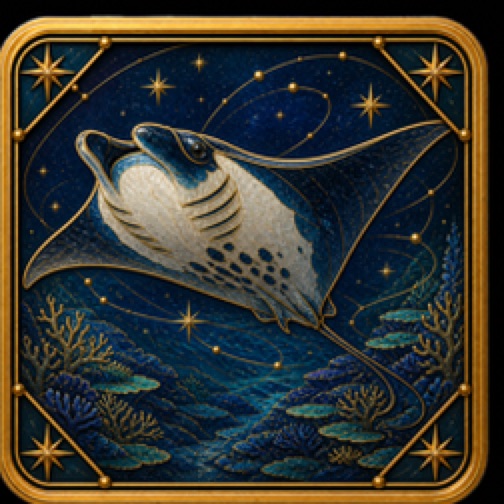
THE LIVING MIRROR · 047
Mobula alfredi · manta ray
graceful scale
# Reef Manta Ray
Reef Manta Ray teaches graceful scale: grace becomes trustworthy when it stays connected to curiosity and does not harden into avoidance of friction.
grace, curiosity, flow, avoidance of friction, diffuse boundaries, vulnerability to exploitation.
The deck uses these observations as a reflective analogy for graceful scale. The animal does not literally carry a human message, and the interpretation is labeled deck synthesis.
Reef Manta Ray occupies the role of graceful scale. Unlike Flamingo, Manta filters while ranging through three-dimensional ocean space rather than standing in dense shallow-water colonies.
The same energy that supports grace can produce avoidance of friction when safety, timing, or relationship is lost. curiosity may grow as an intelligent response to the wound, yet become overused and conceal it. Integration keeps flow available while loosening the demand to live through diffuse boundaries.
A balanced expression combines grace, curiosity, and flow. It responds to actual conditions, remains open to feedback, and stops when the purpose is met.
The Gift becomes rigid when grace turns into avoidance of friction, or when flow dominates context and relationship. The person may mistake intensity for truth.
Disconnection from this card can look like withholding grace, distrusting curiosity, or surrendering flow even when the situation calls for it.
| Context | Reflective possibility |
|---|---|
| Identity | You may be developing grace; ask whether avoidance of friction is driving or distorting it. |
| Relationships | Practice curiosity without asking another person to absorb diffuse boundaries. |
| Community | The group may need the graceful scale role, with explicit limits against vulnerability to exploitation. |
| Work and vocation | Use flow deliberately; check whether the surrounding habitat actually supports it. |
| Creativity | Let the animal's way of living suggest a form: individuals visit cleaning stations where smaller fish remove parasites. |
| Conflict | Choose the proportionate form of grace rather than escalating into avoidance of friction. |
| Healing and restoration | Restore access to curiosity through conditions of safety, time, and support; this is reflection, not treatment. |
| Decision-making | Ask which option embodies flow without repeating diffuse boundaries. |
| Change and transition | Use Reef Manta Ray as a behavioral analogy for moving between present conditions and a viable next state. |
| Leadership and responsibility | Make grace accountable to others and monitor for vulnerability to exploitation. |
These are possibilities, not predictions.
Let one problem become spacious: widen the time horizon and seek a cleaning relationship—feedback that removes drag without diminishing you.
Secular alternative: Treat the card as a behavioral analogy and journaling prompt. Never approach, feed, touch, capture, purchase, or disturb wildlife for the exercise.
No cultural or historical association is adopted for this card in the current draft. Unattributed or insufficiently specific claims were omitted rather than universalized.
The official record for Ted Andrews' Animal-Speak confirms its animal-teacher and behavior-oriented scope, and the official records for Kim Krans' deck confirm a concise animal-archetype, self-discovery, and elemental framework. The complete requested editions were not available, so this draft does not claim either author's animal-specific interpretation, wording, or page reference for Reef Manta Ray. This comparison remains pending.
Deck synthesis — medium confidence: Reef Manta Ray represents graceful scale. The synthesis derives from the verified behaviors above and adopts grace as the primary Gift and avoidance of friction as its closest Wound. It is original to this deck and may be revised after zoological, cultural, and comparative-source review.
Show Reef Manta Ray in coral reef, engaged in the behavior described here: reef mantas are large filter-feeding rays that consume plankton while swimming through productive water. Emphasize real anatomy, ecological context, and the tension between grace and avoidance of friction. Use an original composition and do not imitate any existing deck or artist.
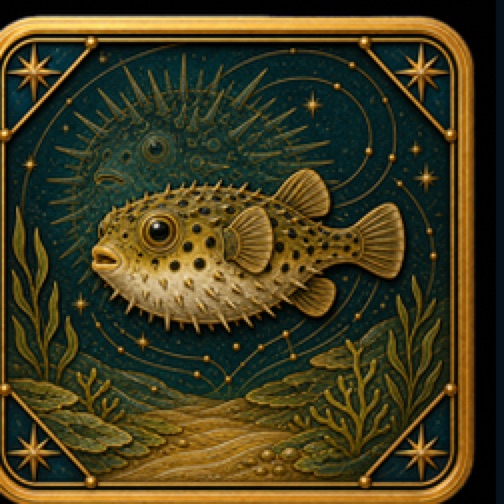
THE LIVING MIRROR · 048
Diodon hystrix · spot-fin porcupinefish
adaptive deterrence
# Spot-fin Porcupinefish
Spot-fin Porcupinefish teaches adaptive deterrence: adaptive defense becomes trustworthy when it stays connected to hidden resilience and does not harden into chronic bracing.
adaptive defense, hidden resilience, timely expansion, chronic bracing, deterrence as identity, fear-driven inflation.
The deck uses these observations as a reflective analogy for adaptive deterrence. The animal does not literally carry a human message, and the interpretation is labeled deck synthesis.
Spot-fin Porcupinefish occupies the role of adaptive deterrence. Unlike Dyeing Poison Frog, Porcupinefish escalates a hidden defense when threatened rather than broadcasting a continuous visual warning.
The same energy that supports adaptive defense can produce chronic bracing when safety, timing, or relationship is lost. hidden resilience may grow as an intelligent response to the wound, yet become overused and conceal it. Integration keeps timely expansion available while loosening the demand to live through deterrence as identity.
A balanced expression combines adaptive defense, hidden resilience, and timely expansion. It responds to actual conditions, remains open to feedback, and stops when the purpose is met.
The Gift becomes rigid when adaptive defense turns into chronic bracing, or when timely expansion dominates context and relationship. The person may mistake intensity for truth.
Disconnection from this card can look like withholding adaptive defense, distrusting hidden resilience, or surrendering timely expansion even when the situation calls for it.
| Context | Reflective possibility |
|---|---|
| Identity | You may be developing adaptive defense; ask whether chronic bracing is driving or distorting it. |
| Relationships | Practice hidden resilience without asking another person to absorb deterrence as identity. |
| Community | The group may need the adaptive deterrence role, with explicit limits against fear-driven inflation. |
| Work and vocation | Use timely expansion deliberately; check whether the surrounding habitat actually supports it. |
| Creativity | Let the animal's way of living suggest a form: they use fused, beak-like teeth to crush hard-shelled prey. |
| Conflict | Choose the proportionate form of adaptive defense rather than escalating into chronic bracing. |
| Healing and restoration | Restore access to hidden resilience through conditions of safety, time, and support; this is reflection, not treatment. |
| Decision-making | Ask which option embodies timely expansion without repeating deterrence as identity. |
| Change and transition | Use Spot-fin Porcupinefish as a behavioral analogy for moving between present conditions and a viable next state. |
| Leadership and responsibility | Make adaptive defense accountable to others and monitor for fear-driven inflation. |
These are possibilities, not predictions.
Notice where you are braced before danger arrives. Practice expanding your boundary only as much as the present threat requires, then release it.
Secular alternative: Treat the card as a behavioral analogy and journaling prompt. Never approach, feed, touch, capture, purchase, or disturb wildlife for the exercise.
No cultural or historical association is adopted for this card in the current draft. Unattributed or insufficiently specific claims were omitted rather than universalized.
The official record for Ted Andrews' Animal-Speak confirms its animal-teacher and behavior-oriented scope, and the official records for Kim Krans' deck confirm a concise animal-archetype, self-discovery, and elemental framework. The complete requested editions were not available, so this draft does not claim either author's animal-specific interpretation, wording, or page reference for Spot-fin Porcupinefish. This comparison remains pending.
Deck synthesis — medium confidence: Spot-fin Porcupinefish represents adaptive deterrence. The synthesis derives from the verified behaviors above and adopts adaptive defense as the primary Gift and chronic bracing as its closest Wound. It is original to this deck and may be revised after zoological, cultural, and comparative-source review.
Show Spot-fin Porcupinefish in coral reef, engaged in the behavior described here: porcupinefish can inflate by taking in water, raising long spines when threatened. Emphasize real anatomy, ecological context, and the tension between adaptive defense and chronic bracing. Use an original composition and do not imitate any existing deck or artist.

THE LIVING MIRROR · 049
Toxotes jaculatrix · archerfish, riflefish
calibrated aim
# Banded Archerfish
Banded Archerfish teaches calibrated aim: aim becomes trustworthy when it stays connected to learning and does not harden into overcalculation.
aim, learning, distance judgment, overcalculation, target fixation, instrumental thinking.
The deck uses these observations as a reflective analogy for calibrated aim. The animal does not literally carry a human message, and the interpretation is labeled deck synthesis.
Banded Archerfish occupies the role of calibrated aim. Unlike Peregrine Falcon, Archerfish acts across a boundary between media through calibration rather than speed and bodily pursuit.
The same energy that supports aim can produce overcalculation when safety, timing, or relationship is lost. learning may grow as an intelligent response to the wound, yet become overused and conceal it. Integration keeps distance judgment available while loosening the demand to live through target fixation.
A balanced expression combines aim, learning, and distance judgment. It responds to actual conditions, remains open to feedback, and stops when the purpose is met.
The Gift becomes rigid when aim turns into overcalculation, or when distance judgment dominates context and relationship. The person may mistake intensity for truth.
Disconnection from this card can look like withholding aim, distrusting learning, or surrendering distance judgment even when the situation calls for it.
| Context | Reflective possibility |
|---|---|
| Identity | You may be developing aim; ask whether overcalculation is driving or distorting it. |
| Relationships | Practice learning without asking another person to absorb target fixation. |
| Community | The group may need the calibrated aim role, with explicit limits against instrumental thinking. |
| Work and vocation | Use distance judgment deliberately; check whether the surrounding habitat actually supports it. |
| Creativity | Let the animal's way of living suggest a form: they compensate for optical refraction and adjust aim with distance and angle. |
| Conflict | Choose the proportionate form of aim rather than escalating into overcalculation. |
| Healing and restoration | Restore access to learning through conditions of safety, time, and support; this is reflection, not treatment. |
| Decision-making | Ask which option embodies distance judgment without repeating target fixation. |
| Change and transition | Use Banded Archerfish as a behavioral analogy for moving between present conditions and a viable next state. |
| Leadership and responsibility | Make aim accountable to others and monitor for instrumental thinking. |
These are possibilities, not predictions.
Define a target and the medium between you and it. Make one measured attempt, observe the miss without shame, and recalibrate.
Secular alternative: Treat the card as a behavioral analogy and journaling prompt. Never approach, feed, touch, capture, purchase, or disturb wildlife for the exercise.
No cultural or historical association is adopted for this card in the current draft. Unattributed or insufficiently specific claims were omitted rather than universalized.
The official record for Ted Andrews' Animal-Speak confirms its animal-teacher and behavior-oriented scope, and the official records for Kim Krans' deck confirm a concise animal-archetype, self-discovery, and elemental framework. The complete requested editions were not available, so this draft does not claim either author's animal-specific interpretation, wording, or page reference for Banded Archerfish. This comparison remains pending.
Deck synthesis — medium confidence: Banded Archerfish represents calibrated aim. The synthesis derives from the verified behaviors above and adopts aim as the primary Gift and overcalculation as its closest Wound. It is original to this deck and may be revised after zoological, cultural, and comparative-source review.
Show Banded Archerfish in mangrove, engaged in the behavior described here: archerfish shoot controlled jets of water to knock insects and other prey from vegetation. Emphasize real anatomy, ecological context, and the tension between aim and overcalculation. Use an original composition and do not imitate any existing deck or artist.

THE LIVING MIRROR · 050
Apis mellifera · honey bee
distributed cooperation
# Western Honey Bee
Western Honey Bee teaches distributed cooperation: cooperation becomes trustworthy when it stays connected to communication and does not harden into overwork.
cooperation, communication, pollination, overwork, role confinement, defensive collectivism.
The deck uses these observations as a reflective analogy for distributed cooperation. The animal does not literally carry a human message, and the interpretation is labeled deck synthesis.
Western Honey Bee occupies the role of distributed cooperation. Unlike Leafcutter Ant, Bee centers mobile pollination and dance communication between flowers and hive rather than fungus farming and trail infrastructure.
The same energy that supports cooperation can produce overwork when safety, timing, or relationship is lost. communication may grow as an intelligent response to the wound, yet become overused and conceal it. Integration keeps pollination available while loosening the demand to live through role confinement.
A balanced expression combines cooperation, communication, and pollination. It responds to actual conditions, remains open to feedback, and stops when the purpose is met.
The Gift becomes rigid when cooperation turns into overwork, or when pollination dominates context and relationship. The person may mistake intensity for truth.
Disconnection from this card can look like withholding cooperation, distrusting communication, or surrendering pollination even when the situation calls for it.
| Context | Reflective possibility |
|---|---|
| Identity | You may be developing cooperation; ask whether overwork is driving or distorting it. |
| Relationships | Practice communication without asking another person to absorb role confinement. |
| Community | The group may need the distributed cooperation role, with explicit limits against defensive collectivism. |
| Work and vocation | Use pollination deliberately; check whether the surrounding habitat actually supports it. |
| Creativity | Let the animal's way of living suggest a form: workers communicate profitable food locations through dances, scent, touch, and sound. |
| Conflict | Choose the proportionate form of cooperation rather than escalating into overwork. |
| Healing and restoration | Restore access to communication through conditions of safety, time, and support; this is reflection, not treatment. |
| Decision-making | Ask which option embodies pollination without repeating role confinement. |
| Change and transition | Use Western Honey Bee as a behavioral analogy for moving between present conditions and a viable next state. |
| Leadership and responsibility | Make cooperation accountable to others and monitor for defensive collectivism. |
These are possibilities, not predictions.
Map a shared task by role, information, and rest. Make one invisible contribution visible, and remove one expectation that treats a person as only their function.
Secular alternative: Treat the card as a behavioral analogy and journaling prompt. Never approach, feed, touch, capture, purchase, or disturb wildlife for the exercise.
No cultural or historical association is adopted for this card in the current draft. Unattributed or insufficiently specific claims were omitted rather than universalized.
The official record for Ted Andrews' Animal-Speak confirms its animal-teacher and behavior-oriented scope, and the official records for Kim Krans' deck confirm a concise animal-archetype, self-discovery, and elemental framework. The complete requested editions were not available, so this draft does not claim either author's animal-specific interpretation, wording, or page reference for Western Honey Bee. This comparison remains pending.
Deck synthesis — medium confidence: Western Honey Bee represents distributed cooperation. The synthesis derives from the verified behaviors above and adopts cooperation as the primary Gift and overwork as its closest Wound. It is original to this deck and may be revised after zoological, cultural, and comparative-source review.
Show Western Honey Bee in flowering habitat, engaged in the behavior described here: honey bee colonies divide work among queens, workers, and drones, with worker tasks changing across life. Emphasize real anatomy, ecological context, and the tension between cooperation and overwork. Use an original composition and do not imitate any existing deck or artist.

THE LIVING MIRROR · 051
Danaus plexippus · monarch
generational transformation
# Monarch Butterfly
Monarch Butterfly teaches generational transformation: transformation becomes trustworthy when it stays connected to migration and does not harden into fragility idealization.
transformation, migration, generational continuity, fragility idealization, endless transition, loss of roots.
The deck uses these observations as a reflective analogy for generational transformation. The animal does not literally carry a human message, and the interpretation is labeled deck synthesis.
Monarch Butterfly occupies the role of generational transformation. Unlike Atlantic Salmon, Monarch’s return emerges across generations rather than one individual’s round trip.
The same energy that supports transformation can produce fragility idealization when safety, timing, or relationship is lost. migration may grow as an intelligent response to the wound, yet become overused and conceal it. Integration keeps generational continuity available while loosening the demand to live through endless transition.
A balanced expression combines transformation, migration, and generational continuity. It responds to actual conditions, remains open to feedback, and stops when the purpose is met.
The Gift becomes rigid when transformation turns into fragility idealization, or when generational continuity dominates context and relationship. The person may mistake intensity for truth.
Disconnection from this card can look like withholding transformation, distrusting migration, or surrendering generational continuity even when the situation calls for it.
| Context | Reflective possibility |
|---|---|
| Identity | You may be developing transformation; ask whether fragility idealization is driving or distorting it. |
| Relationships | Practice migration without asking another person to absorb endless transition. |
| Community | The group may need the generational transformation role, with explicit limits against loss of roots. |
| Work and vocation | Use generational continuity deliberately; check whether the surrounding habitat actually supports it. |
| Creativity | Let the animal's way of living suggest a form: the long north american migration is completed across multiple generations, with one long-lived generation reaching overwintering sites. |
| Conflict | Choose the proportionate form of transformation rather than escalating into fragility idealization. |
| Healing and restoration | Restore access to migration through conditions of safety, time, and support; this is reflection, not treatment. |
| Decision-making | Ask which option embodies generational continuity without repeating endless transition. |
| Change and transition | Use Monarch Butterfly as a behavioral analogy for moving between present conditions and a viable next state. |
| Leadership and responsibility | Make transformation accountable to others and monitor for loss of roots. |
These are possibilities, not predictions.
Name a journey you will not finish alone. Leave one clear resource, instruction, or habitat for the next person or phase.
Secular alternative: Treat the card as a behavioral analogy and journaling prompt. Never approach, feed, touch, capture, purchase, or disturb wildlife for the exercise.
No cultural or historical association is adopted for this card in the current draft. Unattributed or insufficiently specific claims were omitted rather than universalized.
The official record for Ted Andrews' Animal-Speak confirms its animal-teacher and behavior-oriented scope, and the official records for Kim Krans' deck confirm a concise animal-archetype, self-discovery, and elemental framework. The complete requested editions were not available, so this draft does not claim either author's animal-specific interpretation, wording, or page reference for Monarch Butterfly. This comparison remains pending.
Deck synthesis — medium confidence: Monarch Butterfly represents generational transformation. The synthesis derives from the verified behaviors above and adopts transformation as the primary Gift and fragility idealization as its closest Wound. It is original to this deck and may be revised after zoological, cultural, and comparative-source review.
Show Monarch Butterfly in meadow, engaged in the behavior described here: monarch larvae depend on milkweeds, while adults feed from many flowers. Emphasize real anatomy, ecological context, and the tension between transformation and fragility idealization. Use an original composition and do not imitate any existing deck or artist.

THE LIVING MIRROR · 052
Anax junius · green darner, dragonfly
life-stage agility
# Common Green Darner
Common Green Darner teaches life-stage agility: aerial agility becomes trustworthy when it stays connected to life-stage transformation and does not harden into restless motion.
aerial agility, life-stage transformation, territorial clarity, restless motion, competitive vigilance, detachment from origins.
The deck uses these observations as a reflective analogy for life-stage agility. The animal does not literally carry a human message, and the interpretation is labeled deck synthesis.
Common Green Darner occupies the role of life-stage agility. Unlike Monarch, Darner’s transformation connects water to air and predatory roles rather than host-plant specialization and generational migration.
The same energy that supports aerial agility can produce restless motion when safety, timing, or relationship is lost. life-stage transformation may grow as an intelligent response to the wound, yet become overused and conceal it. Integration keeps territorial clarity available while loosening the demand to live through competitive vigilance.
A balanced expression combines aerial agility, life-stage transformation, and territorial clarity. It responds to actual conditions, remains open to feedback, and stops when the purpose is met.
The Gift becomes rigid when aerial agility turns into restless motion, or when territorial clarity dominates context and relationship. The person may mistake intensity for truth.
Disconnection from this card can look like withholding aerial agility, distrusting life-stage transformation, or surrendering territorial clarity even when the situation calls for it.
| Context | Reflective possibility |
|---|---|
| Identity | You may be developing aerial agility; ask whether restless motion is driving or distorting it. |
| Relationships | Practice life-stage transformation without asking another person to absorb competitive vigilance. |
| Community | The group may need the life-stage agility role, with explicit limits against detachment from origins. |
| Work and vocation | Use territorial clarity deliberately; check whether the surrounding habitat actually supports it. |
| Creativity | Let the animal's way of living suggest a form: some populations migrate over long distances, while others are resident. |
| Conflict | Choose the proportionate form of aerial agility rather than escalating into restless motion. |
| Healing and restoration | Restore access to life-stage transformation through conditions of safety, time, and support; this is reflection, not treatment. |
| Decision-making | Ask which option embodies territorial clarity without repeating competitive vigilance. |
| Change and transition | Use Common Green Darner as a behavioral analogy for moving between present conditions and a viable next state. |
| Leadership and responsibility | Make aerial agility accountable to others and monitor for detachment from origins. |
These are possibilities, not predictions.
Review a skill learned in an earlier life stage. Bring it into a new medium without pretending you have no aquatic past.
Secular alternative: Treat the card as a behavioral analogy and journaling prompt. Never approach, feed, touch, capture, purchase, or disturb wildlife for the exercise.
No cultural or historical association is adopted for this card in the current draft. Unattributed or insufficiently specific claims were omitted rather than universalized.
The official record for Ted Andrews' Animal-Speak confirms its animal-teacher and behavior-oriented scope, and the official records for Kim Krans' deck confirm a concise animal-archetype, self-discovery, and elemental framework. The complete requested editions were not available, so this draft does not claim either author's animal-specific interpretation, wording, or page reference for Common Green Darner. This comparison remains pending.
Deck synthesis — medium confidence: Common Green Darner represents life-stage agility. The synthesis derives from the verified behaviors above and adopts aerial agility as the primary Gift and restless motion as its closest Wound. It is original to this deck and may be revised after zoological, cultural, and comparative-source review.
Show Common Green Darner in pond, engaged in the behavior described here: green darner larvae are aquatic predators; adults are powerful aerial hunters. Emphasize real anatomy, ecological context, and the tension between aerial agility and restless motion. Use an original composition and do not imitate any existing deck or artist.

THE LIVING MIRROR · 053
Scarabaeus sacer · dung beetle, scarab beetle
renewal through what is discarded
# Sacred Scarab
Sacred Scarab teaches renewal through what is discarded: renewal becomes trustworthy when it stays connected to persistence and does not harden into compulsive labor.
renewal, persistence, orientation, compulsive labor, false purity, recycling the past without change.
The deck uses these observations as a reflective analogy for renewal through what is discarded. The animal does not literally carry a human message, and the interpretation is labeled deck synthesis.
Sacred Scarab occupies the role of renewal through what is discarded. Unlike Earthworm, Scarab deliberately gathers and relocates concentrated waste rather than continuously processing soil from within.
The same energy that supports renewal can produce compulsive labor when safety, timing, or relationship is lost. persistence may grow as an intelligent response to the wound, yet become overused and conceal it. Integration keeps orientation available while loosening the demand to live through false purity.
A balanced expression combines renewal, persistence, and orientation. It responds to actual conditions, remains open to feedback, and stops when the purpose is met.
The Gift becomes rigid when renewal turns into compulsive labor, or when orientation dominates context and relationship. The person may mistake intensity for truth.
Disconnection from this card can look like withholding renewal, distrusting persistence, or surrendering orientation even when the situation calls for it.
| Context | Reflective possibility |
|---|---|
| Identity | You may be developing renewal; ask whether compulsive labor is driving or distorting it. |
| Relationships | Practice persistence without asking another person to absorb false purity. |
| Community | The group may need the renewal through what is discarded role, with explicit limits against recycling the past without change. |
| Work and vocation | Use orientation deliberately; check whether the surrounding habitat actually supports it. |
| Creativity | Let the animal's way of living suggest a form: they navigate while moving a ball, using celestial and visual cues to maintain direction. |
| Conflict | Choose the proportionate form of renewal rather than escalating into compulsive labor. |
| Healing and restoration | Restore access to persistence through conditions of safety, time, and support; this is reflection, not treatment. |
| Decision-making | Ask which option embodies orientation without repeating false purity. |
| Change and transition | Use Sacred Scarab as a behavioral analogy for moving between present conditions and a viable next state. |
| Leadership and responsibility | Make renewal accountable to others and monitor for recycling the past without change. |
These are possibilities, not predictions.
Choose one discarded experience and extract a usable lesson. Bury or release the remainder instead of rolling the whole past indefinitely.
Secular alternative: Treat the card as a behavioral analogy and journaling prompt. Never approach, feed, touch, capture, purchase, or disturb wildlife for the exercise.
| Tradition or source | Association | Period or context | Provenance | Confidence | Citation |
|---|---|---|---|---|---|
| Ancient Egypt | The scarab was associated with the sun moving across the sky and with rebirth in this British Museum educational record. | Ancient Egyptian symbolism | historical | high | British Museum, *Symbols of the Pharaoh* |
The official record for Ted Andrews' Animal-Speak confirms its animal-teacher and behavior-oriented scope, and the official records for Kim Krans' deck confirm a concise animal-archetype, self-discovery, and elemental framework. The complete requested editions were not available, so this draft does not claim either author's animal-specific interpretation, wording, or page reference for Sacred Scarab. This comparison remains pending.
Deck synthesis — medium confidence: Sacred Scarab represents renewal through what is discarded. The synthesis derives from the verified behaviors above and adopts renewal as the primary Gift and compulsive labor as its closest Wound. It is original to this deck and may be revised after zoological, cultural, and comparative-source review.
Show Sacred Scarab in dung-rich grassland, engaged in the behavior described here: sacred scarabs form and roll dung balls used as food or brood provisions. Emphasize real anatomy, ecological context, and the tension between renewal and compulsive labor. Use an original composition and do not imitate any existing deck or artist.

THE LIVING MIRROR · 054
Mantis religiosa · praying mantis
poised response
# European Mantis
European Mantis teaches poised response: stillness becomes trustworthy when it stays connected to precise response and does not harden into predatory patience.
stillness, precise response, embodied attention, predatory patience, emotional detachment, waiting too long.
The deck uses these observations as a reflective analogy for poised response. The animal does not literally carry a human message, and the interpretation is labeled deck synthesis.
European Mantis occupies the role of poised response. Unlike Great Horned Owl, Mantis brings still attention into a small exposed body and immediate reach rather than nocturnal flight.
The same energy that supports stillness can produce predatory patience when safety, timing, or relationship is lost. precise response may grow as an intelligent response to the wound, yet become overused and conceal it. Integration keeps embodied attention available while loosening the demand to live through emotional detachment.
A balanced expression combines stillness, precise response, and embodied attention. It responds to actual conditions, remains open to feedback, and stops when the purpose is met.
The Gift becomes rigid when stillness turns into predatory patience, or when embodied attention dominates context and relationship. The person may mistake intensity for truth.
Disconnection from this card can look like withholding stillness, distrusting precise response, or surrendering embodied attention even when the situation calls for it.
| Context | Reflective possibility |
|---|---|
| Identity | You may be developing stillness; ask whether predatory patience is driving or distorting it. |
| Relationships | Practice precise response without asking another person to absorb emotional detachment. |
| Community | The group may need the poised response role, with explicit limits against waiting too long. |
| Work and vocation | Use embodied attention deliberately; check whether the surrounding habitat actually supports it. |
| Creativity | Let the animal's way of living suggest a form: they track movement visually and can respond with sudden, precise strikes. |
| Conflict | Choose the proportionate form of stillness rather than escalating into predatory patience. |
| Healing and restoration | Restore access to precise response through conditions of safety, time, and support; this is reflection, not treatment. |
| Decision-making | Ask which option embodies embodied attention without repeating emotional detachment. |
| Change and transition | Use European Mantis as a behavioral analogy for moving between present conditions and a viable next state. |
| Leadership and responsibility | Make stillness accountable to others and monitor for waiting too long. |
These are possibilities, not predictions.
Hold still for one minute while feeling your feet and hands. Then act on one visible opening before stillness becomes avoidance.
Secular alternative: Treat the card as a behavioral analogy and journaling prompt. Never approach, feed, touch, capture, purchase, or disturb wildlife for the exercise.
No cultural or historical association is adopted for this card in the current draft. Unattributed or insufficiently specific claims were omitted rather than universalized.
The official record for Ted Andrews' Animal-Speak confirms its animal-teacher and behavior-oriented scope, and the official records for Kim Krans' deck confirm a concise animal-archetype, self-discovery, and elemental framework. The complete requested editions were not available, so this draft does not claim either author's animal-specific interpretation, wording, or page reference for European Mantis. This comparison remains pending.
Deck synthesis — medium confidence: European Mantis represents poised response. The synthesis derives from the verified behaviors above and adopts stillness as the primary Gift and predatory patience as its closest Wound. It is original to this deck and may be revised after zoological, cultural, and comparative-source review.
Show European Mantis in grassland, engaged in the behavior described here: mantises use grasping forelegs, mobile heads, camouflage, and stillness to ambush prey. Emphasize real anatomy, ecological context, and the tension between stillness and predatory patience. Use an original composition and do not imitate any existing deck or artist.

THE LIVING MIRROR · 055
Photinus pyralis · lightning bug, firefly
timely illumination
# Common Eastern Firefly
Common Eastern Firefly teaches timely illumination: timely signal becomes trustworthy when it stays connected to modest illumination and does not harden into approval-seeking display.
timely signal, modest illumination, authentic attraction, approval-seeking display, fleeting focus, visibility risk.
The deck uses these observations as a reflective analogy for timely illumination. The animal does not literally carry a human message, and the interpretation is labeled deck synthesis.
Common Eastern Firefly occupies the role of timely illumination. Unlike Electric Eel, Firefly sends visible social signals into darkness rather than using electricity to map and subdue nearby space.
The same energy that supports timely signal can produce approval-seeking display when safety, timing, or relationship is lost. modest illumination may grow as an intelligent response to the wound, yet become overused and conceal it. Integration keeps authentic attraction available while loosening the demand to live through fleeting focus.
A balanced expression combines timely signal, modest illumination, and authentic attraction. It responds to actual conditions, remains open to feedback, and stops when the purpose is met.
The Gift becomes rigid when timely signal turns into approval-seeking display, or when authentic attraction dominates context and relationship. The person may mistake intensity for truth.
Disconnection from this card can look like withholding timely signal, distrusting modest illumination, or surrendering authentic attraction even when the situation calls for it.
| Context | Reflective possibility |
|---|---|
| Identity | You may be developing timely signal; ask whether approval-seeking display is driving or distorting it. |
| Relationships | Practice modest illumination without asking another person to absorb fleeting focus. |
| Community | The group may need the timely illumination role, with explicit limits against visibility risk. |
| Work and vocation | Use authentic attraction deliberately; check whether the surrounding habitat actually supports it. |
| Creativity | Let the animal's way of living suggest a form: larvae live in or near soil and prey on small invertebrates, while adult feeding varies. |
| Conflict | Choose the proportionate form of timely signal rather than escalating into approval-seeking display. |
| Healing and restoration | Restore access to modest illumination through conditions of safety, time, and support; this is reflection, not treatment. |
| Decision-making | Ask which option embodies authentic attraction without repeating fleeting focus. |
| Change and transition | Use Common Eastern Firefly as a behavioral analogy for moving between present conditions and a viable next state. |
| Leadership and responsibility | Make timely signal accountable to others and monitor for visibility risk. |
These are possibilities, not predictions.
Craft one brief signal that says what you want without overexplaining. Send it where it can actually be seen, then allow response time.
Secular alternative: Treat the card as a behavioral analogy and journaling prompt. Never approach, feed, touch, capture, purchase, or disturb wildlife for the exercise.
No cultural or historical association is adopted for this card in the current draft. Unattributed or insufficiently specific claims were omitted rather than universalized.
The official record for Ted Andrews' Animal-Speak confirms its animal-teacher and behavior-oriented scope, and the official records for Kim Krans' deck confirm a concise animal-archetype, self-discovery, and elemental framework. The complete requested editions were not available, so this draft does not claim either author's animal-specific interpretation, wording, or page reference for Common Eastern Firefly. This comparison remains pending.
Deck synthesis — medium confidence: Common Eastern Firefly represents timely illumination. The synthesis derives from the verified behaviors above and adopts timely signal as the primary Gift and approval-seeking display as its closest Wound. It is original to this deck and may be revised after zoological, cultural, and comparative-source review.
Show Common Eastern Firefly in meadow, engaged in the behavior described here: adult fireflies produce species-specific bioluminescent courtship flashes through controlled chemistry. Emphasize real anatomy, ecological context, and the tension between timely signal and approval-seeking display. Use an original composition and do not imitate any existing deck or artist.

THE LIVING MIRROR · 056
Atta cephalotes · leaf-cutting ant
cultivated infrastructure
# Leafcutter Ant
Leafcutter Ant teaches cultivated infrastructure: distributed work becomes trustworthy when it stays connected to cultivation and does not harden into self-erasure in labor.
distributed work, cultivation, infrastructure, self-erasure in labor, rigid hierarchy, relentless extraction.
The deck uses these observations as a reflective analogy for cultivated infrastructure. The animal does not literally carry a human message, and the interpretation is labeled deck synthesis.
Leafcutter Ant occupies the role of cultivated infrastructure. Unlike Beaver, Leafcutter Ant builds a vast specialized production system whose agriculture depends on many small roles.
The same energy that supports distributed work can produce self-erasure in labor when safety, timing, or relationship is lost. cultivation may grow as an intelligent response to the wound, yet become overused and conceal it. Integration keeps infrastructure available while loosening the demand to live through rigid hierarchy.
A balanced expression combines distributed work, cultivation, and infrastructure. It responds to actual conditions, remains open to feedback, and stops when the purpose is met.
The Gift becomes rigid when distributed work turns into self-erasure in labor, or when infrastructure dominates context and relationship. The person may mistake intensity for truth.
Disconnection from this card can look like withholding distributed work, distrusting cultivation, or surrendering infrastructure even when the situation calls for it.
| Context | Reflective possibility |
|---|---|
| Identity | You may be developing distributed work; ask whether self-erasure in labor is driving or distorting it. |
| Relationships | Practice cultivation without asking another person to absorb rigid hierarchy. |
| Community | The group may need the cultivated infrastructure role, with explicit limits against relentless extraction. |
| Work and vocation | Use infrastructure deliberately; check whether the surrounding habitat actually supports it. |
| Creativity | Let the animal's way of living suggest a form: colonies divide labor by size and task and maintain trails, chambers, waste areas, and fungus gardens. |
| Conflict | Choose the proportionate form of distributed work rather than escalating into self-erasure in labor. |
| Healing and restoration | Restore access to cultivation through conditions of safety, time, and support; this is reflection, not treatment. |
| Decision-making | Ask which option embodies infrastructure without repeating rigid hierarchy. |
| Change and transition | Use Leafcutter Ant as a behavioral analogy for moving between present conditions and a viable next state. |
| Leadership and responsibility | Make distributed work accountable to others and monitor for relentless extraction. |
These are possibilities, not predictions.
Trace one product back through every person and resource that sustains it. Improve one labor condition before asking the system for more output.
Secular alternative: Treat the card as a behavioral analogy and journaling prompt. Never approach, feed, touch, capture, purchase, or disturb wildlife for the exercise.
No cultural or historical association is adopted for this card in the current draft. Unattributed or insufficiently specific claims were omitted rather than universalized.
The official record for Ted Andrews' Animal-Speak confirms its animal-teacher and behavior-oriented scope, and the official records for Kim Krans' deck confirm a concise animal-archetype, self-discovery, and elemental framework. The complete requested editions were not available, so this draft does not claim either author's animal-specific interpretation, wording, or page reference for Leafcutter Ant. This comparison remains pending.
Deck synthesis — medium confidence: Leafcutter Ant represents cultivated infrastructure. The synthesis derives from the verified behaviors above and adopts distributed work as the primary Gift and self-erasure in labor as its closest Wound. It is original to this deck and may be revised after zoological, cultural, and comparative-source review.
Show Leafcutter Ant in tropical forest, engaged in the behavior described here: leafcutter ants cut vegetation to provision a cultivated fungus rather than eating the leaves directly. Emphasize real anatomy, ecological context, and the tension between distributed work and self-erasure in labor. Use an original composition and do not imitate any existing deck or artist.

THE LIVING MIRROR · 057
Araneus diadematus · European garden spider
sensitive pattern-maker
# Cross Orbweaver
Cross Orbweaver teaches sensitive pattern-maker: pattern construction becomes trustworthy when it stays connected to repair and does not harden into entanglement.
pattern construction, repair, vibrational sensitivity, entanglement, perfectionism, waiting for life.
The deck uses these observations as a reflective analogy for sensitive pattern-maker. The animal does not literally carry a human message, and the interpretation is labeled deck synthesis.
Cross Orbweaver occupies the role of sensitive pattern-maker. Unlike Leafcutter Ant, Orbweaver creates and renews one sensitive individual network rather than a collective infrastructure.
The same energy that supports pattern construction can produce entanglement when safety, timing, or relationship is lost. repair may grow as an intelligent response to the wound, yet become overused and conceal it. Integration keeps vibrational sensitivity available while loosening the demand to live through perfectionism.
A balanced expression combines pattern construction, repair, and vibrational sensitivity. It responds to actual conditions, remains open to feedback, and stops when the purpose is met.
The Gift becomes rigid when pattern construction turns into entanglement, or when vibrational sensitivity dominates context and relationship. The person may mistake intensity for truth.
Disconnection from this card can look like withholding pattern construction, distrusting repair, or surrendering vibrational sensitivity even when the situation calls for it.
| Context | Reflective possibility |
|---|---|
| Identity | You may be developing pattern construction; ask whether entanglement is driving or distorting it. |
| Relationships | Practice repair without asking another person to absorb perfectionism. |
| Community | The group may need the sensitive pattern-maker role, with explicit limits against waiting for life. |
| Work and vocation | Use vibrational sensitivity deliberately; check whether the surrounding habitat actually supports it. |
| Creativity | Let the animal's way of living suggest a form: many rebuild webs frequently and recycle silk by eating old strands. |
| Conflict | Choose the proportionate form of pattern construction rather than escalating into entanglement. |
| Healing and restoration | Restore access to repair through conditions of safety, time, and support; this is reflection, not treatment. |
| Decision-making | Ask which option embodies vibrational sensitivity without repeating perfectionism. |
| Change and transition | Use Cross Orbweaver as a behavioral analogy for moving between present conditions and a viable next state. |
| Leadership and responsibility | Make pattern construction accountable to others and monitor for waiting for life. |
These are possibilities, not predictions.
Draw the network around a problem: anchors, lines, gaps, and signals. Repair one connection and recycle one obsolete structure.
Secular alternative: Treat the card as a behavioral analogy and journaling prompt. Never approach, feed, touch, capture, purchase, or disturb wildlife for the exercise.
No cultural or historical association is adopted for this card in the current draft. Unattributed or insufficiently specific claims were omitted rather than universalized.
The official record for Ted Andrews' Animal-Speak confirms its animal-teacher and behavior-oriented scope, and the official records for Kim Krans' deck confirm a concise animal-archetype, self-discovery, and elemental framework. The complete requested editions were not available, so this draft does not claim either author's animal-specific interpretation, wording, or page reference for Cross Orbweaver. This comparison remains pending.
Deck synthesis — medium confidence: Cross Orbweaver represents sensitive pattern-maker. The synthesis derives from the verified behaviors above and adopts pattern construction as the primary Gift and entanglement as its closest Wound. It is original to this deck and may be revised after zoological, cultural, and comparative-source review.
Show Cross Orbweaver in garden, engaged in the behavior described here: cross orbweavers construct radial orb webs that translate prey movement into vibration. Emphasize real anatomy, ecological context, and the tension between pattern construction and entanglement. Use an original composition and do not imitate any existing deck or artist.

THE LIVING MIRROR · 058
Pandinus imperator · scorpion
calibrated defense
# Emperor Scorpion
Emperor Scorpion teaches calibrated defense: calibrated defense becomes trustworthy when it stays connected to nocturnal resilience and does not harden into guardedness.
calibrated defense, nocturnal resilience, maternal protection, guardedness, retaliatory posture, hidden vulnerability.
The deck uses these observations as a reflective analogy for calibrated defense. The animal does not literally carry a human message, and the interpretation is labeled deck synthesis.
Emperor Scorpion occupies the role of calibrated defense. Unlike King Cobra, Scorpion layers armor, pincers, posture, and venom in close-range defense rather than tall visual warning.
The same energy that supports calibrated defense can produce guardedness when safety, timing, or relationship is lost. nocturnal resilience may grow as an intelligent response to the wound, yet become overused and conceal it. Integration keeps maternal protection available while loosening the demand to live through retaliatory posture.
A balanced expression combines calibrated defense, nocturnal resilience, and maternal protection. It responds to actual conditions, remains open to feedback, and stops when the purpose is met.
The Gift becomes rigid when calibrated defense turns into guardedness, or when maternal protection dominates context and relationship. The person may mistake intensity for truth.
Disconnection from this card can look like withholding calibrated defense, distrusting nocturnal resilience, or surrendering maternal protection even when the situation calls for it.
| Context | Reflective possibility |
|---|---|
| Identity | You may be developing calibrated defense; ask whether guardedness is driving or distorting it. |
| Relationships | Practice nocturnal resilience without asking another person to absorb retaliatory posture. |
| Community | The group may need the calibrated defense role, with explicit limits against hidden vulnerability. |
| Work and vocation | Use maternal protection deliberately; check whether the surrounding habitat actually supports it. |
| Creativity | Let the animal's way of living suggest a form: large pincers are central to prey handling and defense; venom is not their only strategy. |
| Conflict | Choose the proportionate form of calibrated defense rather than escalating into guardedness. |
| Healing and restoration | Restore access to nocturnal resilience through conditions of safety, time, and support; this is reflection, not treatment. |
| Decision-making | Ask which option embodies maternal protection without repeating retaliatory posture. |
| Change and transition | Use Emperor Scorpion as a behavioral analogy for moving between present conditions and a viable next state. |
| Leadership and responsibility | Make calibrated defense accountable to others and monitor for hidden vulnerability. |
These are possibilities, not predictions.
List your defensive layers from least to most costly. Practice the mildest one that can actually protect the boundary.
Secular alternative: Treat the card as a behavioral analogy and journaling prompt. Never approach, feed, touch, capture, purchase, or disturb wildlife for the exercise.
No cultural or historical association is adopted for this card in the current draft. Unattributed or insufficiently specific claims were omitted rather than universalized.
The official record for Ted Andrews' Animal-Speak confirms its animal-teacher and behavior-oriented scope, and the official records for Kim Krans' deck confirm a concise animal-archetype, self-discovery, and elemental framework. The complete requested editions were not available, so this draft does not claim either author's animal-specific interpretation, wording, or page reference for Emperor Scorpion. This comparison remains pending.
Deck synthesis — medium confidence: Emperor Scorpion represents calibrated defense. The synthesis derives from the verified behaviors above and adopts calibrated defense as the primary Gift and guardedness as its closest Wound. It is original to this deck and may be revised after zoological, cultural, and comparative-source review.
Show Emperor Scorpion in tropical forest floor, engaged in the behavior described here: emperor scorpions shelter in burrows and use sensory hairs and comb-like pectines to detect substrate information. Emphasize real anatomy, ecological context, and the tension between calibrated defense and guardedness. Use an original composition and do not imitate any existing deck or artist.

THE LIVING MIRROR · 059
Octopus vulgaris · octopus
flexible distributed intelligence
# Common Octopus
Common Octopus teaches flexible distributed intelligence: flexible intelligence becomes trustworthy when it stays connected to adaptive expression and does not harden into evasion.
flexible intelligence, adaptive expression, escape skill, evasion, identity shifting, isolation.
The deck uses these observations as a reflective analogy for flexible distributed intelligence. The animal does not literally carry a human message, and the interpretation is labeled deck synthesis.
Common Octopus occupies the role of flexible distributed intelligence. Unlike Chameleon, Octopus changes color, texture, shape, route, and object use in a highly manipulative aquatic body.
The same energy that supports flexible intelligence can produce evasion when safety, timing, or relationship is lost. adaptive expression may grow as an intelligent response to the wound, yet become overused and conceal it. Integration keeps escape skill available while loosening the demand to live through identity shifting.
A balanced expression combines flexible intelligence, adaptive expression, and escape skill. It responds to actual conditions, remains open to feedback, and stops when the purpose is met.
The Gift becomes rigid when flexible intelligence turns into evasion, or when escape skill dominates context and relationship. The person may mistake intensity for truth.
Disconnection from this card can look like withholding flexible intelligence, distrusting adaptive expression, or surrendering escape skill even when the situation calls for it.
| Context | Reflective possibility |
|---|---|
| Identity | You may be developing flexible intelligence; ask whether evasion is driving or distorting it. |
| Relationships | Practice adaptive expression without asking another person to absorb identity shifting. |
| Community | The group may need the flexible distributed intelligence role, with explicit limits against isolation. |
| Work and vocation | Use escape skill deliberately; check whether the surrounding habitat actually supports it. |
| Creativity | Let the animal's way of living suggest a form: they change skin color and texture, squeeze through small openings, use dens, and solve novel problems. |
| Conflict | Choose the proportionate form of flexible intelligence rather than escalating into evasion. |
| Healing and restoration | Restore access to adaptive expression through conditions of safety, time, and support; this is reflection, not treatment. |
| Decision-making | Ask which option embodies escape skill without repeating identity shifting. |
| Change and transition | Use Common Octopus as a behavioral analogy for moving between present conditions and a viable next state. |
| Leadership and responsibility | Make flexible intelligence accountable to others and monitor for isolation. |
These are possibilities, not predictions.
Solve one problem with your environment rather than force: rearrange tools, change route, or create cover. Then state your identity without camouflage.
Secular alternative: Treat the card as a behavioral analogy and journaling prompt. Never approach, feed, touch, capture, purchase, or disturb wildlife for the exercise.
No cultural or historical association is adopted for this card in the current draft. Unattributed or insufficiently specific claims were omitted rather than universalized.
The official record for Ted Andrews' Animal-Speak confirms its animal-teacher and behavior-oriented scope, and the official records for Kim Krans' deck confirm a concise animal-archetype, self-discovery, and elemental framework. The complete requested editions were not available, so this draft does not claim either author's animal-specific interpretation, wording, or page reference for Common Octopus. This comparison remains pending.
Deck synthesis — medium confidence: Common Octopus represents flexible distributed intelligence. The synthesis derives from the verified behaviors above and adopts flexible intelligence as the primary Gift and evasion as its closest Wound. It is original to this deck and may be revised after zoological, cultural, and comparative-source review.
Show Common Octopus in rocky reef, engaged in the behavior described here: octopuses explore and manipulate with eight arms rich in sensory and neural capacity. Emphasize real anatomy, ecological context, and the tension between flexible intelligence and evasion. Use an original composition and do not imitate any existing deck or artist.

THE LIVING MIRROR · 060
Nautilus pompilius · nautilus
chambered continuity
# Chambered Nautilus
Chambered Nautilus teaches chambered continuity: buoyancy regulation becomes trustworthy when it stays connected to continuity and does not harden into retreat into former rooms.
buoyancy regulation, continuity, layered growth, retreat into former rooms, overcontainment, slow adaptation.
The deck uses these observations as a reflective analogy for chambered continuity. The animal does not literally carry a human message, and the interpretation is labeled deck synthesis.
Chambered Nautilus occupies the role of chambered continuity. Unlike Garden Snail, Nautilus carries a visible record of sealed growth chambers while actively regulating depth in the ocean.
The same energy that supports buoyancy regulation can produce retreat into former rooms when safety, timing, or relationship is lost. continuity may grow as an intelligent response to the wound, yet become overused and conceal it. Integration keeps layered growth available while loosening the demand to live through overcontainment.
A balanced expression combines buoyancy regulation, continuity, and layered growth. It responds to actual conditions, remains open to feedback, and stops when the purpose is met.
The Gift becomes rigid when buoyancy regulation turns into retreat into former rooms, or when layered growth dominates context and relationship. The person may mistake intensity for truth.
Disconnection from this card can look like withholding buoyancy regulation, distrusting continuity, or surrendering layered growth even when the situation calls for it.
| Context | Reflective possibility |
|---|---|
| Identity | You may be developing buoyancy regulation; ask whether retreat into former rooms is driving or distorting it. |
| Relationships | Practice continuity without asking another person to absorb overcontainment. |
| Community | The group may need the chambered continuity role, with explicit limits against slow adaptation. |
| Work and vocation | Use layered growth deliberately; check whether the surrounding habitat actually supports it. |
| Creativity | Let the animal's way of living suggest a form: they move with jet propulsion, use numerous tentacles without suckers, and rely strongly on chemical sensing. |
| Conflict | Choose the proportionate form of buoyancy regulation rather than escalating into retreat into former rooms. |
| Healing and restoration | Restore access to continuity through conditions of safety, time, and support; this is reflection, not treatment. |
| Decision-making | Ask which option embodies layered growth without repeating overcontainment. |
| Change and transition | Use Chambered Nautilus as a behavioral analogy for moving between present conditions and a viable next state. |
| Leadership and responsibility | Make buoyancy regulation accountable to others and monitor for slow adaptation. |
These are possibilities, not predictions.
Name one former room of identity that supports you structurally but is no longer where you live. Adjust depth without moving backward into it.
Secular alternative: Treat the card as a behavioral analogy and journaling prompt. Never approach, feed, touch, capture, purchase, or disturb wildlife for the exercise.
No cultural or historical association is adopted for this card in the current draft. Unattributed or insufficiently specific claims were omitted rather than universalized.
The official record for Ted Andrews' Animal-Speak confirms its animal-teacher and behavior-oriented scope, and the official records for Kim Krans' deck confirm a concise animal-archetype, self-discovery, and elemental framework. The complete requested editions were not available, so this draft does not claim either author's animal-specific interpretation, wording, or page reference for Chambered Nautilus. This comparison remains pending.
Deck synthesis — medium confidence: Chambered Nautilus represents chambered continuity. The synthesis derives from the verified behaviors above and adopts buoyancy regulation as the primary Gift and retreat into former rooms as its closest Wound. It is original to this deck and may be revised after zoological, cultural, and comparative-source review.
Show Chambered Nautilus in deep coral slope, engaged in the behavior described here: nautiluses regulate buoyancy using gas and fluid in shell chambers while living in the newest outer chamber. Emphasize real anatomy, ecological context, and the tension between buoyancy regulation and retreat into former rooms. Use an original composition and do not imitate any existing deck or artist.

THE LIVING MIRROR · 061
Cornu aspersum · brown garden snail, Helix aspersa
portable pacing
# Garden Snail
Garden Snail teaches portable pacing: patient contact becomes trustworthy when it stays connected to portable refuge and does not harden into avoidance.
patient contact, portable refuge, measured pacing, avoidance, inertia, excessive self-protection.
The deck uses these observations as a reflective analogy for portable pacing. The animal does not literally carry a human message, and the interpretation is labeled deck synthesis.
Garden Snail occupies the role of portable pacing. Unlike Desert Tortoise, Snail carries a lightweight refuge through a small moisture-dependent world rather than a vertebrate shell and burrow strategy.
The same energy that supports patient contact can produce avoidance when safety, timing, or relationship is lost. portable refuge may grow as an intelligent response to the wound, yet become overused and conceal it. Integration keeps measured pacing available while loosening the demand to live through inertia.
A balanced expression combines patient contact, portable refuge, and measured pacing. It responds to actual conditions, remains open to feedback, and stops when the purpose is met.
The Gift becomes rigid when patient contact turns into avoidance, or when measured pacing dominates context and relationship. The person may mistake intensity for truth.
Disconnection from this card can look like withholding patient contact, distrusting portable refuge, or surrendering measured pacing even when the situation calls for it.
| Context | Reflective possibility |
|---|---|
| Identity | You may be developing patient contact; ask whether avoidance is driving or distorting it. |
| Relationships | Practice portable refuge without asking another person to absorb inertia. |
| Community | The group may need the portable pacing role, with explicit limits against excessive self-protection. |
| Work and vocation | Use measured pacing deliberately; check whether the surrounding habitat actually supports it. |
| Creativity | Let the animal's way of living suggest a form: tentacles carry eyes and chemical/tactile senses; moisture strongly shapes activity. |
| Conflict | Choose the proportionate form of patient contact rather than escalating into avoidance. |
| Healing and restoration | Restore access to portable refuge through conditions of safety, time, and support; this is reflection, not treatment. |
| Decision-making | Ask which option embodies measured pacing without repeating inertia. |
| Change and transition | Use Garden Snail as a behavioral analogy for moving between present conditions and a viable next state. |
| Leadership and responsibility | Make patient contact accountable to others and monitor for excessive self-protection. |
These are possibilities, not predictions.
Reduce a task to the smallest continuous pace. Carry one simple refuge—water, a note, a boundary—that lets you continue without vanishing.
Secular alternative: Treat the card as a behavioral analogy and journaling prompt. Never approach, feed, touch, capture, purchase, or disturb wildlife for the exercise.
No cultural or historical association is adopted for this card in the current draft. Unattributed or insufficiently specific claims were omitted rather than universalized.
The official record for Ted Andrews' Animal-Speak confirms its animal-teacher and behavior-oriented scope, and the official records for Kim Krans' deck confirm a concise animal-archetype, self-discovery, and elemental framework. The complete requested editions were not available, so this draft does not claim either author's animal-specific interpretation, wording, or page reference for Garden Snail. This comparison remains pending.
Deck synthesis — medium confidence: Garden Snail represents portable pacing. The synthesis derives from the verified behaviors above and adopts patient contact as the primary Gift and avoidance as its closest Wound. It is original to this deck and may be revised after zoological, cultural, and comparative-source review.
Show Garden Snail in garden, engaged in the behavior described here: garden snails move on muscular feet using mucus and rasp food with a radula. Emphasize real anatomy, ecological context, and the tension between patient contact and avoidance. Use an original composition and do not imitate any existing deck or artist.

THE LIVING MIRROR · 062
Coenobita clypeatus · purple pincher
adaptive housing
# Caribbean Hermit Crab
Caribbean Hermit Crab teaches adaptive housing: resource reuse becomes trustworthy when it stays connected to adaptive shelter and does not harden into insecure borrowing.
resource reuse, adaptive shelter, transition, insecure borrowing, serial escape, possessiveness.
The deck uses these observations as a reflective analogy for adaptive housing. The animal does not literally carry a human message, and the interpretation is labeled deck synthesis.
Caribbean Hermit Crab occupies the role of adaptive housing. Unlike Clownfish, Hermit Crab repeatedly negotiates a portable inherited shelter rather than remaining within one living host partnership.
The same energy that supports resource reuse can produce insecure borrowing when safety, timing, or relationship is lost. adaptive shelter may grow as an intelligent response to the wound, yet become overused and conceal it. Integration keeps transition available while loosening the demand to live through serial escape.
A balanced expression combines resource reuse, adaptive shelter, and transition. It responds to actual conditions, remains open to feedback, and stops when the purpose is met.
The Gift becomes rigid when resource reuse turns into insecure borrowing, or when transition dominates context and relationship. The person may mistake intensity for truth.
Disconnection from this card can look like withholding resource reuse, distrusting adaptive shelter, or surrendering transition even when the situation calls for it.
| Context | Reflective possibility |
|---|---|
| Identity | You may be developing resource reuse; ask whether insecure borrowing is driving or distorting it. |
| Relationships | Practice adaptive shelter without asking another person to absorb serial escape. |
| Community | The group may need the adaptive housing role, with explicit limits against possessiveness. |
| Work and vocation | Use transition deliberately; check whether the surrounding habitat actually supports it. |
| Creativity | Let the animal's way of living suggest a form: they return to seawater for reproduction and require moisture for modified gills. |
| Conflict | Choose the proportionate form of resource reuse rather than escalating into insecure borrowing. |
| Healing and restoration | Restore access to adaptive shelter through conditions of safety, time, and support; this is reflection, not treatment. |
| Decision-making | Ask which option embodies transition without repeating serial escape. |
| Change and transition | Use Caribbean Hermit Crab as a behavioral analogy for moving between present conditions and a viable next state. |
| Leadership and responsibility | Make resource reuse accountable to others and monitor for possessiveness. |
These are possibilities, not predictions.
Inventory the structures you use but did not create. Care for one borrowed resource and plan a transition before it becomes too small.
Secular alternative: Treat the card as a behavioral analogy and journaling prompt. Never approach, feed, touch, capture, purchase, or disturb wildlife for the exercise.
No cultural or historical association is adopted for this card in the current draft. Unattributed or insufficiently specific claims were omitted rather than universalized.
The official record for Ted Andrews' Animal-Speak confirms its animal-teacher and behavior-oriented scope, and the official records for Kim Krans' deck confirm a concise animal-archetype, self-discovery, and elemental framework. The complete requested editions were not available, so this draft does not claim either author's animal-specific interpretation, wording, or page reference for Caribbean Hermit Crab. This comparison remains pending.
Deck synthesis — medium confidence: Caribbean Hermit Crab represents adaptive housing. The synthesis derives from the verified behaviors above and adopts resource reuse as the primary Gift and insecure borrowing as its closest Wound. It is original to this deck and may be revised after zoological, cultural, and comparative-source review.
Show Caribbean Hermit Crab in coast, engaged in the behavior described here: land hermit crabs protect soft abdomens in empty gastropod shells and change shells as they grow. Emphasize real anatomy, ecological context, and the tension between resource reuse and insecure borrowing. Use an original composition and do not imitate any existing deck or artist.

THE LIVING MIRROR · 063
Odontodactylus scyllarus · mantis shrimp
complex perception with rapid force
# Peacock Mantis Shrimp
Peacock Mantis Shrimp teaches complex perception with rapid force: complex perception becomes trustworthy when it stays connected to rapid commitment and does not harden into explosive force.
complex perception, rapid commitment, burrow defense, explosive force, sensory overwhelm, combative certainty.
The deck uses these observations as a reflective analogy for complex perception with rapid force. The animal does not literally carry a human message, and the interpretation is labeled deck synthesis.
Peacock Mantis Shrimp occupies the role of complex perception with rapid force. Unlike Archerfish, Mantis Shrimp closes distance with explosive impact rather than acting through a calibrated water jet.
The same energy that supports complex perception can produce explosive force when safety, timing, or relationship is lost. rapid commitment may grow as an intelligent response to the wound, yet become overused and conceal it. Integration keeps burrow defense available while loosening the demand to live through sensory overwhelm.
A balanced expression combines complex perception, rapid commitment, and burrow defense. It responds to actual conditions, remains open to feedback, and stops when the purpose is met.
The Gift becomes rigid when complex perception turns into explosive force, or when burrow defense dominates context and relationship. The person may mistake intensity for truth.
Disconnection from this card can look like withholding complex perception, distrusting rapid commitment, or surrendering burrow defense even when the situation calls for it.
| Context | Reflective possibility |
|---|---|
| Identity | You may be developing complex perception; ask whether explosive force is driving or distorting it. |
| Relationships | Practice rapid commitment without asking another person to absorb sensory overwhelm. |
| Community | The group may need the complex perception with rapid force role, with explicit limits against combative certainty. |
| Work and vocation | Use burrow defense deliberately; check whether the surrounding habitat actually supports it. |
| Creativity | Let the animal's way of living suggest a form: the striking appendages accelerate rapidly to break hard-shelled prey and can produce cavitation effects. |
| Conflict | Choose the proportionate form of complex perception rather than escalating into explosive force. |
| Healing and restoration | Restore access to rapid commitment through conditions of safety, time, and support; this is reflection, not treatment. |
| Decision-making | Ask which option embodies burrow defense without repeating sensory overwhelm. |
| Change and transition | Use Peacock Mantis Shrimp as a behavioral analogy for moving between present conditions and a viable next state. |
| Leadership and responsibility | Make complex perception accountable to others and monitor for combative certainty. |
These are possibilities, not predictions.
Before using a powerful response, name the channel of evidence you trust and one you may be overreading. Protect the burrow without turning every movement into attack.
Secular alternative: Treat the card as a behavioral analogy and journaling prompt. Never approach, feed, touch, capture, purchase, or disturb wildlife for the exercise.
No cultural or historical association is adopted for this card in the current draft. Unattributed or insufficiently specific claims were omitted rather than universalized.
The official record for Ted Andrews' Animal-Speak confirms its animal-teacher and behavior-oriented scope, and the official records for Kim Krans' deck confirm a concise animal-archetype, self-discovery, and elemental framework. The complete requested editions were not available, so this draft does not claim either author's animal-specific interpretation, wording, or page reference for Peacock Mantis Shrimp. This comparison remains pending.
Deck synthesis — medium confidence: Peacock Mantis Shrimp represents complex perception with rapid force. The synthesis derives from the verified behaviors above and adopts complex perception as the primary Gift and explosive force as its closest Wound. It is original to this deck and may be revised after zoological, cultural, and comparative-source review.
Show Peacock Mantis Shrimp in coral rubble, engaged in the behavior described here: peacock mantis shrimp have highly complex visual systems and powerful club-like appendages. Emphasize real anatomy, ecological context, and the tension between complex perception and explosive force. Use an original composition and do not imitate any existing deck or artist.

THE LIVING MIRROR · 064
Aurelia aurita · moon jellyfish
rhythmic receptivity
# Moon Jelly
Moon Jelly teaches rhythmic receptivity: receptivity becomes trustworthy when it stays connected to rhythmic flow and does not harden into drift.
receptivity, rhythmic flow, transparency, drift, porous boundaries, passivity.
The deck uses these observations as a reflective analogy for rhythmic receptivity. The animal does not literally carry a human message, and the interpretation is labeled deck synthesis.
Moon Jelly occupies the role of rhythmic receptivity. Unlike Reef Manta, Moon Jelly yields much more of its route to current and transforms across attached and drifting life stages.
The same energy that supports receptivity can produce drift when safety, timing, or relationship is lost. rhythmic flow may grow as an intelligent response to the wound, yet become overused and conceal it. Integration keeps transparency available while loosening the demand to live through porous boundaries.
A balanced expression combines receptivity, rhythmic flow, and transparency. It responds to actual conditions, remains open to feedback, and stops when the purpose is met.
The Gift becomes rigid when receptivity turns into drift, or when transparency dominates context and relationship. The person may mistake intensity for truth.
Disconnection from this card can look like withholding receptivity, distrusting rhythmic flow, or surrendering transparency even when the situation calls for it.
| Context | Reflective possibility |
|---|---|
| Identity | You may be developing receptivity; ask whether drift is driving or distorting it. |
| Relationships | Practice rhythmic flow without asking another person to absorb porous boundaries. |
| Community | The group may need the rhythmic receptivity role, with explicit limits against passivity. |
| Work and vocation | Use transparency deliberately; check whether the surrounding habitat actually supports it. |
| Creativity | Let the animal's way of living suggest a form: tentacles and oral arms capture plankton; a simple nerve net coordinates movement and response. |
| Conflict | Choose the proportionate form of receptivity rather than escalating into drift. |
| Healing and restoration | Restore access to rhythmic flow through conditions of safety, time, and support; this is reflection, not treatment. |
| Decision-making | Ask which option embodies transparency without repeating porous boundaries. |
| Change and transition | Use Moon Jelly as a behavioral analogy for moving between present conditions and a viable next state. |
| Leadership and responsibility | Make receptivity accountable to others and monitor for passivity. |
These are possibilities, not predictions.
Feel the current around a decision—deadlines, incentives, expectations. Choose one small pulse that changes direction instead of confusing receptivity with surrender.
Secular alternative: Treat the card as a behavioral analogy and journaling prompt. Never approach, feed, touch, capture, purchase, or disturb wildlife for the exercise.
No cultural or historical association is adopted for this card in the current draft. Unattributed or insufficiently specific claims were omitted rather than universalized.
The official record for Ted Andrews' Animal-Speak confirms its animal-teacher and behavior-oriented scope, and the official records for Kim Krans' deck confirm a concise animal-archetype, self-discovery, and elemental framework. The complete requested editions were not available, so this draft does not claim either author's animal-specific interpretation, wording, or page reference for Moon Jelly. This comparison remains pending.
Deck synthesis — medium confidence: Moon Jelly represents rhythmic receptivity. The synthesis derives from the verified behaviors above and adopts receptivity as the primary Gift and drift as its closest Wound. It is original to this deck and may be revised after zoological, cultural, and comparative-source review.
Show Moon Jelly in coastal ocean, engaged in the behavior described here: moon jellies pulse their bells but are also strongly transported by currents. Emphasize real anatomy, ecological context, and the tension between receptivity and drift. Use an original composition and do not imitate any existing deck or artist.

THE LIVING MIRROR · 065
Pisaster ochraceus · purple sea star
distributed keystone influence
# Ochre Sea Star
Ochre Sea Star teaches distributed keystone influence: regeneration becomes trustworthy when it stays connected to keystone influence and does not harden into fragmentation.
regeneration, keystone influence, distributed sensing, fragmentation, clinging, underestimating indirect power.
The deck uses these observations as a reflective analogy for distributed keystone influence. The animal does not literally carry a human message, and the interpretation is labeled deck synthesis.
Ochre Sea Star occupies the role of distributed keystone influence. Unlike Staghorn Coral, Sea Star maintains diversity through selective predation rather than building habitat through colony growth.
The same energy that supports regeneration can produce fragmentation when safety, timing, or relationship is lost. keystone influence may grow as an intelligent response to the wound, yet become overused and conceal it. Integration keeps distributed sensing available while loosening the demand to live through clinging.
A balanced expression combines regeneration, keystone influence, and distributed sensing. It responds to actual conditions, remains open to feedback, and stops when the purpose is met.
The Gift becomes rigid when regeneration turns into fragmentation, or when distributed sensing dominates context and relationship. The person may mistake intensity for truth.
Disconnection from this card can look like withholding regeneration, distrusting keystone influence, or surrendering distributed sensing even when the situation calls for it.
| Context | Reflective possibility |
|---|---|
| Identity | You may be developing regeneration; ask whether fragmentation is driving or distorting it. |
| Relationships | Practice keystone influence without asking another person to absorb clinging. |
| Community | The group may need the distributed keystone influence role, with explicit limits against underestimating indirect power. |
| Work and vocation | Use distributed sensing deliberately; check whether the surrounding habitat actually supports it. |
| Creativity | Let the animal's way of living suggest a form: they prey heavily on mussels and can maintain space for diverse intertidal organisms. |
| Conflict | Choose the proportionate form of regeneration rather than escalating into fragmentation. |
| Healing and restoration | Restore access to keystone influence through conditions of safety, time, and support; this is reflection, not treatment. |
| Decision-making | Ask which option embodies distributed sensing without repeating clinging. |
| Change and transition | Use Ochre Sea Star as a behavioral analogy for moving between present conditions and a viable next state. |
| Leadership and responsibility | Make regeneration accountable to others and monitor for underestimating indirect power. |
These are possibilities, not predictions.
Identify one small lever that changes a crowded system. Use it carefully; regeneration is not permission to keep causing damage.
Secular alternative: Treat the card as a behavioral analogy and journaling prompt. Never approach, feed, touch, capture, purchase, or disturb wildlife for the exercise.
No cultural or historical association is adopted for this card in the current draft. Unattributed or insufficiently specific claims were omitted rather than universalized.
The official record for Ted Andrews' Animal-Speak confirms its animal-teacher and behavior-oriented scope, and the official records for Kim Krans' deck confirm a concise animal-archetype, self-discovery, and elemental framework. The complete requested editions were not available, so this draft does not claim either author's animal-specific interpretation, wording, or page reference for Ochre Sea Star. This comparison remains pending.
Deck synthesis — medium confidence: Ochre Sea Star represents distributed keystone influence. The synthesis derives from the verified behaviors above and adopts regeneration as the primary Gift and fragmentation as its closest Wound. It is original to this deck and may be revised after zoological, cultural, and comparative-source review.
Show Ochre Sea Star in rocky intertidal, engaged in the behavior described here: ochre sea stars use tube feet and hydraulic systems to move, attach, sense, and handle prey. Emphasize real anatomy, ecological context, and the tension between regeneration and fragmentation. Use an original composition and do not imitate any existing deck or artist.

THE LIVING MIRROR · 066
Acropora cervicornis · branching coral
collective habitat-making
# Staghorn Coral
Staghorn Coral teaches collective habitat-making: collective building becomes trustworthy when it stays connected to symbiosis and does not harden into brittleness.
collective building, symbiosis, habitat generation, brittleness, dependency, silent collapse.
The deck uses these observations as a reflective analogy for collective habitat-making. The animal does not literally carry a human message, and the interpretation is labeled deck synthesis.
Staghorn Coral occupies the role of collective habitat-making. Unlike Beaver, Coral builds through countless connected bodies and metabolic symbiosis rather than mobile family engineering.
The same energy that supports collective building can produce brittleness when safety, timing, or relationship is lost. symbiosis may grow as an intelligent response to the wound, yet become overused and conceal it. Integration keeps habitat generation available while loosening the demand to live through dependency.
A balanced expression combines collective building, symbiosis, and habitat generation. It responds to actual conditions, remains open to feedback, and stops when the purpose is met.
The Gift becomes rigid when collective building turns into brittleness, or when habitat generation dominates context and relationship. The person may mistake intensity for truth.
Disconnection from this card can look like withholding collective building, distrusting symbiosis, or surrendering habitat generation even when the situation calls for it.
| Context | Reflective possibility |
|---|---|
| Identity | You may be developing collective building; ask whether brittleness is driving or distorting it. |
| Relationships | Practice symbiosis without asking another person to absorb dependency. |
| Community | The group may need the collective habitat-making role, with explicit limits against silent collapse. |
| Work and vocation | Use habitat generation deliberately; check whether the surrounding habitat actually supports it. |
| Creativity | Let the animal's way of living suggest a form: symbiotic algae provide much of the colony's energy under suitable light and temperature. |
| Conflict | Choose the proportionate form of collective building rather than escalating into brittleness. |
| Healing and restoration | Restore access to symbiosis through conditions of safety, time, and support; this is reflection, not treatment. |
| Decision-making | Ask which option embodies habitat generation without repeating dependency. |
| Change and transition | Use Staghorn Coral as a behavioral analogy for moving between present conditions and a viable next state. |
| Leadership and responsibility | Make collective building accountable to others and monitor for silent collapse. |
These are possibilities, not predictions.
Ask which relationship supplies energy to your shared structure and what heat it cannot absorb. Protect conditions before visible collapse.
Secular alternative: Treat the card as a behavioral analogy and journaling prompt. Never approach, feed, touch, capture, purchase, or disturb wildlife for the exercise.
No cultural or historical association is adopted for this card in the current draft. Unattributed or insufficiently specific claims were omitted rather than universalized.
The official record for Ted Andrews' Animal-Speak confirms its animal-teacher and behavior-oriented scope, and the official records for Kim Krans' deck confirm a concise animal-archetype, self-discovery, and elemental framework. The complete requested editions were not available, so this draft does not claim either author's animal-specific interpretation, wording, or page reference for Staghorn Coral. This comparison remains pending.
Deck synthesis — medium confidence: Staghorn Coral represents collective habitat-making. The synthesis derives from the verified behaviors above and adopts collective building as the primary Gift and brittleness as its closest Wound. It is original to this deck and may be revised after zoological, cultural, and comparative-source review.
Show Staghorn Coral in shallow coral reef, engaged in the behavior described here: staghorn coral is a colony of genetically connected polyps building a branching calcium-carbonate skeleton. Emphasize real anatomy, ecological context, and the tension between collective building and brittleness. Use an original composition and do not imitate any existing deck or artist.

THE LIVING MIRROR · 067
Apostichopus californicus · California sea cucumber
quiet recycling
# Giant Pacific Sea Cucumber
Giant Pacific Sea Cucumber teaches quiet recycling: recycling becomes trustworthy when it stays connected to low-profile service and does not harden into self-emptying.
recycling, low-profile service, substrate renewal, self-emptying, invisibility, depletion.
The deck uses these observations as a reflective analogy for quiet recycling. The animal does not literally carry a human message, and the interpretation is labeled deck synthesis.
Giant Pacific Sea Cucumber occupies the role of quiet recycling. Unlike Earthworm, Sea Cucumber performs analogous recycling in marine sediment and may defend by literally emptying part of itself.
The same energy that supports recycling can produce self-emptying when safety, timing, or relationship is lost. low-profile service may grow as an intelligent response to the wound, yet become overused and conceal it. Integration keeps substrate renewal available while loosening the demand to live through invisibility.
A balanced expression combines recycling, low-profile service, and substrate renewal. It responds to actual conditions, remains open to feedback, and stops when the purpose is met.
The Gift becomes rigid when recycling turns into self-emptying, or when substrate renewal dominates context and relationship. The person may mistake intensity for truth.
Disconnection from this card can look like withholding recycling, distrusting low-profile service, or surrendering substrate renewal even when the situation calls for it.
| Context | Reflective possibility |
|---|---|
| Identity | You may be developing recycling; ask whether self-emptying is driving or distorting it. |
| Relationships | Practice low-profile service without asking another person to absorb invisibility. |
| Community | The group may need the quiet recycling role, with explicit limits against depletion. |
| Work and vocation | Use substrate renewal deliberately; check whether the surrounding habitat actually supports it. |
| Creativity | Let the animal's way of living suggest a form: tube feet support movement and attachment; defensive responses can include expelling internal tissues that later regenerate. |
| Conflict | Choose the proportionate form of recycling rather than escalating into self-emptying. |
| Healing and restoration | Restore access to low-profile service through conditions of safety, time, and support; this is reflection, not treatment. |
| Decision-making | Ask which option embodies substrate renewal without repeating invisibility. |
| Change and transition | Use Giant Pacific Sea Cucumber as a behavioral analogy for moving between present conditions and a viable next state. |
| Leadership and responsibility | Make recycling accountable to others and monitor for depletion. |
These are possibilities, not predictions.
Do one quiet maintenance task, then record its value and recovery cost. Service should renew the field without requiring self-erasure.
Secular alternative: Treat the card as a behavioral analogy and journaling prompt. Never approach, feed, touch, capture, purchase, or disturb wildlife for the exercise.
No cultural or historical association is adopted for this card in the current draft. Unattributed or insufficiently specific claims were omitted rather than universalized.
The official record for Ted Andrews' Animal-Speak confirms its animal-teacher and behavior-oriented scope, and the official records for Kim Krans' deck confirm a concise animal-archetype, self-discovery, and elemental framework. The complete requested editions were not available, so this draft does not claim either author's animal-specific interpretation, wording, or page reference for Giant Pacific Sea Cucumber. This comparison remains pending.
Deck synthesis — medium confidence: Giant Pacific Sea Cucumber represents quiet recycling. The synthesis derives from the verified behaviors above and adopts recycling as the primary Gift and self-emptying as its closest Wound. It is original to this deck and may be revised after zoological, cultural, and comparative-source review.
Show Giant Pacific Sea Cucumber in rocky seafloor, engaged in the behavior described here: giant pacific sea cucumbers ingest sediment and organic material, digesting useful matter and returning processed sediment. Emphasize real anatomy, ecological context, and the tension between recycling and self-emptying. Use an original composition and do not imitate any existing deck or artist.

THE LIVING MIRROR · 068
Lumbricus terrestris · nightcrawler
humble transformation
# Common Earthworm
Common Earthworm teaches humble transformation: soil renewal becomes trustworthy when it stays connected to humble transformation and does not harden into self-neglect.
soil renewal, humble transformation, sensitivity, self-neglect, buried emotion, fragmentation.
The deck uses these observations as a reflective analogy for humble transformation. The animal does not literally carry a human message, and the interpretation is labeled deck synthesis.
Common Earthworm occupies the role of humble transformation. Unlike Sacred Scarab, Earthworm transforms diffuse soil continuously from within rather than rolling a discrete resource away.
The same energy that supports soil renewal can produce self-neglect when safety, timing, or relationship is lost. humble transformation may grow as an intelligent response to the wound, yet become overused and conceal it. Integration keeps sensitivity available while loosening the demand to live through buried emotion.
A balanced expression combines soil renewal, humble transformation, and sensitivity. It responds to actual conditions, remains open to feedback, and stops when the purpose is met.
The Gift becomes rigid when soil renewal turns into self-neglect, or when sensitivity dominates context and relationship. The person may mistake intensity for truth.
Disconnection from this card can look like withholding soil renewal, distrusting humble transformation, or surrendering sensitivity even when the situation calls for it.
| Context | Reflective possibility |
|---|---|
| Identity | You may be developing soil renewal; ask whether self-neglect is driving or distorting it. |
| Relationships | Practice humble transformation without asking another person to absorb buried emotion. |
| Community | The group may need the humble transformation role, with explicit limits against fragmentation. |
| Work and vocation | Use sensitivity deliberately; check whether the surrounding habitat actually supports it. |
| Creativity | Let the animal's way of living suggest a form: they sense vibration, moisture, chemicals, and light despite lacking eyes like vertebrates. |
| Conflict | Choose the proportionate form of soil renewal rather than escalating into self-neglect. |
| Healing and restoration | Restore access to humble transformation through conditions of safety, time, and support; this is reflection, not treatment. |
| Decision-making | Ask which option embodies sensitivity without repeating buried emotion. |
| Change and transition | Use Common Earthworm as a behavioral analogy for moving between present conditions and a viable next state. |
| Leadership and responsibility | Make soil renewal accountable to others and monitor for fragmentation. |
These are possibilities, not predictions.
Take one neglected remainder and work it into the foundation: compost a note, repair a process, or name a buried feeling. Do not confuse invisibility with worthlessness.
Secular alternative: Treat the card as a behavioral analogy and journaling prompt. Never approach, feed, touch, capture, purchase, or disturb wildlife for the exercise.
No cultural or historical association is adopted for this card in the current draft. Unattributed or insufficiently specific claims were omitted rather than universalized.
The official record for Ted Andrews' Animal-Speak confirms its animal-teacher and behavior-oriented scope, and the official records for Kim Krans' deck confirm a concise animal-archetype, self-discovery, and elemental framework. The complete requested editions were not available, so this draft does not claim either author's animal-specific interpretation, wording, or page reference for Common Earthworm. This comparison remains pending.
Deck synthesis — medium confidence: Common Earthworm represents humble transformation. The synthesis derives from the verified behaviors above and adopts soil renewal as the primary Gift and self-neglect as its closest Wound. It is original to this deck and may be revised after zoological, cultural, and comparative-source review.
Show Common Earthworm in soil, engaged in the behavior described here: earthworms ingest soil and organic material, mix layers, and create burrows that affect air and water movement. Emphasize real anatomy, ecological context, and the tension between soil renewal and self-neglect. Use an original composition and do not imitate any existing deck or artist.
METHOD + INTEGRITY
The Animal Deck offers reflective possibilities, not diagnoses, directives, or claims of fate. A participant may accept, reject, or reinterpret what a card suggests.
Start with species, habitat, range, and observed behavior.
Distinguish behavioral inference, historical record, cultural attribution, modern authors, and deck synthesis.
Explore how a Gift can arise from a Wound—and how either can become distorted.
End with a grounded question or practice that restores the participant’s agency.
WORKING LIBRARY
Download the preserved source material. Status notes travel with the files so future work can resume without losing provenance or overstating completion.