Signal
Receive, transmit, interpret, and coordinate information.
Brain · Cerebral Cortex · Limbic System · Cerebellum · Brainstem · Neuron · SynapseA symbolic physiology of living systems
84 cards translate actual biological function into psychological, relational, archetypal, and divinatory meaning.
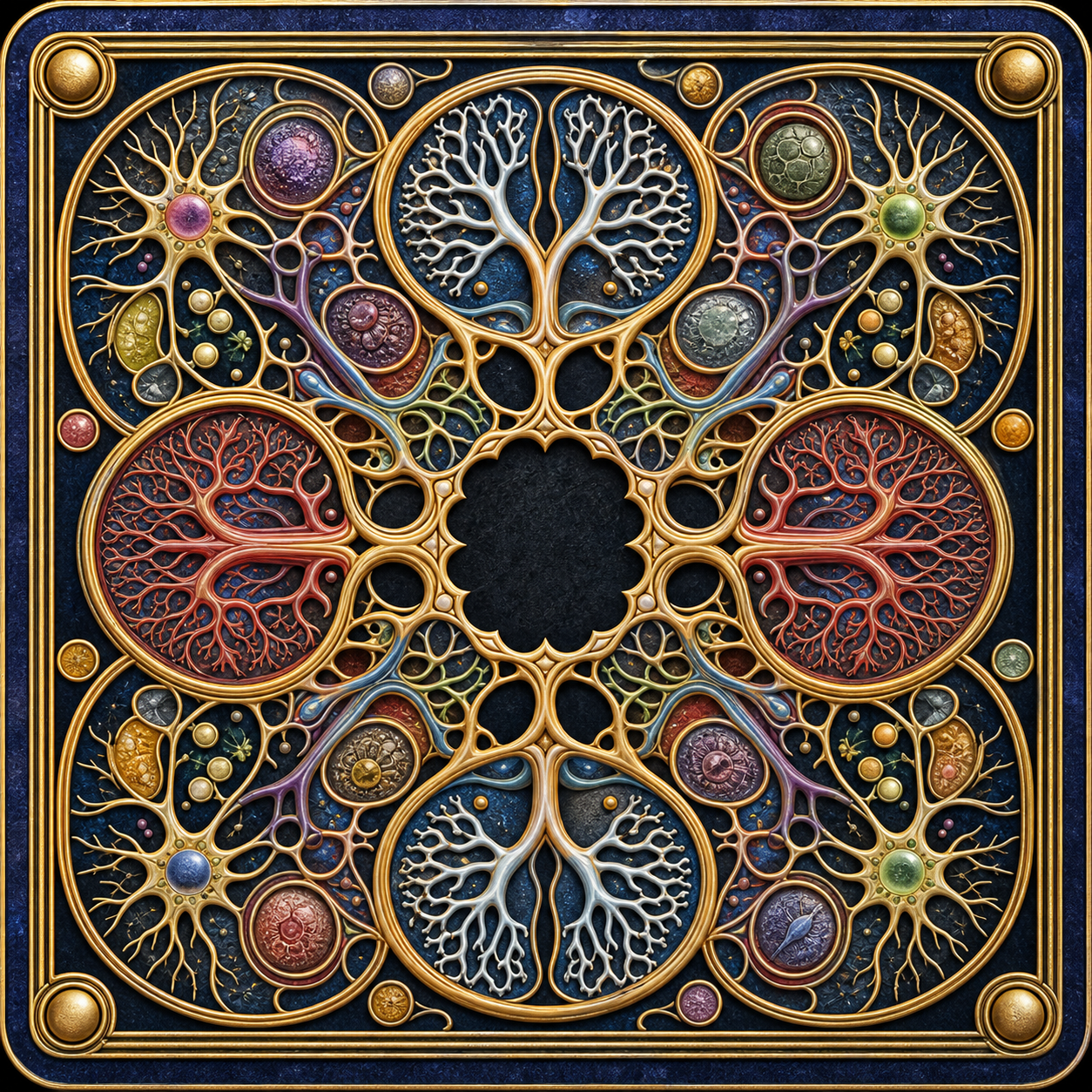
Model of meaning
A symbolic claim must be traceable to distinctive biological work. The card then asks where human experience has the same structure.
Twelve living operations · seven cards each
Receive, transmit, interpret, and coordinate information.
Brain · Cerebral Cortex · Limbic System · Cerebellum · Brainstem · Neuron · SynapseSet pace, threshold, proportion, and feedback across the whole.
Hypothalamus · Pituitary · Pineal · Thyroid · Parathyroids · Adrenals · HormonesCirculate, trade, and renew across living interfaces.
Heart · Lungs · Blood · Arteries · Veins · Capillaries · BreathReceive matter and make it usable, storable, or meaningful.
Mouth, Teeth & Tongue · Esophagus · Stomach · Liver · Gallbladder · Pancreas · Small IntestineDiscriminate, reclaim, complete, and let go.
Large Intestine · Rectum & Elimination · Kidneys · Bladder · Lymphatic System · Spleen · SweatCreate a selective, sensing border between self and world.
Skin · Hair & Nails · Thymus · Mucous Membranes · Cell Membrane · Fascia · Immune SystemGive durable form, alignment, leverage, and protected space.
Skeleton · Skull · Spine · Pelvis · Joints · Bone Marrow · Ligaments & Connective TissueConvert intention, tension, and energy into motion.
Muscles · Tendons · Hands · Feet · Diaphragm · Peripheral Nerves · ProprioceptionSample the world and orient action within it.
Eyes · Ears · Nose · Tongue & Taste · Touch · Vestibular System · Sensory IntegrationMake, differentiate, and bring new form into possibility.
Uterus · Cervix · Ovaries · Vagina · Testes · Penis · ProstateCarry life, memory, nourishment, and pattern across time.
Breast · Placenta · Umbilical Cord · Stem Cell · DNA · Cell · MitochondriaCoordinate difference so the organism adapts as one.
Autonomic Nervous System · Vagus Nerve · Microbiome · Sleep · Healing · Metabolism · HomeostasisComplete card library
84 of 84 cards
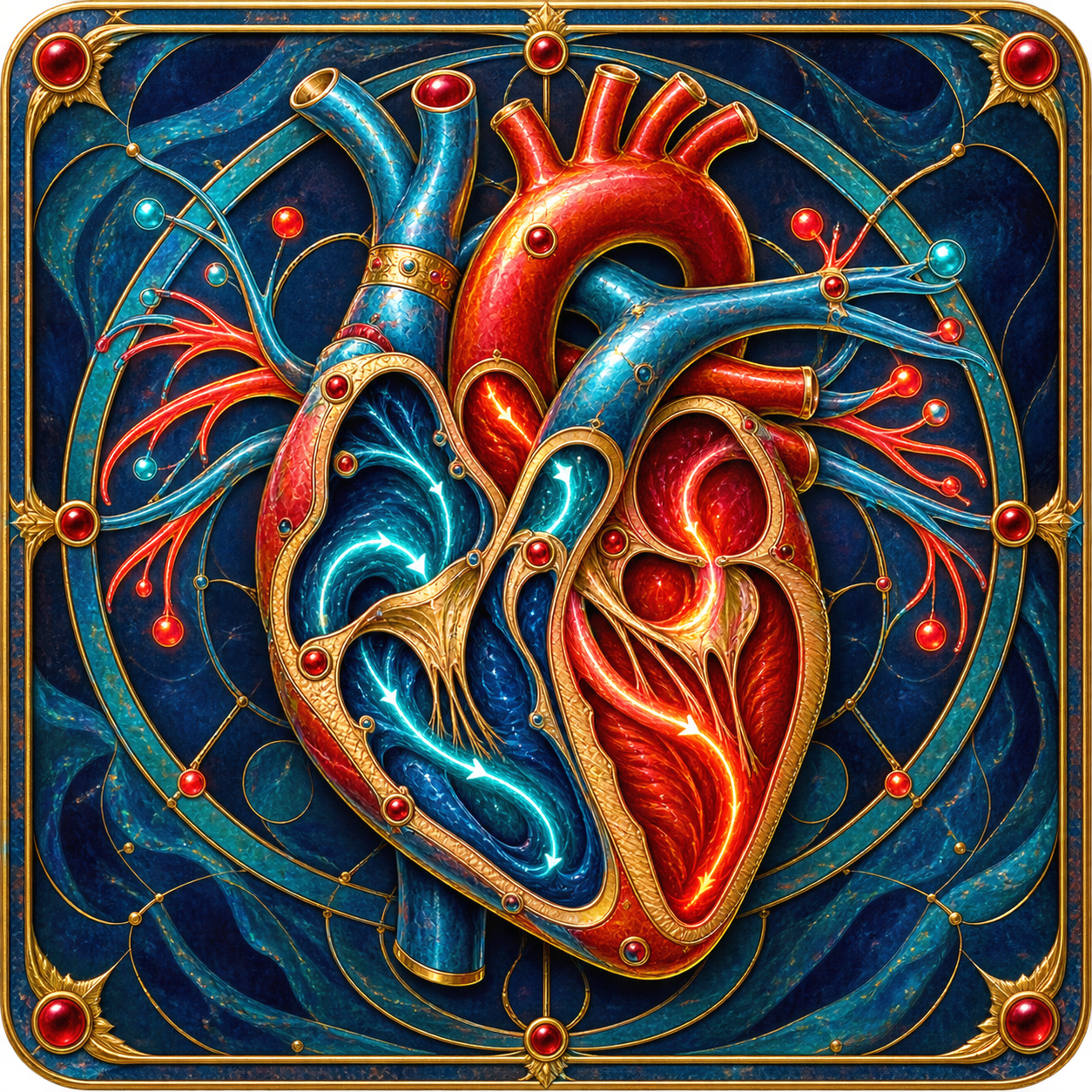
15 · Exchange
reciprocity through circulation.
Heart creates rhythmic pressure that receives venous blood and sends it through pulmonary and systemic circulation.
isolation, stagnation, under-supply, or inability to receive
mutual movement in which giving and receiving sustain the whole
overextension, leakage, forced reciprocity, or circulation without rest
Restore movement by following the organ's actual logic: give, receive, and send onward.
What must keep moving in order to remain alive?
Action: Give, receive, and send onward.
Body map
113 explicit links
Gold lines mark functional pairings; teal lines mark family and system constellations. Select a node to open its card.
Archetypes
Receive, transmit, interpret, and coordinate information.
Set pace, threshold, proportion, and feedback across the whole.
Circulate, trade, and renew across living interfaces.
Receive matter and make it usable, storable, or meaningful.
Discriminate, reclaim, complete, and let go.
Create a selective, sensing border between self and world.
Give durable form, alignment, leverage, and protected space.
Convert intention, tension, and energy into motion.
Sample the world and orient action within it.
Make, differentiate, and bring new form into possibility.
Carry life, memory, nourishment, and pattern across time.
Coordinate difference so the organism adapts as one.
Psychology
Signal illuminates attention and interpretation; Regulation, thresholds and pace; Exchange, reciprocity; Transformation, processing; Release, completion; Boundary, selective contact.
Structure illuminates support; Movement, agency; Perception, orientation; Generation, creation; Continuity, inheritance; Integration, state and coherence.
Traditions
Pneuma, bodily faculties, and historical organ psychology are labeled as historical frameworks.
Heart/shen, five viscera, and dantian appear only as situated correspondences.
Dosha and dhatu are preserved as distinct theoretical categories, not translated into modern organs.
Correspondences
Colors identify living operations. Material, motion, archetype, and relational geometry are recorded per card. Correspondences never replace biological reasoning.
The body as oracle
Too little access to the principle.
The principle proportioned to the whole.
The power rigid, overactive, or isolated.
The movement that restores responsiveness.
Original spreads
A five-card reading for regulation, teams, conflict, and adaptive decisions.
For projects, information, grief, food for thought, and organizational resources.
For reciprocity, money, attention, care, and stalled movement.
A relational reading built from card-to-card biology.
A five-position spatial reading.
For recovery without pretending repair is linear.
Uses the deck’s regulation states instead of reversals.
For locating the scale at which change belongs.
Visual language
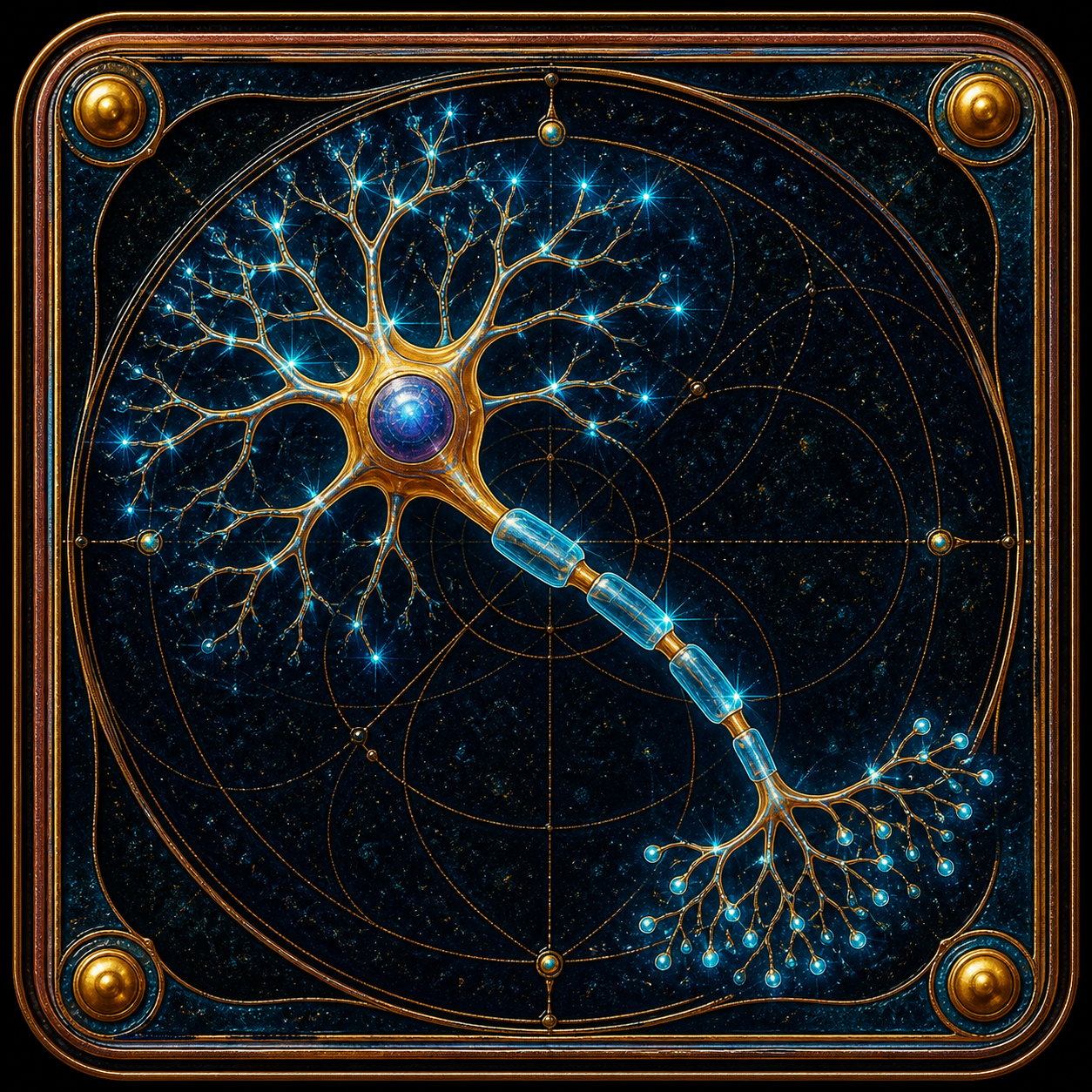
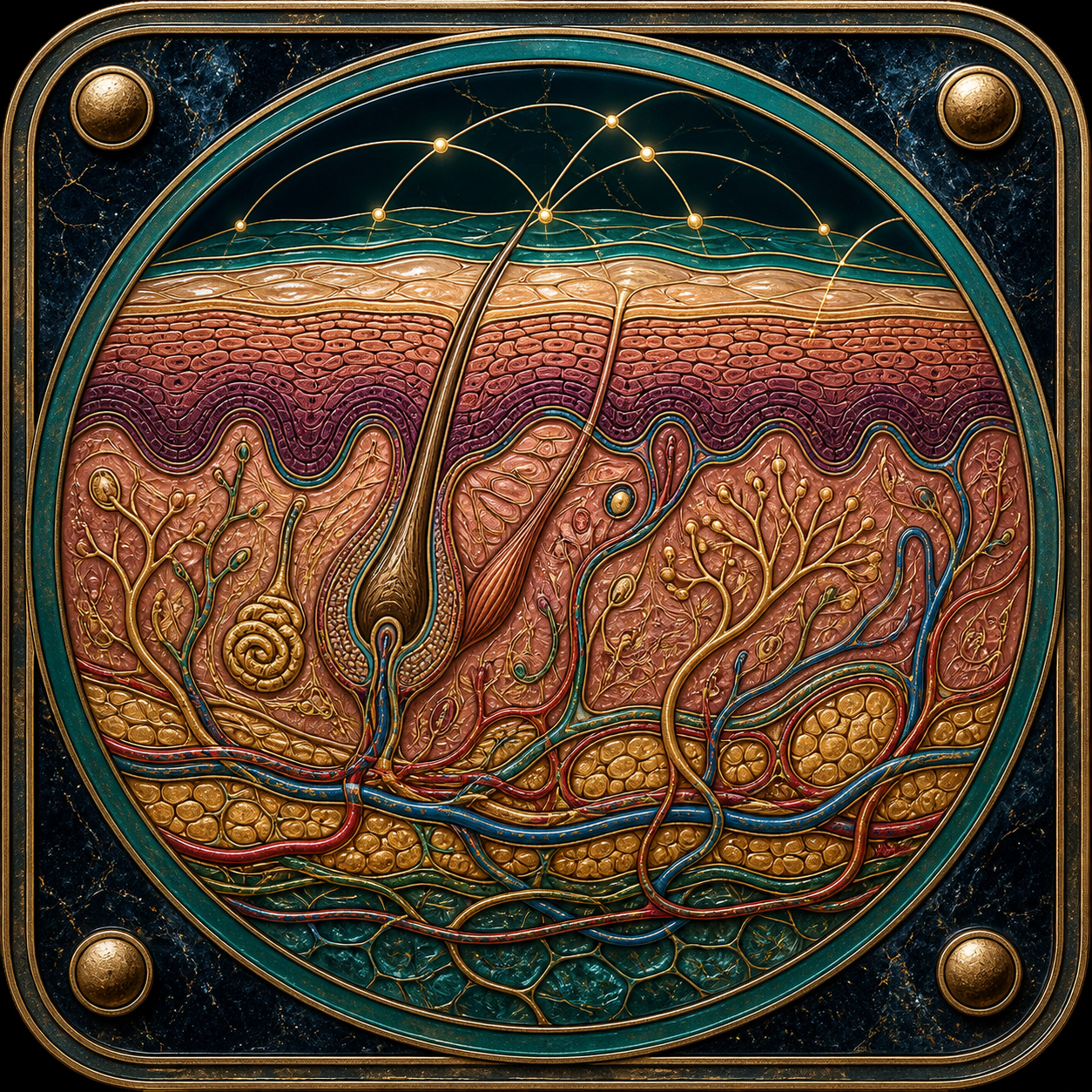
Square rounded enamel artifacts, recognizable biological forms, controlled gold partitions, dark mineral grounds, and operation-specific geometry. Words remain a separate type layer.
Research & provenance
Meaning follows documented structure and physiology from institutional and peer-reviewed sources.
Every culturally specific note names its tradition, concept, source, and adaptation.
New symbolic reasoning is identified as interpretation, never inherited fact.
Downloads