Projection
2:1 isometric ground logic; architecture may lift toward a cinematic 35.264° view without breaking the shared axes.
 Isometric Scene System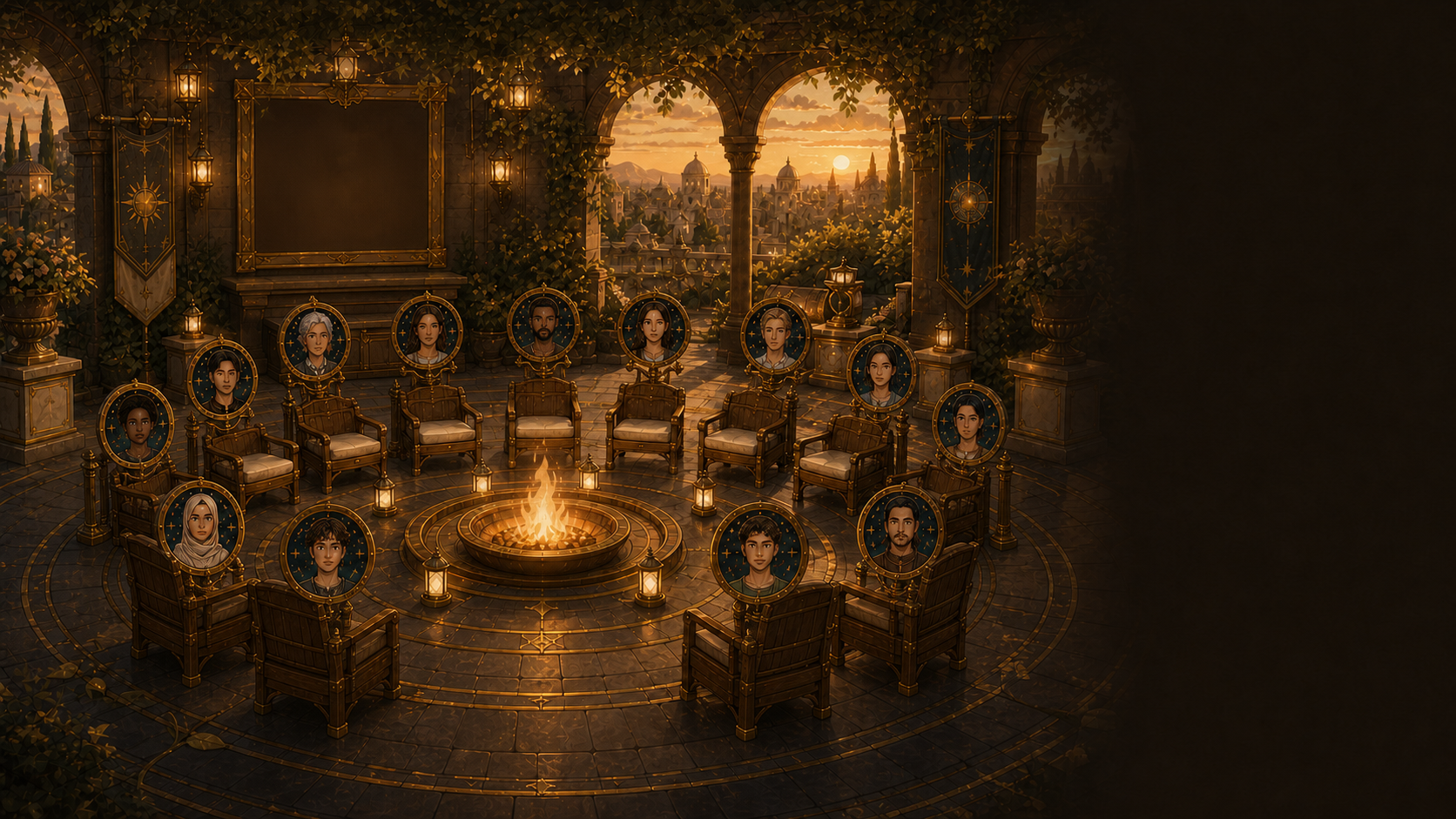
A VISUAL CONSTITUTION FOR LIVING SCENES
A production-oriented grammar for composing Kiduna Scenes from canonical Components—without losing atmosphere, coherence, or beauty.
THE PROMISE
A Scene is a situated, stateful composition. Its visual integrity comes from one contract shared by every Background, Tile, Wall, Object, Entity, Effect, Portal, Panel, Overlay, and piece of Chrome.
2:1 isometric ground logic; architecture may lift toward a cinematic 35.264° view without breaking the shared axes.
One world unit equals 0.25 m. A canonical standing Avatar occupies 0.62 × 0.62 × 1.75 m.
Placement, interaction, shadow, light, attachment, portal, and occlusion anchors are explicit metadata.
A deterministic world-depth key combines layer band, projected position, elevation, and local bias.
Every asset is authored under a neutral world rig, then receives Scene atmosphere, local light, and reflected color.
Stone, wood, brass, enamel, glass, textile, foliage, water, and fire share a restrained response grammar.
Light, motion, material and environmental response express state before any Overlay is introduced.
Realm → Scene → Area → Component. Structure survives style; identity survives adaptation.

SYSTEM DEMONSTRATION
Background light, architecture, portals, work surfaces, and portrait presences operate as one world.
Open all nine Scenes →THE TEST
Everything in this release exists to make the answer inspectable, repeatable, and yes.
See the acceptance gates